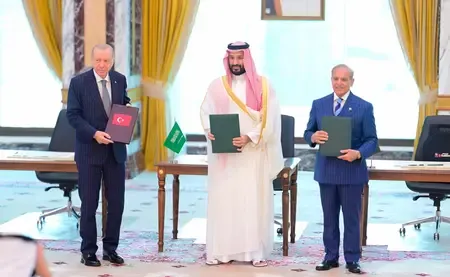
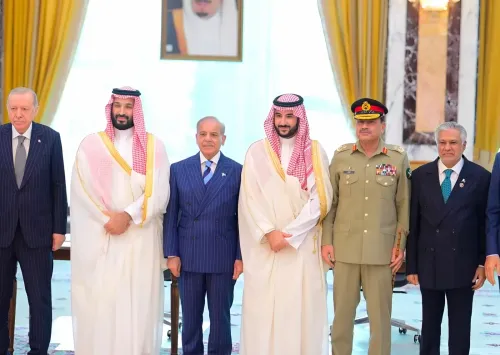
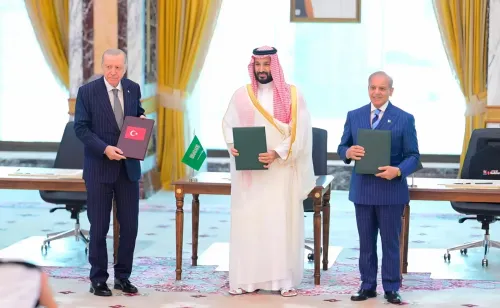
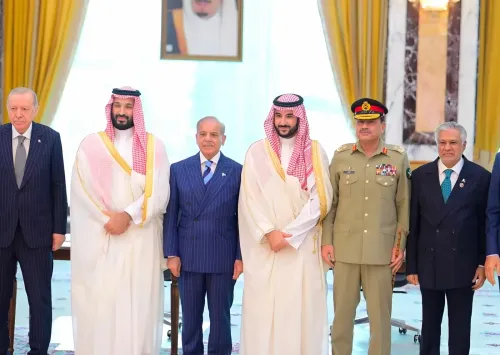
Mecca Defence Pact: India examining implications, will safeguard national interests, says MEA
Synopsis
India's Ministry of External Affairs has put the Mecca Defence Pact — a trilateral defence deal between Pakistan, Turkey, and Saudi Arabia — under active scrutiny, warning it will take all necessary measures to protect national interests. The pact's vague text has led analysts to question its military credibility, but Pakistan's Defence Minister has already named India and Israel as the alliance's implied adversaries, sharpening New Delhi's concern.
Key Takeaways
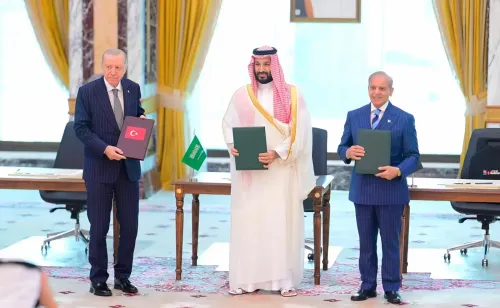
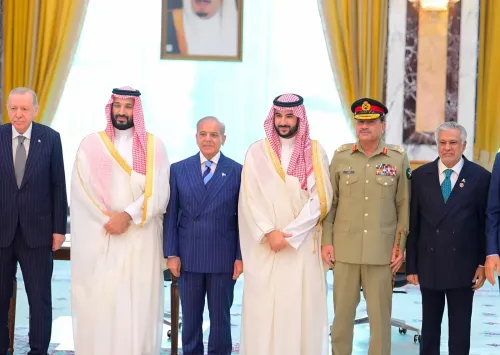
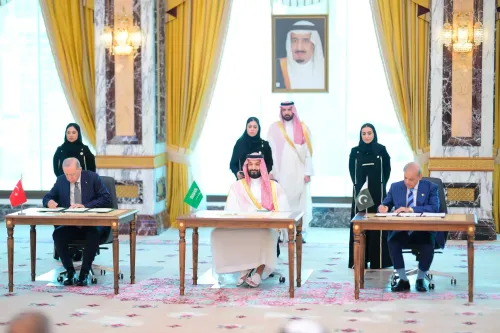
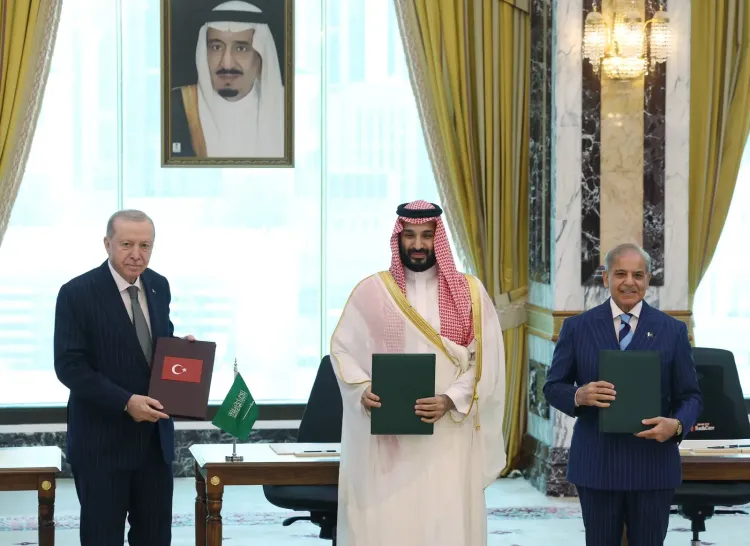
The MEA on 11 August said India is examining the implications of the Mecca Defence Pact signed between Pakistan , Turkey , and Saudi Arabia .
Spokesperson Randhir Jaiswal stated India will take 'all necessary measures' to safeguard national interests and regional stability.
Analysts say the pact is framed in vague terms with no clear mutual defence obligation, potentially limiting its military effectiveness.
Pakistan's Defence Minister Khawaja Asif reportedly named India and Israel as adversaries in the context of the new alliance.
Geopolitical expert Sergio Restelli noted Asif's remarks gave the pact a 'clearly identified enemy' that its official text had avoided.
The Ministry of External Affairs (MEA) on Tuesday, 11 August said India is closely examining the implications of the recently signed Mecca Defence Pact — a trilateral defence agreement between Pakistan, Turkey, and Saudi Arabia — and will take all necessary steps to protect its national interests. The statement came during a biweekly press briefing in New Delhi, as the pact drew sharp scrutiny from regional analysts and foreign policy observers.
What the MEA Said
MEA spokesperson Randhir Jaiswal addressed reporter queries on the newly signed agreement, offering a measured but firm response. 'Regarding the agreement that was signed recently, let me say that we continue to closely follow developments in the West Asia conflict. As far as this particular agreement is concerned, we are examining its implications, both from the perspective of our national security as well as considerations of regional stability, peace and stability. India remains fully committed to meeting or safeguarding its national interests and will take all necessary measures in this regard,' Jaiswal stated.
The spokesperson's remarks signal that New Delhi is treating the pact as a live national security concern, even as the government refrains from a more direct public response pending its full assessment.
Analysts Question the Pact's Teeth
Strategic analysts have raised doubts about the pact's operational effectiveness. According to assessments circulating in foreign policy circles, the defence agreement risks remaining largely rhetorical unless it clearly defines what constitutes aggression, identifies the circumstances that would trigger a military response, and outlines how the three countries would coordinate their forces.
The agreement has been characterised by some observers as a 'backup plan' — an arrangement by three middle powers preparing for a scenario in which they can no longer fully rely on security guarantees from major global powers. Notably, the pact's text is reportedly framed in vague terms, with no clear obligation for any member state to go to war if another is attacked, according to analysis published in Modern Diplomacy.
Pakistan's Defence Minister Identifies India and Israel as Targets
The pact's political framing, however, has been less ambiguous. Italian political advisor and geopolitical expert Sergio Restelli, writing in The Times of Israel, noted that Pakistan's Defence Minister Khawaja Asif gave the emerging alliance something its carefully worded official text had conspicuously avoided: a clearly identified adversary — naming both Israel and India.
According to Restelli, Asif called for Muslim countries to unite against Israel and advocated a united military front, arguing that the threat posed by Israel extended beyond Palestine to the Muslim world as a whole. 'What makes Asif's latest intervention different is that it comes immediately after Islamabad entered a potentially historic collective defence arrangement with Saudi Arabia and Turkey,' Restelli wrote.
Pakistan has never recognised Israel, and Pakistani politicians have frequently adopted strongly anti-Israel positions. Critics argue that Asif's remarks, delivered in the immediate aftermath of the pact's signing, reveal the alliance's underlying strategic intent more candidly than its formal text.
Broader Regional Context
This comes amid sustained turbulence in West Asia, where shifting alliances and the ongoing conflict have prompted several regional powers to recalibrate their security postures. The Mecca Defence Pact represents a notable convergence of Pakistan's military capacity with Turkey's NATO membership and Saudi Arabia's financial leverage — a combination that India's security establishment will be watching closely.
India's diplomatic response in the coming weeks, particularly in multilateral forums, will signal how seriously New Delhi views the pact as a long-term strategic challenge.
Point of View
While Turkey has historically complicated India's positions at multilateral forums. What is harder to ignore is Pakistan's Defence Minister voluntarily naming India as an adversary in the same breath as the pact's signing — a political signal that cuts through the agreement's deliberately ambiguous legal text. The real question is whether this pact evolves into a functional security architecture or remains, as analysts suggest, a rhetorical statement of solidarity. Either way, New Delhi will be recalibrating its West Asia strategy, and the pace of that recalibration will say much about how seriously the government rates the threat.
NationPress
25 Sept 2026
Frequently Asked Questions
What is the Mecca Defence Pact?
The Mecca Defence Pact is a trilateral defence agreement signed between Pakistan, Turkey, and Saudi Arabia. It is described as a collective security arrangement, though analysts note its text is vague and does not clearly obligate any member to go to war if another is attacked.
How has India responded to the Mecca Defence Pact?
India's Ministry of External Affairs said on 11 August that it is examining the pact's implications from the perspective of national security and regional stability. MEA spokesperson Randhir Jaiswal stated that India will take all necessary measures to safeguard its national interests.
Why is the Mecca Defence Pact a concern for India?
Pakistan's Defence Minister Khawaja Asif reportedly identified India and Israel as adversaries in the context of the pact, giving the alliance a clearer strategic target than its official text suggests. This, combined with Pakistan's military capacity and the financial and diplomatic weight of Turkey and Saudi Arabia, raises strategic concerns for New Delhi.
What do analysts say about the pact's effectiveness?
Analysts argue the pact risks being largely rhetorical because it does not clearly define what constitutes aggression, what would trigger a military response, or how the three countries would coordinate forces. It has been characterised as a 'backup plan' by middle powers hedging against the declining reliability of major power security guarantees.
Who is Sergio Restelli and what did he write about the pact?
Sergio Restelli is an Italian political advisor, author, and geopolitical expert who wrote in The Times of Israel that Pakistan's Defence Minister Khawaja Asif gave the alliance a 'clearly identified enemy' — Israel and India — that the pact's official text had conspicuously avoided naming.