Pakistan's identity crisis: Islam, nationalism and militant challenge
Synopsis
Pakistan was born from a religious idea but built as a territorial state — and that contradiction has never been resolved. From HT's caliphate ideology to TTP's armed insurgency and the Paigham-e-Pakistan counter-narrative, the battle over whether Islamic identity and Pakistani nationhood can coexist is no longer just theological. It is a live security question.
Key Takeaways
Hizb ut-Tahrir (HT) advocates a transnational caliphate, treating territorial nationalism as a lesser political loyalty — an ideological, not violent, challenge to the Pakistani state.
Tehrik-e-Taliban Pakistan (TTP) , as described by the United Nations , seeks to overthrow Pakistan's government; TTP-affiliated militants attacked 11 districts of Khyber Pakhtunkhwa on 14 August last year, according to the Pakistan Institute for Peace Studies .
ISIS-K operates from a transnational jihadist framework, rejecting nation-state borders and targeting both state institutions and rival militant groups.
The Paigham-e-Pakistan initiative, backed by a broad body of religious scholars, condemns terrorism and armed rebellion as incompatible with Islamic principles and Pakistan's constitutional order.
Baloch separatist groups such as the Balochistan Liberation Army challenge the state on ethnonationalist, not Islamist, grounds — a distinct ideological category.
Pakistan's long-term stability may hinge on whether Islamic identity and national citizenship are treated as compatible rather than competing loyalties.
Pakistan's political identity has long carried a fundamental contradiction: the country was established as a homeland for South Asian Muslims, yet it took shape as a territorial state with defined borders, functioning institutions and a constitutional framework. That internal tension is thrown into sharp relief when examining radical Islamist organisations that place the global Muslim community — the 'ummah' — above the nation-state itself. Crucially, however, this ideological position must not be conflated with the views of Pakistan's Muslim majority or its mainstream religious scholars, the vast majority of whom reconcile Islamic identity with Pakistani citizenship and patriotism.
Hizb ut-Tahrir and the Caliphate Argument
Hizb ut-Tahrir (HT) offers one of the most articulate ideological challenges to territorial nationalism. The organisation's central objective is the restoration of a caliphate uniting Muslims under a single Islamic polity — not the preservation of sovereign nation-states. Its Pakistan-oriented publications have characterised independence as incomplete when measured against the broader goal of establishing such a caliphate. This does not necessarily mean every HT supporter rejects Pakistan's people or culture; rather, territorial nationalism is simply not regarded as the highest political loyalty. HT's framework thus disputes whether the Pakistani state represents the final or legitimate expression of Muslim political identity.
TTP and ISIS-K: When Ideology Becomes Violence
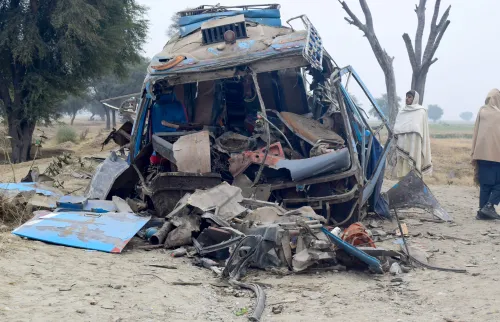
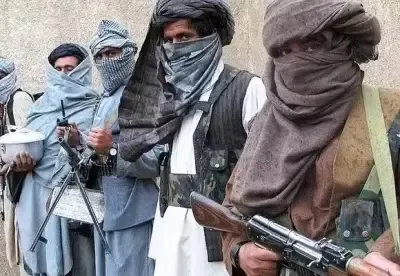
Tehrik-e-Taliban Pakistan (TTP) represents a far more direct and violent challenge. The United Nations has described TTP's objective as overthrowing Pakistan's government and establishing its own form of Islamic rule. The organisation has carried out attacks against soldiers, police officers, politicians and state institutions, framing the existing political order as illegitimate or insufficiently Islamic. Its propaganda has increasingly cast the conflict as a war against the Pakistani state itself — translating ideological rejection into sustained armed violence.
ISIS-K operates from an explicitly transnational jihadist worldview, rejecting modern nation-state boundaries in favour of a borderless caliphate. Its propaganda treats governments and national institutions as obstacles to its religious-political project, while simultaneously targeting rival militant organisations. Where HT primarily illustrates ideological anti-nationalism, TTP and ISIS-K demonstrate how rejection of territorial authority can become inseparable from terrorism and insurgency.
Independence Day as a Flashpoint
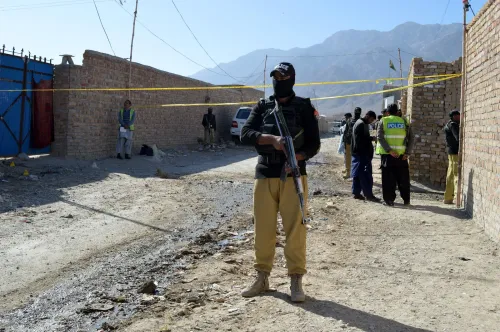
Pakistan's Independence Day on 14 August provides a revealing test of these competing narratives. Claims of blanket 'black day' campaigns or universal boycotts by Islamist groups warrant caution unless supported by verified primary organisational material. On the question of militant violence, however, evidence is more concrete. The Pakistan Institute for Peace Studies reported that on 14 August last year, TTP-affiliated militants conducted coordinated attacks across 11 districts of Khyber Pakhtunkhwa, targeting mainly police and security personnel.
The timing lent the violence symbolic weight, though it should not automatically be read as proof that every attack constituted an explicit call to boycott Independence Day. A critical distinction exists between ideological statements, verified organisational directives and unverified media claims. A group advocating a caliphate may reject territorial nationalism without instructing supporters to burn flags; equally, an attack timed for 14 August can carry an anti-state message without the organisation having formally declared a 'black day.'
Mainstream Islam and the Paigham-e-Pakistan Counter-Narrative
Pakistan's mainstream religious establishment offers a markedly different model. The Paigham-e-Pakistan initiative, endorsed by a broad coalition of religious scholars, explicitly condemned terrorism, suicide attacks and armed rebellion against the state, presenting these practices as incompatible with Islamic principles and Pakistan's constitutional order. Religious institutions have also issued rulings permitting expressions of patriotism — including the display of the Pakistani flag on Independence Day — though scholars differ on appropriate forms of celebration. These positions underscore that Islamic faith and Pakistani patriotism are not inherently at odds.
Baloch separatist militancy belongs to an entirely different ideological category. Organisations such as the Balochistan Liberation Army are driven primarily by Baloch ethnonationalism and a demand for territorial sovereignty — not by a vision of replacing Pakistan with a transnational Islamic caliphate. Both Islamist militants and separatists challenge the Pakistani state, but from fundamentally distinct ideological premises.
What Pakistan's Cohesion Depends On
India offers a partial, if imperfect, comparison. Major Muslim institutions such as Jamiat Ulama-i-Hind have broadly sought to accommodate Muslim religious identity within India's plural constitutional framework, affirming citizenship and democratic institutions while defending religious rights. This differs from Islamist currents in Pakistan that explicitly debate whether religious solidarity should take precedence over territorial nationalism — a debate with direct security implications.
When religious identity is integrated with constitutional citizenship, it can coexist with national loyalty and reinforce social cohesion. When organisations declare the state illegitimate, reject its institutions and subordinate Pakistani sovereignty to a transnational project, ideological disagreement risks crossing into a security threat. Pakistan's long-term cohesion may ultimately depend on whether Islamic identity and national identity are understood as compatible commitments — or as mutually exclusive loyalties.
Point of View
TTP's armed insurgency and Baloch separatism are three distinct challenges that require three distinct policy responses, not a single 'extremism' label. The Paigham-e-Pakistan consensus is real, but it remains a declaration rather than a movement with institutional muscle. Pakistan's establishment has historically used Islamist proxies as strategic assets; the blowback from that policy is now structural. Until the state consistently distinguishes between religious identity and violent rejection of statehood — in law, in education and in security doctrine — the contradiction at Pakistan's founding will continue to be exploited by those who benefit from the ambiguity.
NationPress
7 Oct 2026
Frequently Asked Questions
What is Hizb ut-Tahrir's position on Pakistan as a nation-state?
Hizb ut-Tahrir (HT) advocates the restoration of a transnational Islamic caliphate and does not regard territorial nationalism as the highest political loyalty. Its Pakistan-oriented publications have described independence as incomplete against the broader goal of establishing a caliphate, though this is an ideological position rather than a call for direct violence against Pakistan's people.
What attacks did TTP carry out on Pakistan's Independence Day?
According to the Pakistan Institute for Peace Studies, TTP-affiliated militants conducted coordinated attacks across 11 districts of Khyber Pakhtunkhwa on 14 August last year, targeting mainly police and security personnel. The timing gave the violence symbolic significance, though analysts caution against automatically interpreting every attack as a formal 'black day' declaration.
What is the Paigham-e-Pakistan initiative?
Paigham-e-Pakistan is a counter-extremism declaration endorsed by a broad coalition of Pakistani religious scholars that condemns terrorism, suicide attacks and armed rebellion against the state as incompatible with Islamic principles and Pakistan's constitutional order. It represents mainstream religious thought's effort to decouple Islamic identity from violent anti-state ideology.
How does Baloch separatism differ from Islamist militancy in Pakistan?
Baloch separatist organisations such as the Balochistan Liberation Army are driven by Baloch ethnonationalism and a demand for territorial sovereignty, not by a vision of replacing Pakistan with a transnational Islamic caliphate. While both Islamist militants and separatists challenge the Pakistani state, they do so from fundamentally different ideological premises.
Can Islamic identity and Pakistani nationalism coexist?
According to mainstream Pakistani religious scholars and the Paigham-e-Pakistan framework, Islamic faith and Pakistani patriotism are not inherently contradictory. The central argument is that when religious identity is integrated with constitutional citizenship, it can reinforce rather than undermine national cohesion — a position that contrasts sharply with groups like HT or TTP.