Trump: China agrees to nuclear-risk talks with US and Russia for first time
Synopsis
For the first time, China has agreed to join nuclear-risk talks with the US and Russia — a historic break from Beijing's decades-long resistance. Trump announced the breakthrough after a trilateral summit in Shenzhen with Xi and Putin, but no timeline, arms limits, or formal agenda have yet been set, leaving the declaration's real-world weight uncertain.
Key Takeaways
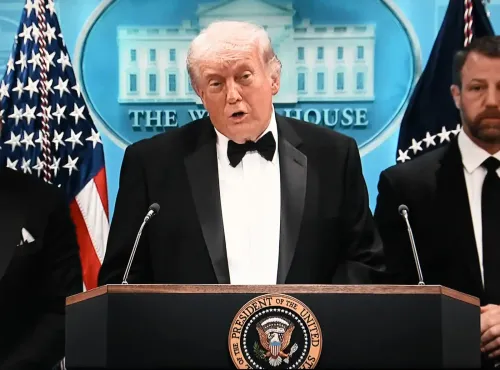
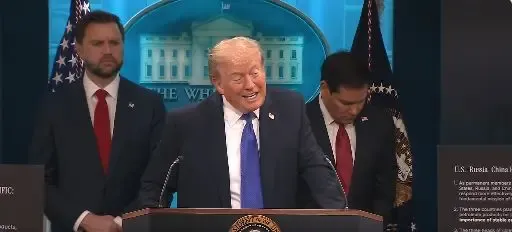
US President Donald Trump announced on Friday that China had agreed for the first time to hold nuclear-risk reduction talks with the US and Russia .
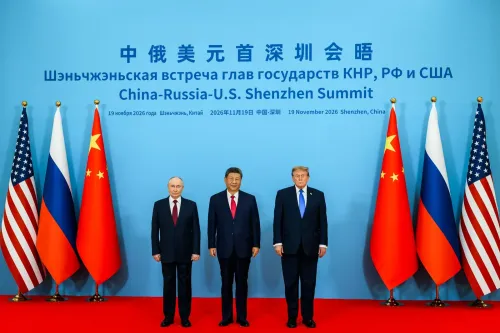
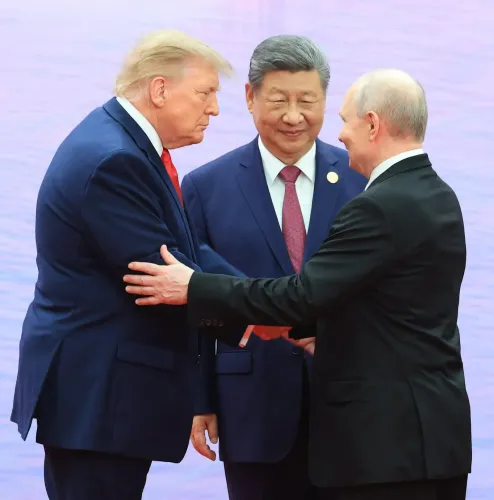
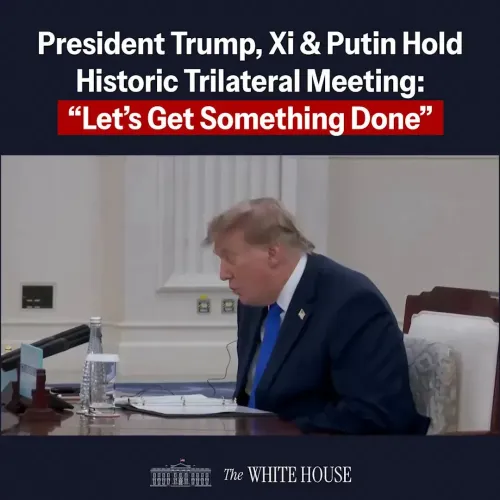
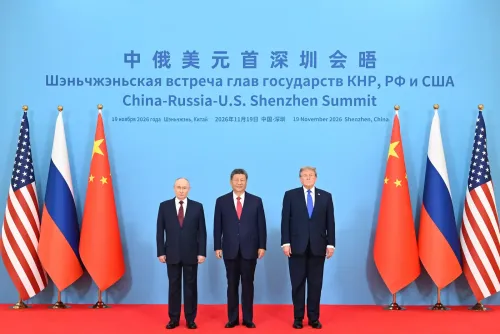
The commitment came from a trilateral summit in Shenzhen between Trump, Xi Jinping , and Vladimir Putin .
The three leaders issued a declaration stating that 'nuclear conflict must never be allowed to happen' ; no date for talks or arms reduction targets was set.
Trump put China's nuclear stockpile at approximately 600 weapons , predicting it could reach US parity within 10 years .
Iran's nuclear ambitions , Korean Peninsula security , and the Ukraine war were also discussed, with no specific commitments announced.
The three countries also agreed to jointly increase oil, petrol, and diesel production to ease global price pressures.
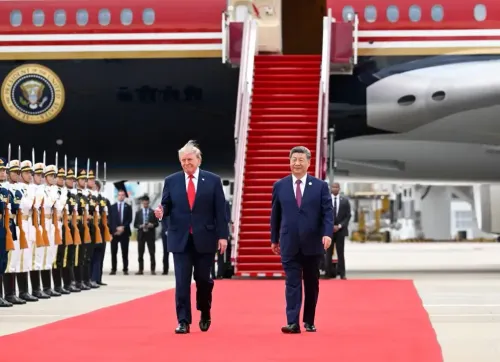
US President Donald Trump announced on Friday that China had agreed, for the first time, to hold talks with the United States and Russia on reducing the risk of nuclear conflict — a potentially landmark shift in global arms diplomacy. Trump said the commitment emerged from a trilateral summit with Chinese President Xi Jinping and Russian President Vladimir Putin held in Shenzhen, China.
The Shenzhen Declaration
Trump said the three leaders issued a joint declaration affirming that 'nuclear conflict must never be allowed to happen'. However, he provided no date for when the formal talks would begin, and announced no agreement to reduce the number of nuclear weapons held by any of the three countries. The declaration builds on an earlier pledge: in January 2022, all five permanent members of the UN Security Council — including China, France, Russia, the United Kingdom, and the United States — issued a joint statement asserting that a nuclear war cannot be won and must never be fought.
China's Historic Reluctance — and What Changed
Beijing had for decades resisted bilateral or trilateral nuclear arms discussions, primarily because its arsenal was significantly smaller than those of Washington and Moscow. Trump put China's current stockpile at approximately 600 weapons and predicted it could reach parity with the United States within 10 years. US Secretary of State Marco Rubio described the Shenzhen meeting as 'an opening for diplomats to negotiate specific agreements', adding that the scale of the three nations' arsenals made regular leader-level contact essential. For decades, Washington and Moscow had managed strategic nuclear limits through bilateral treaties such as New START, signed in 2010 by then-US President Barack Obama and then-Russian President Dmitry Medvedev. China was never a party to that treaty, making its entry into these discussions a significant diplomatic development.
Iran, Korea, and Ukraine on the Agenda
Beyond nuclear risk reduction, Iran featured prominently in the Shenzhen discussions. Trump said the three leaders spent considerable time on the prospect of Tehran acquiring nuclear weapons and also discussed security on the Korean Peninsula. However, Trump announced no specific undertakings by Beijing or Moscow on either issue. The war in Ukraine was raised both at the summit and in a separate meeting between Trump and Putin on the sidelines of the Asia-Pacific Economic Cooperation (APEC) gathering. Trump said Putin had expressed a desire to end the conflict through diplomacy, but noted that personal hostility between Putin and Ukrainian President Volodymyr Zelenskyy remained an obstacle to any settlement.
Broader Agreements: Oil Production and ICC Criticism
The three leaders also reportedly found common ground on energy policy. Trump said the US, China, and Russia agreed to work together to increase production of oil, petrol, and diesel to ease pressure on global prices, though he provided no specific production targets. Additionally, all three countries joined in criticising what they characterised as overreach by the International Criminal Court (ICC). Trump acknowledged his own reservations about disarmament, saying that while he had often spoken about a world without nuclear weapons, he would find it difficult, as US President, to agree to cut the American arsenal in half — citing the deterrent value of the weapons and noting that any deal among the three powers would still leave other nations armed.
What Comes Next
Secretary Rubio indicated that the Shenzhen summit was a foundation for diplomats to work from, rather than a finalised framework. Relations among the three presidents, he noted, would also shape progress on trade disputes with China and other outstanding issues with Russia. With no timeline set for formal talks and no arms reduction targets agreed, the durability of this diplomatic opening remains to be tested.
Point of View
But the absence of a timeline, agenda, or arms reduction targets means this is an opening statement, not a deal. Beijing's historic resistance to these discussions was structural — its smaller arsenal meant any numerical limits would lock in inferiority — and that strategic calculus has not changed. The real test is whether this trilateral format survives the return to Washington's domestic politics and Beijing's own red lines on sovereignty. The Shenzhen declaration, like the January 2022 P5 statement before it, risks becoming a rhetorical milestone rather than an operational one unless diplomats produce a binding follow-on framework.
NationPress
21 Nov 2026
Frequently Asked Questions
What did Trump announce about China and nuclear talks?
Trump announced that China had agreed, for the first time, to hold talks with the United States and Russia on reducing the risk of nuclear conflict. The commitment was made at a trilateral summit in Shenzhen with Chinese President Xi Jinping and Russian President Vladimir Putin, where the three leaders issued a declaration stating that nuclear conflict must never be allowed to happen.
Why had China previously refused nuclear arms talks?
Beijing had long resisted such discussions because its nuclear arsenal was significantly smaller than those of the US and Russia, and any formal limits would have entrenched that disparity. Trump put China's current stockpile at around 600 weapons and predicted it could reach parity with the US within 10 years — a shift that may have made Beijing more willing to engage.
Were any concrete arms reduction agreements reached at Shenzhen?
No. Trump announced no agreement to reduce the number of weapons held by any of the three countries, and provided no date for when formal nuclear-risk talks would begin. Secretary of State Marco Rubio described the summit as an opening for diplomats to negotiate specific agreements.
What else was discussed at the Shenzhen summit?
The three leaders discussed preventing the spread of nuclear weapons, with particular focus on Iran's potential acquisition of a nuclear weapon and security on the Korean Peninsula. The Ukraine war was also raised, with Putin reportedly expressing a desire for a diplomatic end to the conflict. The three countries additionally agreed to work together to increase oil, petrol, and diesel production to ease global price pressures.
How does this compare to previous nuclear arms agreements?
For decades, the US and Russia managed strategic nuclear limits through bilateral treaties, most recently New START signed in 2010, which set ceilings on deployed warheads and delivery systems. China was never a party to those agreements. The Shenzhen declaration is the first time Beijing has agreed to enter direct discussions with both Washington and Moscow, though it falls short of a binding treaty and builds on a broader January 2022 P5 statement against nuclear war.