Trump, Xi, Putin pledge nuclear-risk talks and UN reform at Shenzhen summit
Synopsis
For the first time, the leaders of the US, China, and Russia sat together and committed to nuclear-risk dialogue — but their four-point Shenzhen declaration is notably light on specifics: no arms-reduction targets, no ceasefire for Ukraine, no ICC case named, and no seat for India at the UN reform table. The significance lies as much in the optics of the meeting as in what it actually delivered.
Key Takeaways
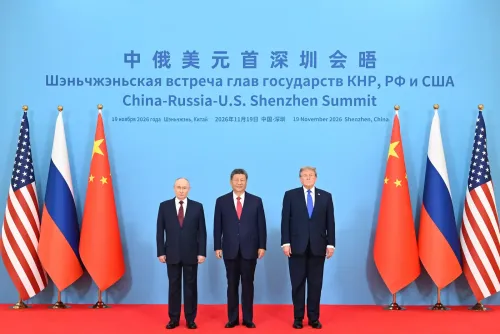
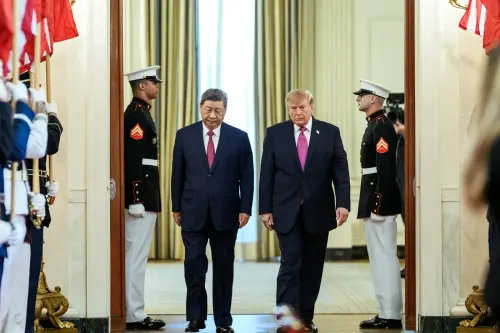
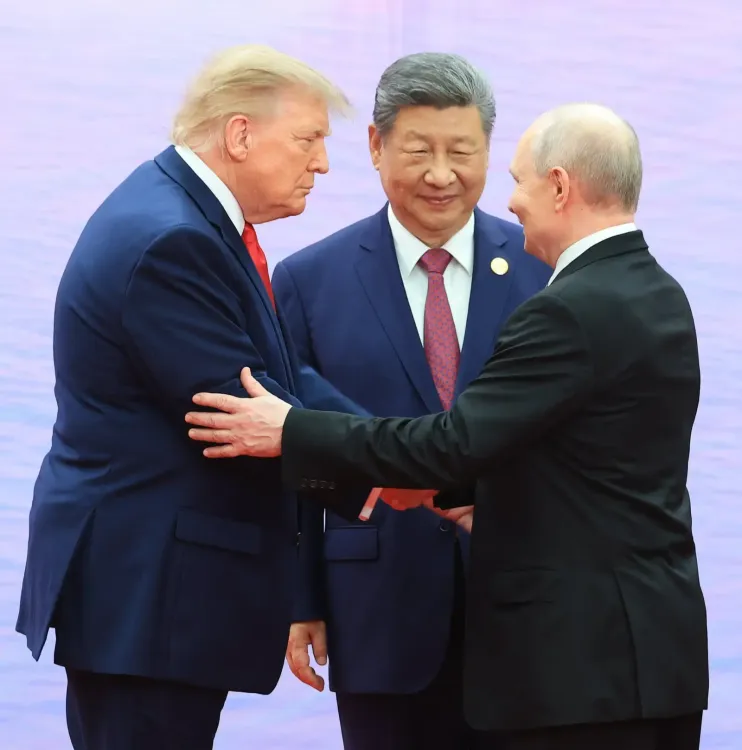
Donald Trump , Xi Jinping , and Vladimir Putin held a trilateral summit in Shenzhen on 19 November 2026 on the sidelines of the APEC leaders' gathering.
Their joint declaration reaffirmed that 'a nuclear war cannot be won and must never be fought' and pledged dialogue on nuclear risks and non-proliferation.
The statement included no arms-reduction targets, no timetable, and no verification framework.
The three nations committed to UN reform without specifying institutional changes or addressing Security Council composition.
Plans to increase global supply of refined petroleum products were outlined with no production figures or timelines.
Neither Ukraine nor Iran was named in the declaration; no ceasefire was announced.
US President Donald Trump, Chinese President Xi Jinping, and Russian President Vladimir Putin on Thursday, 19 November 2026, issued a joint four-point declaration at the conclusion of a trilateral summit in Shenzhen, pledging dialogue on reducing nuclear risks, backing reforms to the United Nations, and outlining plans to increase global supplies of refined petroleum products. The summit took place on the sidelines of the Asia-Pacific Economic Cooperation (APEC) leaders' gathering.
What the Declaration Says
The joint statement reaffirmed that 'a nuclear war cannot be won and must never be fought' — language that echoes earlier US-Russia and US-China bilateral communiqués — and committed all three nations to a structured dialogue on reducing nuclear risks and preventing weapons proliferation. Crucially, the declaration announced no specific arms-reduction targets, no timetable, and no verification mechanism.
On energy, the three governments said they would work to increase the production and supply of refined petroleum products for the benefit of all nations, while stressing the importance of stable energy flows. No production figures, pricing benchmarks, or supply timelines were specified.
UN Reform Commitment
All three countries — each a permanent member of the UN Security Council — pledged to pursue reforms that would make the organisation more effective in addressing global challenges and fulfilling its peace and security mandate. The declaration did not identify specific institutional changes, did not mention India or any other candidate for expanded permanent membership, and did not address the composition of the Security Council itself.
ICC Remark and Strategic Stability
The joint statement also stressed state consent and the immunities of state officials, asserting that the International Criminal Court (ICC) and similar bodies 'must not abuse their jurisdiction.' No particular case was identified, though the remark is likely to draw scrutiny given outstanding ICC proceedings involving figures aligned with the three powers. The leaders additionally committed to maintaining strategic stability and international security.
Trump's Bilateral Meetings and Remarks
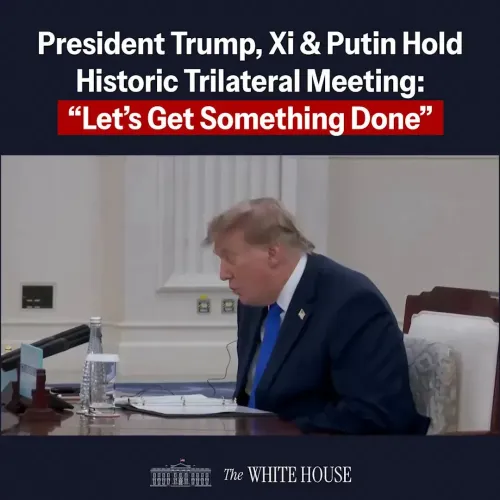
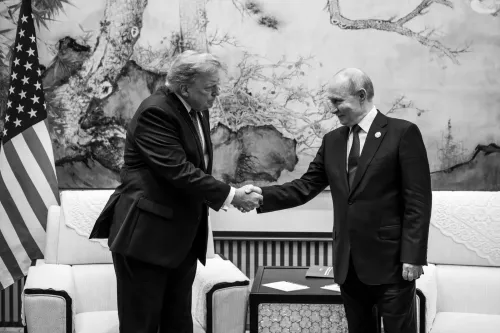
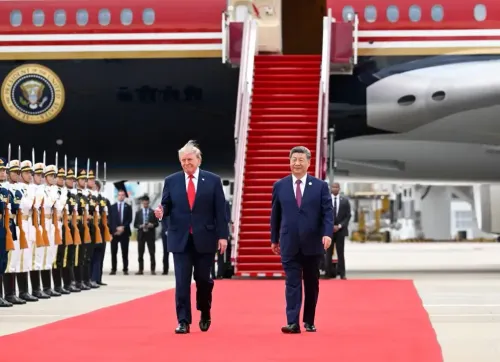
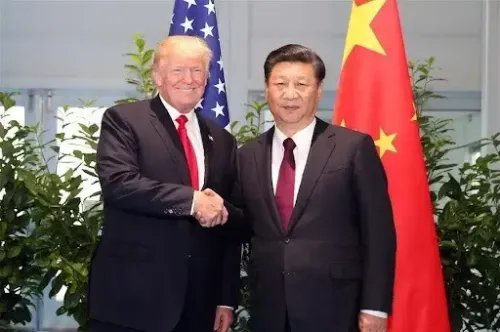
Ahead of the trilateral session, Trump held separate one-on-one meetings with both Putin and Xi. At the opening of his meeting with Xi, Trump identified the Russia-Ukraine war and the fentanyl crisis as areas for potential cooperation, according to White House travelling pool reports. Trump also acknowledged the inherent difficulty of persuading nuclear-armed states to give up their weapons, and argued that refusing dialogue would not resolve international disputes.
Notably, neither Ukraine nor Iran appeared by name in the final joint declaration, which announced no ceasefire, no settlement framework, and no specific diplomatic roadmap for either conflict. This comes amid continued international pressure for a negotiated end to the war in Ukraine.
What Comes Next
The declaration is a statement of intent rather than a binding agreement. Analysts will watch whether the promised nuclear-risk dialogue produces any formal negotiating channel — particularly given that no existing multilateral arms-control treaty covers all three powers simultaneously. The energy supply pledge will be closely tracked by oil-importing nations, while the ICC language is expected to generate debate at the UN General Assembly.
Point of View
Timeline, or treaty — is reassurance theatre, not arms control. The ICC language is telling: by asserting that international judicial bodies 'must not abuse their jurisdiction,' the three leaders appear to be building a collective shield against accountability mechanisms, which will alarm smaller states and human-rights bodies alike. India's conspicuous absence from any mention of UN reform is also significant — it signals that this trilateral has no appetite for expanding the Security Council veto club, even as New Delhi presses its candidacy. The real test of Shenzhen will be whether a formal nuclear-risk negotiating channel materialises, or whether this declaration joins a long line of summit communiqués that generated headlines and little else.
NationPress
19 Nov 2026
Frequently Asked Questions
What was agreed at the Trump-Xi-Putin Shenzhen summit?
The three leaders issued a four-point joint declaration pledging dialogue on reducing nuclear risks and preventing proliferation, committing to UN reform, and outlining plans to increase global refined petroleum supplies. No specific targets, timetables, or binding commitments were announced.
Did the summit produce any agreement on the Ukraine war or Iran?
No. Neither Ukraine nor Iran was named in the final joint declaration, and no ceasefire framework or diplomatic roadmap for either conflict was announced, despite Trump raising the Russia-Ukraine war in his bilateral meeting with Xi.
What did the three leaders say about nuclear weapons?
They reaffirmed that 'a nuclear war cannot be won and must never be fought' and committed to a dialogue on reducing nuclear risks and preventing proliferation. However, the declaration set no arms-reduction targets and outlined no verification mechanism.
What did the declaration say about the UN and the ICC?
The declaration committed the three permanent Security Council members to reforms aimed at making the UN more effective, without identifying specific changes or mentioning Security Council expansion. It also stated that the ICC and similar bodies 'must not abuse their jurisdiction,' without naming any particular case.
Where did the summit take place and what was the broader context?
The trilateral summit was held in Shenzhen, China, on 19 November 2026, on the sidelines of the Asia-Pacific Economic Cooperation (APEC) leaders' summit. Trump also held separate bilateral meetings with Putin and Xi earlier the same day.