CM Himanta Meets Railway Minister, Flags Assam's Full Electrification
Synopsis
Assam Chief Minister Himanta Biswa Sarma met Union Railway Minister Ashwini Vaishnaw on 19 November 2026 to mark Assam's milestone of 100% rail electrification and advocate for suburban services, new tracks, and bridges to drive the state's industrial growth.
Key Takeaways
Assam has achieved 100% broad-gauge rail electrification , up from zero electrified track before 2014 , as part of Indian Railways' nationwide clean-energy drive.
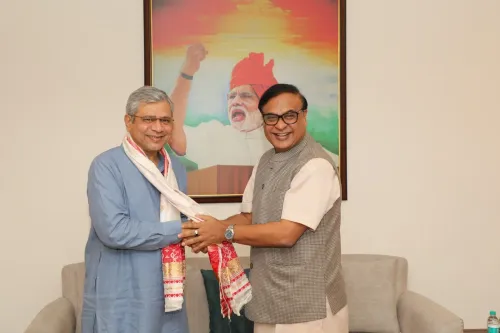
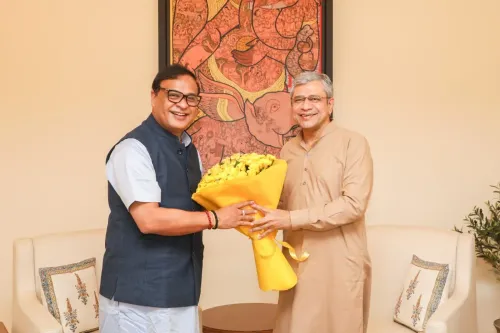
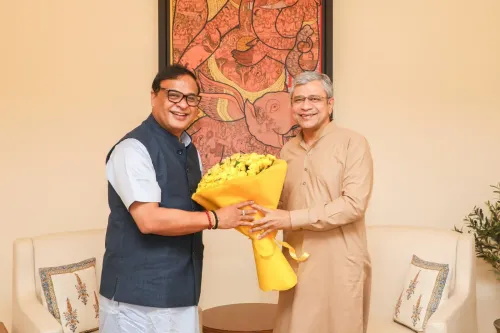
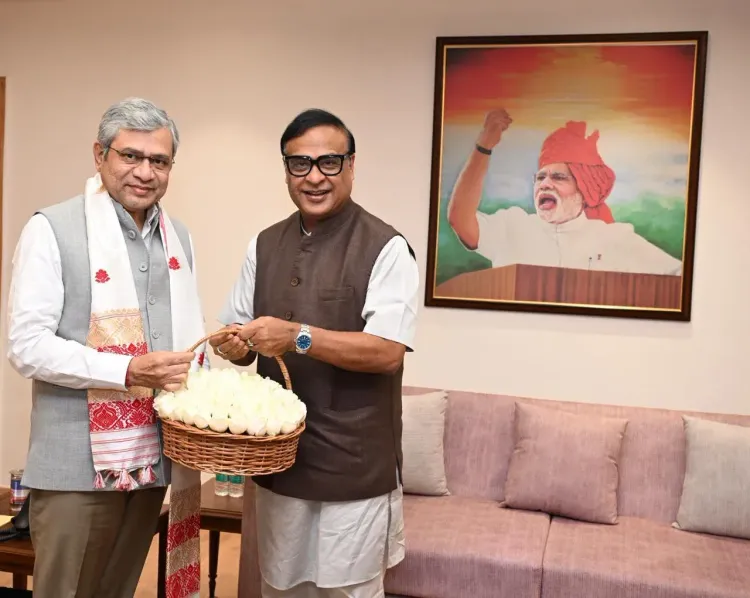
CM Himanta Biswa Sarma called on Railway Minister Ashwini Vaishnaw in person on 19 November 2026 to acknowledge the milestone.
Sarma flagged three priorities for the next phase: suburban rail services , new tracks , and new bridges to support Assam's industrial growth.
The electrification is part of a broader Northeast connectivity push by the central government aimed at reducing logistics costs and integrating the region with national networks.
Vaishnaw's described 'positive approach' signals continued central government engagement on Assam's pending rail infrastructure requests.
From a state with zero electrified track before 2014 to a network running entirely on clean energy today, Assam has crossed a threshold that once seemed decades away — and Assam Chief Minister Himanta Biswa Sarma made sure the man who helped get it there heard it in person.
On Thursday, 19 November 2026, CM Sarma called on Union Railway Minister Ashwini Vaishnaw to formally thank him for the milestone, posting on X: 'From zero electrified track before 2014 to a 100% electric rail network today, Assam is moving on clean energy.' The meeting was both a gesture of acknowledgment and, as Sarma made clear, a down-payment on what comes next.
A Northeast state electrified — what it actually means
Assam's rail story has historically been one of terrain-driven difficulty and chronic under-investment. The state's hilly approaches, the Brahmaputra's floodplains, and the logistical complexity of the Northeast made broad-gauge electrification a slow, expensive proposition. The acceleration after 2014 — driven by Union budgets that set aggressive nationwide electrification targets — changed the pace fundamentally.
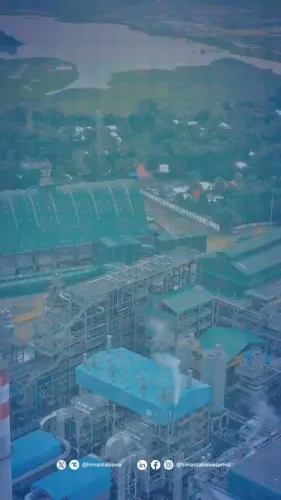
Indian Railways has been executing a multi-year programme to electrify every broad-gauge track in the country, with the dual aim of cutting diesel dependence and lowering freight and passenger logistics costs. For the Northeast, the stakes were higher: isolation from the national electric grid meant energy inefficiency bled into every industry that relied on rail. Full electrification closes that gap.
Sarma's three-part agenda for Vaishnaw
The CM did not come merely to offer thanks. He flagged a concrete pipeline: suburban train services for Assam, construction of new tracks and bridges, and the broader goal of using rail to power the state's industrial growth. These are not abstract wishes — suburban connectivity around Guwahati and other urban centres has been a standing demand, and new bridge infrastructure over the Brahmaputra and its tributaries would open corridors currently dependent on roads.
Sarma described the Railway Minister's response as a 'positive approach' — diplomatic language that signals active engagement rather than a closed door. The timelines for these projects will be the real test of momentum.
The Northeast connectivity arc
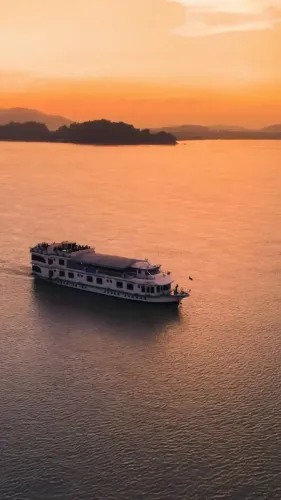
Assam's electrification milestone sits inside a larger strategic frame. The central government's Northeast connectivity push — spanning rail, road, and inland waterways — has been one of the more consistent policy threads of the last decade, with NEDA states like Assam serving as both anchor and beneficiary. For CM Sarma, who convenes the North-East Democratic Alliance (NEDA), visible infrastructure wins carry weight both as governance delivery and as regional political capital.
The transition from diesel to electric rail also aligns with India's broader climate commitments — cleaner traction means lower emissions per tonne-kilometre, a metric that matters as the country defends its infrastructure expansion at international forums.
The electrification is done. The next chapter — suburban lines, new bridges, industrial corridors — is now squarely on the Ministry's desk.
Point of View
While simultaneously locking in momentum for the next tranche of infrastructure asks. The pivot from gratitude to a three-point agenda (suburban services, tracks, bridges) shows Sarma treating electrification as a base, not a ceiling. For the central government, Assam's full electrification is a headline data point in its Northeast integration narrative, useful both domestically and in climate diplomacy. The real policy watch is whether suburban rail around Guwahati moves from aspiration to sanctioned project within this fiscal cycle.
NationPress
19 Nov 2026
Frequently Asked Questions
Has Assam achieved 100% rail electrification?
According to CM Himanta Biswa Sarma's statement on 19 November 2026, Assam's broad-gauge rail network is now fully electrified, compared to zero electrified track before 2014.
Why did Assam CM Himanta Sarma meet Railway Minister Ashwini Vaishnaw?
CM Sarma met Vaishnaw to thank him for Assam's rail electrification milestone and to push for the next phase of projects including suburban train services, new tracks, and bridges.
What are the next railway projects planned for Assam?
CM Sarma has flagged suburban train services, new rail tracks, and new bridges as the priority projects to drive Assam's industrial growth after full electrification.
What is Indian Railways' electrification programme in Northeast India?
Indian Railways has been executing a nationwide programme to electrify all broad-gauge tracks, with the Northeast receiving dedicated focus to reduce logistics costs and integrate the region with national energy and rail networks.
How does rail electrification benefit Assam's economy?
Electric traction is cheaper to operate and lowers per-tonne freight costs, reducing logistics expenses for industries in Assam and enabling cleaner, faster passenger services compared to diesel-powered trains.