CM Fadnavis Reviews 31-km Mumbai Tunnel Road and Uttan–Virar Sea Link
Synopsis
Maharashtra CM Devendra Fadnavis chaired an MMRDA meeting on 19 November 2026, reviewing a proposed 31-km Integrated Tunnel Road System linking BKC, the airport and sea link, alongside a revised Uttan–Virar Sea Link plan to connect Mumbai with Vadhavan port.
Key Takeaways
CM Devendra Fadnavis chaired an MMRDA review meeting on 19 November 2026 covering two major Mumbai infrastructure projects.
The Integrated Tunnel Road System spans approximately 31 kilometres and links the Bandra-Worli Sea Link, BKC, Airport Terminal 2, and the Eastern Express Highway.
Entry and exit points will connect the BKC Bullet Train Station , Dharavi, Mumbai Airport, and both Express Highways.
The revised Bhayandar/Uttan–Virar Sea Link has two alignment options under consideration to establish Mumbai–Vadhavan connectivity.
Both projects are designed to integrate with the planned MMR ring road to reduce travel time across the metropolitan region.
Next steps include alignment finalisation, environmental clearances, and state budget allocations for MMRDA projects.
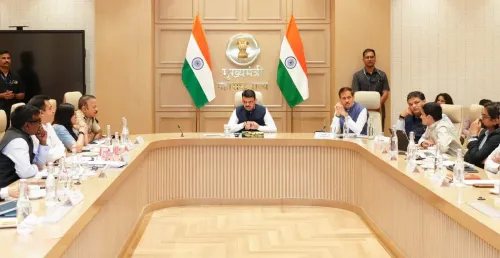
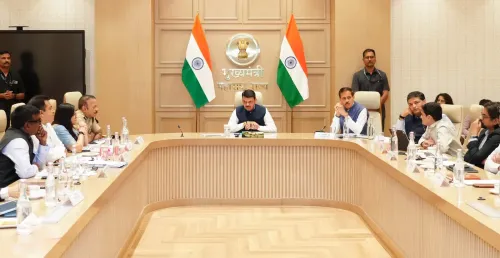
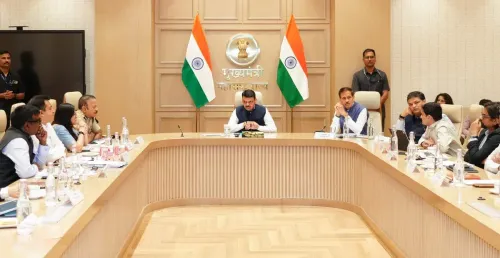
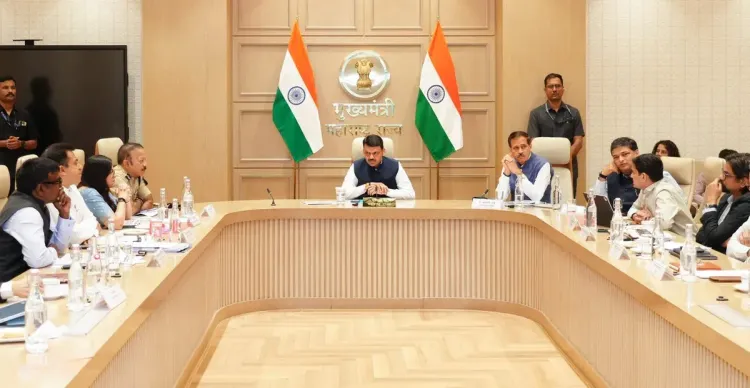
Two projects that could fundamentally rewire how Mumbai moves are now under active review at the highest level of Maharashtra's government. Maharashtra Chief Minister Devendra Fadnavis on Thursday, 19 November 2026, chaired a high-level meeting of the Mumbai Metropolitan Region Development Authority (MMRDA) to assess the progress and alignment options for an Integrated Tunnel Road System and a revised Bhayandar/Uttan–Virar Sea Link connecting Mumbai to Vadhavan.
A 31-km tunnel threading Mumbai's busiest landmarks
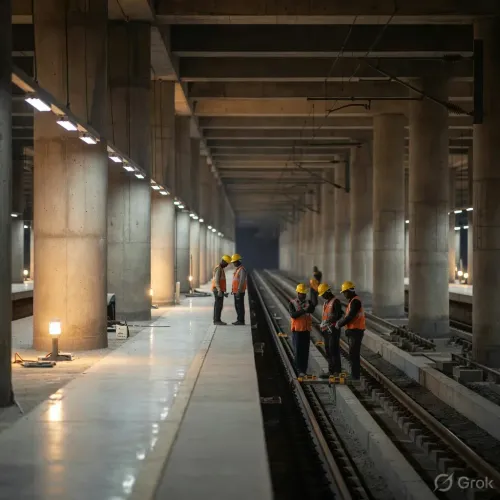
The centrepiece of Thursday's review is a proposed underground corridor of roughly 31 kilometres — one of the longest urban road tunnel systems ever contemplated in India. The route is designed to stitch together four of the city's highest-traffic nodes: the Bandra-Worli Sea Link, Bandra-Kurla Complex (BKC), Chhatrapati Shivaji Maharaj International Airport Terminal 2, and the Eastern Express Highway. Strategically placed entry and exit points will further tie in the BKC Bullet Train Station — the proposed Mumbai stop on the Mumbai-Ahmedabad high-speed rail corridor — Dharavi, and both the Western and Eastern Express Highways.
What makes the plan architecturally ambitious is integration: rather than a single-use bypass, the tunnel is conceived as a connective spine linking surface transit, elevated roads, and future high-speed rail in one underground grid. For the tens of thousands of daily commuters crawling between the airport, BKC, and south Mumbai, the promise is a congestion-cut measured in tens of minutes, not seconds.
The Uttan–Virar sea link and the Vadhavan equation
The second project on the table addresses Mumbai's northern frontier. The Bhayandar/Uttan–Virar Sea Link has been revised, with two alignment options now under consideration to bridge Mumbai and Vadhavan in Palghar district — where a major greenfield port is planned to serve India's growing maritime trade. Fadnavis noted that whichever alignment is chosen, the route will integrate seamlessly with the planned ring road for the broader Mumbai Metropolitan Region, compressing travel time across the MMR's northern arc.
The original Bandra-Worli Sea Link opened in 2009 and immediately became a template for how sea-crossing infrastructure could transform urban commutes. The Uttan–Virar link, if executed, would extend that logic northward at a scale that connects port logistics to city mobility in one stroke.
MMRDA's expanding infrastructure canvas
MMRDA has been the institutional engine behind Mumbai's infrastructure surge — from the coastal road project phases initiated around 2018–2020 to the authority's comprehensive mobility masterplans for integrated transport. Thursday's meeting fits a clear pattern: the Maharashtra government is treating the MMR not as a congested legacy city but as a global financial hub requiring world-class mobility plumbing. Senior MMRDA officials were present at the review, signalling that both projects are past the conceptual stage and moving toward decisions on alignments, environmental clearances, and tendering.
The next critical milestones will be the finalisation of the sea link alignment, environmental impact assessments, and state budget allocations that will determine construction timelines. With the BKC Bullet Train Station anchoring one end of the tunnel system, the project's fate is also quietly linked to the pace of the national high-speed rail programme. Two projects. One city. And a government signalling it intends to build its way out of gridlock.
Point of View
The government is explicitly linking urban road planning to the national high-speed rail agenda — a rare instance of multi-modal integration at the planning stage rather than as an afterthought. The Uttan–Virar Sea Link's connection to Vadhavan port adds a port-logistics dimension that transforms what looks like a commuter project into a freight and trade corridor. If timelines hold, these projects could define Fadnavis's infrastructure legacy in the way the Bandra-Worli Sea Link defined an earlier era of Mumbai governance.
NationPress
19 Nov 2026
Frequently Asked Questions
What is the Mumbai Integrated Tunnel Road System?
It is a proposed underground road corridor of approximately 31 kilometres that will connect the Bandra-Worli Sea Link, BKC, Chhatrapati Shivaji Maharaj International Airport Terminal 2, and the Eastern Express Highway, with links to the BKC Bullet Train Station, Dharavi, and both Express Highways.
What is the Uttan–Virar Sea Link project?
The Bhayandar/Uttan–Virar Sea Link is a revised sea-crossing project with two alignment options aimed at connecting Mumbai with Vadhavan in Palghar district, where a major greenfield port is planned, while also integrating with the MMR ring road.
What is MMRDA and what role does it play in Mumbai's infrastructure?
MMRDA (Mumbai Metropolitan Region Development Authority) is the state body responsible for planning and executing large-scale infrastructure projects across the Mumbai Metropolitan Region, including sea links, tunnels, and metro rail corridors.
How will the tunnel road system benefit Mumbai commuters?
By linking key hubs — the airport, BKC, Bandra-Worli Sea Link, and Express Highways — in a single underground corridor, the system is designed to significantly cut travel time for commuters moving between Mumbai's busiest nodes and reduce surface-level congestion.
What are the next steps for the Mumbai tunnel and sea link projects?
Following the MMRDA review chaired by CM Fadnavis , the critical next steps are finalisation of sea link alignment options, environmental impact assessments, and state budget allocations to fund construction and tendering processes.