CM Pema Khandu meets Galo legislators and GWS on community welfare
Synopsis
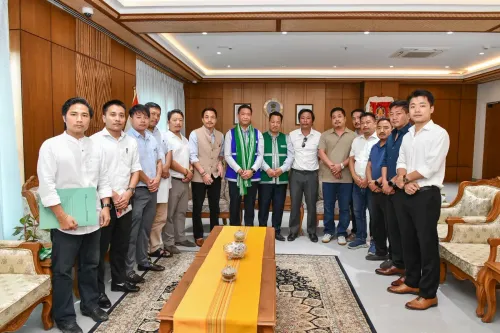
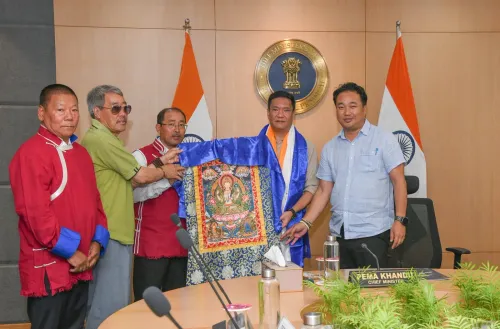
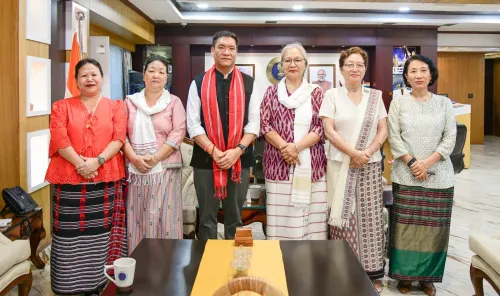
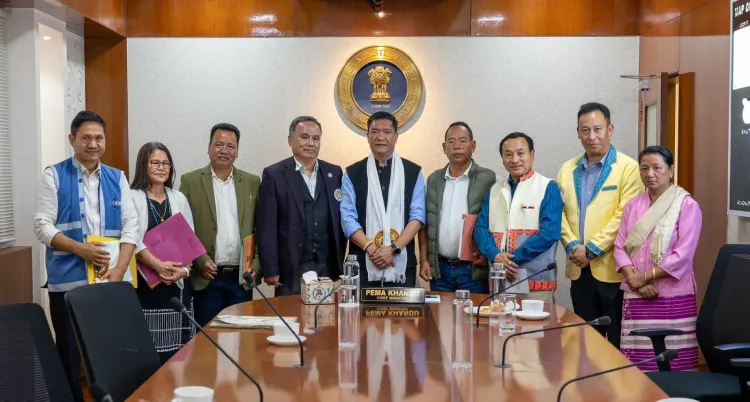
Arunachal Pradesh CM Pema Khandu met Galo legislators, led by Deputy Speaker Kardo Nyigyor, and the Galo Welfare Society on 19 November 2026 to discuss tribal welfare, developmental priorities and community concerns.
Key Takeaways
CM Pema Khandu held a consultation with Galo community legislators and the Galo Welfare Society on 19 November 2026 .
The delegation was led by Deputy Speaker Kardo Nyigyor and included MLAs Nyabi Jini Dirchi, Topin Ete and Tojir Kadu .
Discussions centred on welfare of the Galo community, key developmental priorities and collective problem-solving.
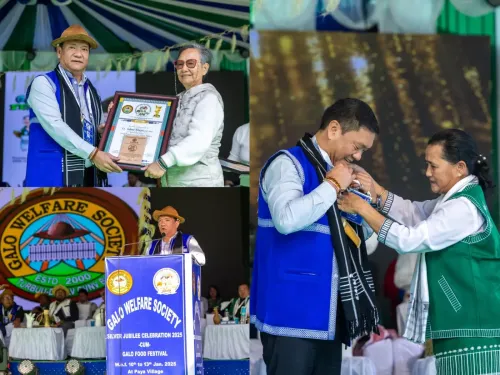
The Galo Welfare Society (GWS) attended alongside elected legislators, reflecting the community's dual civic and political mobilisation.
No specific project announcements were made; follow-up is expected ahead of the next assembly session or state budget.
Arunachal Pradesh Chief Minister Pema Khandu sat down with Galo community legislators and representatives of the Galo Welfare Society (GWS) on Thursday, 19 November 2026, to take stock of developmental priorities and pressing welfare concerns facing one of the state's prominent tribal groups.
The meeting, led by Deputy Speaker Kardo Nyigyor, also brought together MLAs Nyabi Jini Dirchi, Topin Ete and Tojir Kadu — a cross-section of Galo legislative representation that signalled the community's desire to put its concerns directly before the Chief Minister.
Who are the Galo, and why this meeting matters
The Galo are one of Arunachal Pradesh's largest and most organised tribal communities, concentrated primarily in the West Siang and East Siang districts. The Galo Welfare Society functions as the community's principal civic body, channelling grassroots concerns into formal policy dialogue. Having the Deputy Speaker chair the delegation underscores the group's institutional weight inside the state legislature.
Arunachal Pradesh is a mosaic of over 26 major tribes, each with distinct customary laws, territorial interests and development gaps. State governments have long relied on structured consultations between the Chief Minister, tribal legislators and community organisations to translate those differences into actionable scheme priorities — a practice that has become especially important as the state absorbs larger central allocations under schemes tied to border-area infrastructure and tribal welfare.
What was on the table
Khandu described the discussion as covering 'welfare of the Galo community, key developmental priorities and the need to work together to address issues affecting our people.' While no specific projects or fund allocations were announced publicly, the framing — legislators plus a community welfare body in the same room — points to the kind of pre-budget or pre-assembly-session groundwork that typically precedes targeted scheme announcements for tribal areas.
The Galo Welfare Society's presence alongside elected representatives matters: community bodies in Arunachal Pradesh often carry grievances that formal constituency channels miss, from land-use disputes under customary law to gaps in healthcare and road connectivity in remote sub-divisions.
What comes next for Galo areas
The Chief Minister's office will now be watched for follow-up — whether specific development projects for Galo-majority constituencies surface in the next assembly session or find a line in the upcoming state budget. For a region where infrastructure lag and tribal welfare remain live political issues, meetings like this one are rarely ceremonial. They are where the ask gets made, and the response sets the tempo for the year ahead.
Point of View
Where the Chief Minister builds legislative consensus and community buy-in through structured bilateral consultations rather than blanket policy. For Khandu, keeping Galo legislators — who represent constituencies in strategically sensitive border districts — closely aligned with the state government's agenda carries both administrative and political logic. The presence of the Galo Welfare Society signals that the community is not waiting passively for top-down delivery; it is actively lobbying for a seat at the planning table. Watch whether this consultation translates into ring-fenced allocations in the upcoming budget cycle, which would be the clearest measure of its policy weight.
NationPress
19 Nov 2026
Frequently Asked Questions
Who is Pema Khandu and why did he meet the Galo community?
Pema Khandu is the Chief Minister of Arunachal Pradesh and a senior BJP leader. He met Galo legislators and the Galo Welfare Society on 19 November 2026 to discuss the community's welfare needs and key development priorities for Galo-majority areas of the state.
Who is Kardo Nyigyor?
Kardo Nyigyor is the Deputy Speaker of the Arunachal Pradesh Legislative Assembly and a legislator from the Galo community. He led the delegation that met Chief Minister Pema Khandu on 19 November 2026.
What is the Galo Welfare Society?
The Galo Welfare Society (GWS) is the principal civic organisation of the Galo tribe in Arunachal Pradesh. It advocates for the community's development interests and welfare concerns, often engaging directly with the state government.
Where do the Galo tribe live in Arunachal Pradesh?
The Galo community is concentrated primarily in the West Siang and East Siang districts of Arunachal Pradesh and is one of the state's largest and most organised tribal groups.
What issues were discussed in the CM-Galo community meeting?
The meeting covered the welfare of the Galo community, key developmental priorities for Galo-majority areas, and the need for coordinated action to address issues affecting the community. No specific projects or fund allocations were publicly announced.