CM Rekha Gupta launches Delhi's first Mental Health Policy for students
Synopsis
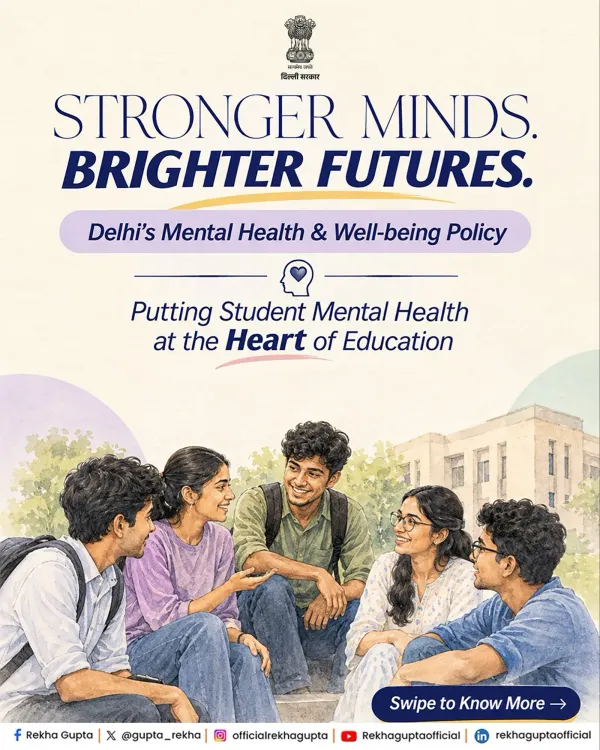
Delhi CM Rekha Gupta launched the city's first dedicated Mental Health and Well-being Policy on 19 November 2026, extending emotional support and counselling coverage to more than 45 lakh students in government schools across the national capital.
Key Takeaways
Delhi's first-ever Mental Health and Well-being Policy was launched by CM Rekha Gupta on 19 November 2026 .
The policy is designed to cover more than 45 lakh (4.5 million) students in Delhi government schools.
Delhi had earlier introduced the Happiness Curriculum in 2018 , but this marks the first standalone mental health policy framework.
India's National Mental Health Policy (2014) had urged states to mainstream mental health into public services including education.
Post-COVID-19 student distress across India accelerated state-level moves to institutionalise school mental health support.
Key implementation details — counsellor recruitment, budget allocation, and referral pathways — remain to be specified for the coming academic session.
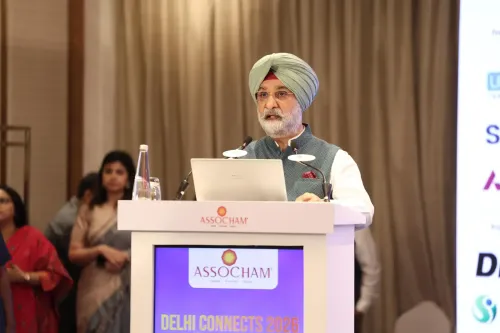
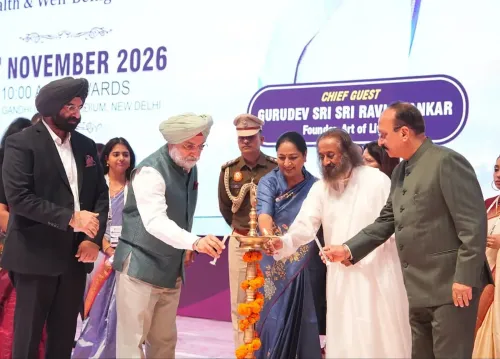
For the first time in Delhi's history, the city's schoolchildren have a dedicated mental health framework looking out for them. Delhi Chief Minister Rekha Gupta announced on Thursday, 19 November 2026, that the capital's first-ever Mental Health and Well-being Policy is now live — covering more than 45 lakh students across government schools in the national capital.
Posting on X, CM Gupta declared: 'What previous governments never even imagined for Delhi's children, we've made a reality! Delhi's FIRST Mental Health and Well-being Policy is LIVE from today, bringing care, confidence and emotional support to 45 lakh+ students.' The announcement, tagged #ViksitDelhi ('Developed Delhi'), frames the policy as a generational shift in how the state treats student welfare — not as an afterthought, but as a formal governance priority.
Why a dedicated policy, and why now?
India's post-pandemic classroom told an uncomfortable story. When schools reopened after COVID-19 lockdowns, educators and parents alike noticed what the data was already signalling: student anxiety, social withdrawal, and learning disruption had become systemic, not incidental. Indian states moved — slowly at first — to build mental health support into their school programmes.
Delhi had a head start of sorts. The city's government schools introduced the Happiness Curriculum in 2018, blending mindfulness, emotional awareness, and reflective exercises into daily school life. That was a cultural nudge. This new policy is a structural commitment — a framework, not just a module.
At the national level, India's National Mental Health Policy, adopted in 2014, called on states to mainstream mental health into public services, including education. Central health initiatives have further encouraged state governments to embed counselling services within government school systems. Delhi's new policy, if implemented at scale, would put the capital at the leading edge of that push.
45 lakh students — and the counsellors who must reach them
The sheer scale is the story's sharpest edge. 45 lakh — that is 4.5 million children — represent one of the largest school-student populations under a single city administration in India. Putting a credible mental health framework around them demands not just a policy document, but trained school counsellors, clear referral pathways, and sustained budget allocation.
Those implementation details — counsellor recruitment numbers, budget lines for the coming academic session, and the specific programme architecture — are what educators and child-welfare advocates will be watching most closely in the weeks ahead. A policy announcement is a promise; the recruitment drive and resource roll-out are the proof.
The political signal behind the launch
The BJP-led Delhi government under CM Gupta has consistently sought to contrast its governance record with the previous administration's education legacy — most visibly associated with the Happiness Curriculum. By elevating mental health from a curriculum elective to a standalone state policy, the government is planting a marker: student well-being is now a headline deliverable, not a footnote. The #ViksitDelhi hashtag reinforces the broader BJP narrative of Delhi as a city being 'built up' under its current stewardship.
India's children have waited long enough for a government to treat their minds with the same urgency as their marks. Delhi has just made the first move — now every stakeholder will be watching to see whether the promise survives contact with the classroom.
Point of View
The Rekha Gupta government is signalling that emotional welfare now carries institutional weight, not just aspirational framing. Politically, the launch serves a dual purpose: it advances the BJP's 'Viksit Delhi' governance narrative while implicitly drawing contrast with the prior administration's approach to education. The real test, however, will be execution — specifically whether Delhi can recruit and deploy enough trained counsellors to serve 4.5 million students at a meaningful ratio.
NationPress
19 Nov 2026
Frequently Asked Questions
What is Delhi's Mental Health and Well-being Policy?
It is Delhi's first dedicated mental health framework for school students, launched by Chief Minister Rekha Gupta on 19 November 2026, aimed at providing care, emotional support, and counselling to over 45 lakh students in government schools.
How many students will benefit from Delhi's new mental health policy?
The policy is intended to cover more than 45 lakh — that is 4.5 million — students enrolled in Delhi government schools.
Who launched Delhi's Mental Health and Well-being Policy?
Delhi Chief Minister Rekha Gupta, leader of the BJP government in the national capital, announced the policy's launch on 19 November 2026.
What was Delhi's earlier mental health or well-being initiative in schools?
Delhi government schools introduced the Happiness Curriculum in 2018, which incorporated elements of mindfulness and emotional well-being. The new policy goes further by establishing a dedicated mental health framework.
What is the national context for state-level school mental health policies in India?
India adopted a National Mental Health Policy in 2014 urging states to integrate mental health into public services. The COVID-19 pandemic intensified student distress nationwide and spurred several states to formalise mental health support within school systems.