CM Bhupendra Patel Reviews Tribal Development in Dahod
Synopsis
Gujarat CM Bhupendra Patel reviewed development works in Dahod's Ratanmahal with district officials on 19 November 2026, directing faster delivery of welfare schemes and acceleration of infrastructure, education, health and water conservation projects in the tribal forest region.
Key Takeaways
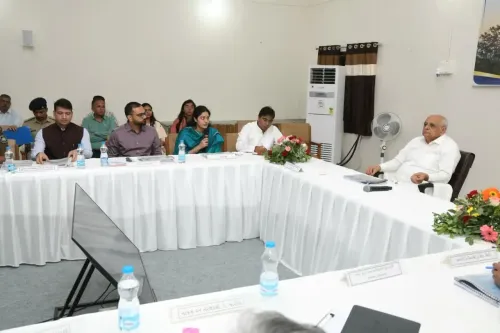
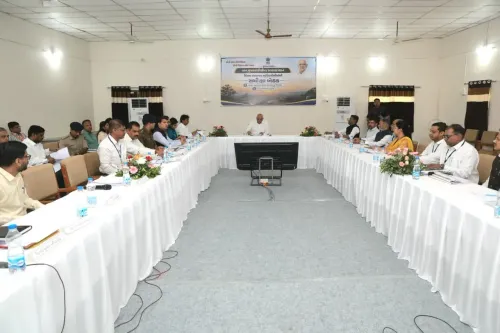
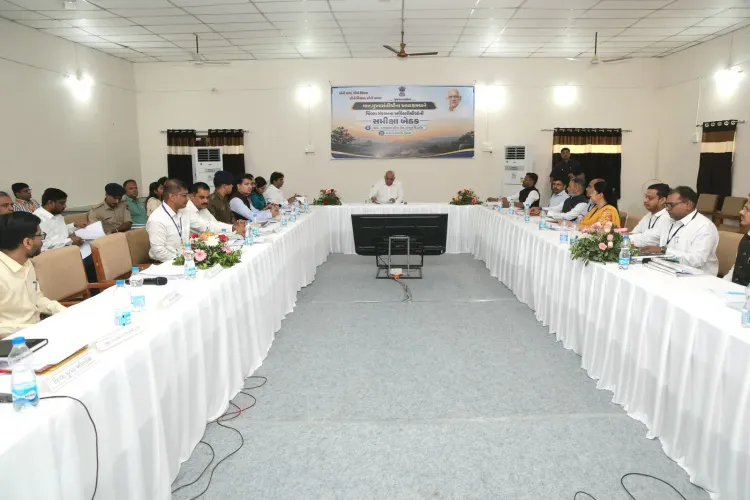
CM Bhupendra Patel chaired a development review meeting at Ratanmahal, Dahod district on 19 November 2026 .
He directed officials to ensure welfare scheme benefits reach the last person in tribal areas on time.
Four priority sectors were identified: infrastructure, education, health, and water conservation in forest areas.
The meeting fits Gujarat's long-standing practice of district-level reviews in tribal eastern districts.
Dahod is a key tribal district in eastern Gujarat with historically uneven access to public services.
The review aligns with the framework of Gujarat's Vanbandhu Kalyan Yojana , launched in 2007 for tribal development.
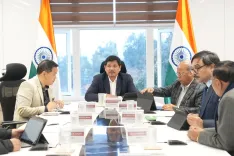
In the forest-edged district of Dahod, Gujarat Chief Minister Bhupendra Patel chaired a development review meeting with district administration officials at Ratanmahal on Thursday, 19 November 2026 — pressing hard on one of the state's most persistent governance challenges: getting welfare benefits to tribal communities at the last mile.
Posting in Gujarati, the Chief Minister stated that he convened the review to ensure that 'આદિજાતિ વિસ્તારના છેવાડાના માનવી સુધી' — 'the last person in the tribal area' — receives government welfare scheme benefits on time. He issued specific directions to accelerate work on infrastructure, education, health, and water conservation across the forest region.
Ratanmahal: Where the forest meets the governance gap
Dahod district sits in eastern Gujarat, home to a dense tribal and forest-dwelling population that has historically faced uneven access to public services. The Ratanmahal area, nestled within this tribal belt, is precisely the kind of terrain where district-level administrative grip matters most — roads run thin, digital connectivity is patchy, and scheme leakages can occur simply through distance.
CM Patel's focus on four pillars — infrastructure, education, health, and water conservation (jalasanchay) — mirrors the architecture of Gujarat's Vanbandhu Kalyan Yojana, launched in 2007, which was designed to channel accelerated investment into tribal districts through a convergent, departmentally coordinated model. The meeting at Ratanmahal fits squarely into that institutional rhythm.
Dahod's place in Gujarat's tribal welfare push
Successive Gujarat administrations have treated districts like Dahod as a test of last-mile governance — the place where policy intent either reaches a family or dissolves in bureaucratic distance. Regular district reviews, where the Chief Minister or senior ministers sit across the table from collectors and line-department heads, are a deliberate accountability mechanism.
By holding the meeting at Ratanmahal rather than the district headquarters, Patel signalled proximity to the ground — a symbolic but pointed administrative choice in a region where physical presence by senior leadership is itself a signal to local machinery.
Water conservation drew explicit mention alongside education and health — a priority sharpened by Dahod's history of monsoon-dependent agriculture and the vulnerability of forest-fringe communities to water stress in lean seasons. Getting jalasanchay works moving faster is both a welfare and a climate-resilience play.
With district-level progress reports now expected to follow, Gujarat's tribal belt is once again under the administrative spotlight — and the people of Ratanmahal are, at least for today, at the centre of the state's attention.
Point of View
Recognising that welfare outcomes in forest-fringe areas are inseparable from environmental resilience. Within Gujarat's BJP playbook, regular tribal-belt reviews serve a dual purpose: genuine administrative pressure and a consistent public signal of inclusive governance ahead of potential electoral cycles. The Vanbandhu Kalyan Yojana's nearly two-decade lineage gives these reviews institutional weight beyond routine optics.
NationPress
19 Nov 2026
Frequently Asked Questions
Why did CM Bhupendra Patel visit Ratanmahal in Dahod?
CM Bhupendra Patel visited Ratanmahal to chair a development review meeting with Dahod district administration officials, with the aim of ensuring timely delivery of welfare scheme benefits to tribal communities and speeding up infrastructure, education, health and water conservation work in the forest region.
What is the Vanbandhu Kalyan Yojana?
The Vanbandhu Kalyan Yojana is a Gujarat government scheme launched in 2007 to accelerate infrastructure, education, health and other facilities in tribal areas of the state, using a convergent departmental model to close development gaps in eastern districts like Dahod.
Where is Ratanmahal located?
Ratanmahal is an area within Dahod district in eastern Gujarat, situated in a tribal and forest region. It is known for its forest wildlife sanctuary and its predominantly tribal population.
What are the development priorities CM Patel outlined for Dahod?
CM Patel directed officials to accelerate work in four areas: infrastructure, education, health, and water conservation (jalasanchay) in the forest and tribal zones of Dahod district.
How significant is Dahod district in Gujarat's tribal welfare efforts?
Dahod is one of Gujarat's most significant tribal districts, with a large adivasi population historically underserved by public services. The state has consistently used it as a focal point for tribal welfare reviews and scheme implementation under programmes like the Vanbandhu Kalyan Yojana.