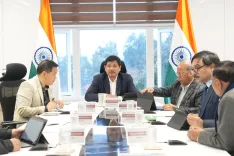
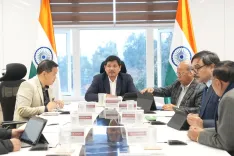
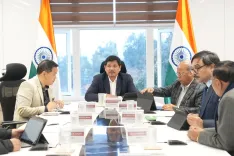
CM Sukhu Launches Health Camp in Nadaun, Screens 2,216 People
Synopsis
Himachal Pradesh CM Sukhvinder Singh Sukhu inaugurated a Jan Swasthya Shivir at Galod in Nadaun, screening 2,216 residents, running 2,000-plus diagnostic tests, and issuing Ayushman cards and ABHA IDs on the spot to cut last-mile access barriers.
Key Takeaways
2,216 people received health check-ups at the Jan Swasthya Shivir at Galod, Nadaun on 19 November 2026 .
893 people were examined by specialists in Ayurveda, Homoeopathy, and Yoga-Naturopathy .
Diagnostic tests were conducted for more than 2,000 residents at the camp.
Nine Ayushman Bharat cards and four ABHA IDs were issued on the spot, removing enrolment hurdles.
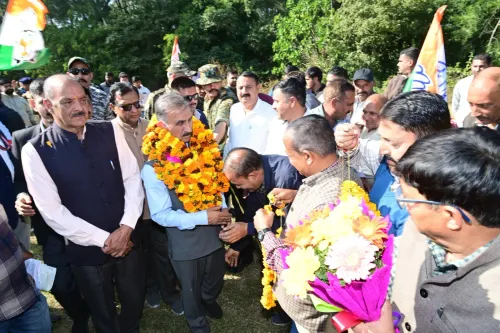
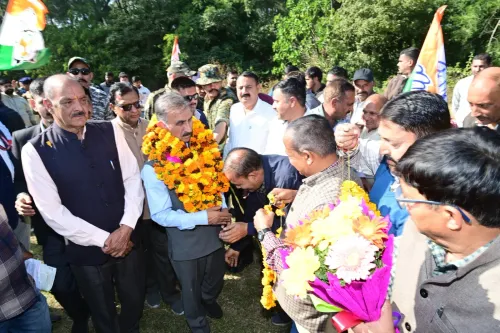
CM Sukhu personally inaugurated the camp in his own Nadaun assembly constituency in Hamirpur district .
The camp combined clinical screening with scheme enrolment, aiming to reduce the need for residents to travel to distant hospitals.
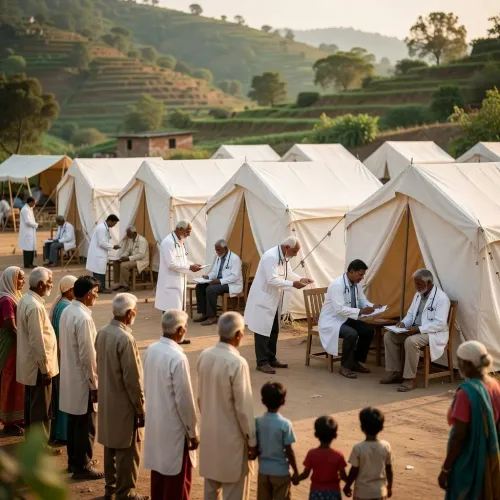
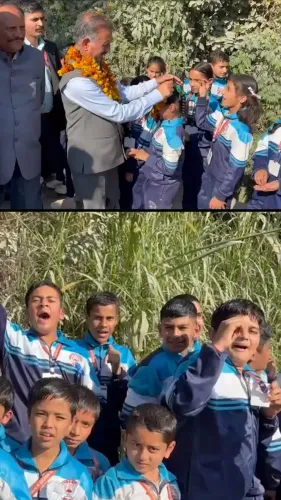
A health camp in a hilly constituency — and over 2,216 residents turning up for check-ups in a single day — signals exactly what Himachal Pradesh Chief Minister Sukhvinder Singh Sukhu had in mind when he personally inaugurated the Jan Swasthya Shivir (public health camp) at Galod in his home constituency of Nadaun on Thursday, 19 November 2026.
Posting on X, CM Sukhu wrote: 'Today I inaugurated a Jan Swasthya Shivir at Galod in my assembly constituency Nadaun. Approximately 2,216 people underwent health examinations. 893 people were examined by experts in Ayurveda, Homoeopathy, and Yoga-Naturopathy. Tests were conducted for more than 2,000 people. Additionally, Ayushman cards for nine people and ABHA IDs for four people were created on the spot. Our constant endeavour has been to make better healthcare facilities available to people close to their homes so they do not have to travel to distant hospitals for treatment.'
What happened at Galod: the numbers that matter
The single-day camp packed in a striking volume of outreach. 2,216 people received health check-ups, while a parallel AYUSH stream — combining Ayurveda, Homoeopathy, and Yoga-Naturopathy specialists — examined 893 individuals separately. Diagnostic tests were run for more than 2,000 residents, covering a broad sweep of the constituency's healthcare needs in one location. On-the-spot enrolment added a welfare dimension to the medical one: nine Ayushman cards and four ABHA IDs were issued at the venue itself, removing the bureaucratic detour that often keeps eligible families from claiming benefits they are legally entitled to.Ayushman and ABHA: the schemes behind the cards
Ayushman Bharat Pradhan Mantri Jan Arogya Yojana, launched in 2018, provides up to ₹5 lakh in annual health insurance coverage per family for secondary and tertiary hospital care — one of the world's largest publicly funded health protection schemes by beneficiary count. The ABHA ID (Ayushman Bharat Health Account), introduced under the national Digital Health Mission, creates a unified digital health record linked across facilities, so a patient's history travels with them regardless of which hospital or clinic they visit next. Issuing both instruments at a village-level camp — rather than requiring beneficiaries to visit a government office or district hospital — is precisely the last-mile model the schemes were designed to enable, but which often stalls in execution.Nadaun's geography and the case for doorstep care
Nadaun is an assembly constituency in Hamirpur district of Himachal Pradesh, the state Sukhu has led since December 2022. Like much of the hill state, its terrain makes routine hospital visits a genuine hardship — distances that look short on a map translate into hours of travel on winding mountain roads. The Chief Minister's stated logic — 'people should not have to travel to distant hospitals for treatment' — is not rhetorical; in a state where specialist facilities are concentrated in a handful of urban centres, mobile multi-disciplinary camps represent a structural workaround. State governments across India regularly deploy such multi-system camps combining allopathic and AYUSH services to extend coverage in geographically challenging areas. What distinguishes this iteration is the dual focus: clinical screening alongside same-day scheme enrolment, compressing what would normally be two separate institutional journeys into one. Whether Himachal Pradesh scales these camps systematically to other constituencies — and whether enrolment and follow-up data are reported transparently — will determine if this is a replicable model or a constituency-level gesture.Point of View
Running this camp in his own constituency adds a visible political dividend to a genuine administrative objective. The AYUSH integration also signals alignment with the Centre's push to mainstream traditional medicine within primary health outreach, even as the Congress-led state government navigates its own relationship with centrally sponsored schemes. The real test is whether Himachal Pradesh converts these single-day events into a documented, state-wide cadence with measurable enrolment and follow-up outcomes.
NationPress
19 Nov 2026
Frequently Asked Questions
What is the Jan Swasthya Shivir launched by CM Sukhu in Nadaun?
The Jan Swasthya Shivir is a public health camp inaugurated by Himachal Pradesh CM Sukhvinder Singh Sukhu at Galod in Nadaun on 19 November 2026, where 2,216 people were screened, over 2,000 tests were conducted, and Ayushman cards and ABHA IDs were issued on the spot.
How many people were examined at the Nadaun health camp?
Approximately 2,216 people underwent health examinations at the camp. Of these, 893 were specifically examined by experts in Ayurveda, Homoeopathy, and Yoga-Naturopathy, and diagnostic tests were run for more than 2,000 residents.
What is an Ayushman card and who can get one?
An Ayushman card is issued under Ayushman Bharat Pradhan Mantri Jan Arogya Yojana, which provides up to ₹5 lakh in annual health insurance coverage to economically vulnerable families for secondary and tertiary hospital care. At the Nadaun camp, nine cards were issued on site.
What is an ABHA ID and why does it matter?
An ABHA ID (Ayushman Bharat Health Account) is a digital health identity created under India's National Digital Health Mission. It links a person's health records across facilities so their medical history is accessible at any registered provider. Four ABHA IDs were created at the Nadaun camp.
Where is Nadaun constituency and why does healthcare access matter there?
Nadaun is an assembly constituency in Hamirpur district of Himachal Pradesh. Like much of the hill state, its terrain makes travel to specialist hospitals time-consuming and difficult, making doorstep health camps particularly significant for residents.