CM Conrad Sangma Revamps Meghalaya Police Recruitment Rules
Synopsis
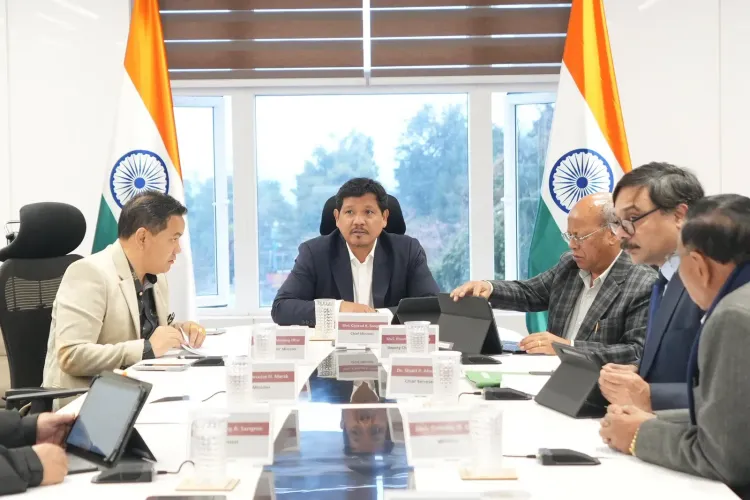
Meghalaya CM Conrad Sangma announced Cabinet approval of revised Uniform Guidelines for police recruitment and a reconstituted Central Recruitment Board with wider regional and technical representation. Around 2,000 new Meghalaya Police vacancies are expected to be advertised shortly, following ~3,000 hires last year.
Key Takeaways
The Meghalaya Cabinet has approved revised Uniform Guidelines for Recruitment of Police Personnel .
The Central Recruitment Board (CRB) has been reconstituted with new members from the Eastern and Western Ranges , plus technical members.
Revised guidelines streamline registration fees , physical examinations , and examination centres for greater transparency.
Approximately 3,000 police personnel were recruited in the year prior to this announcement.
Around 2,000 additional Meghalaya Police vacancies are expected to be advertised shortly.
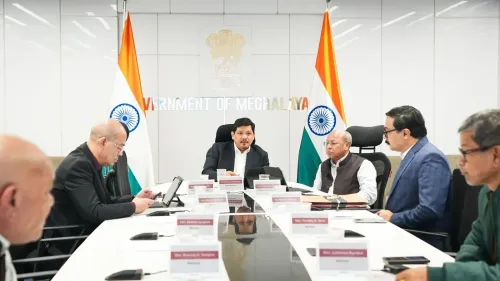
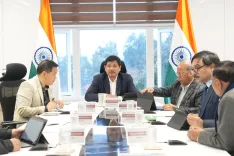
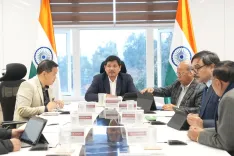
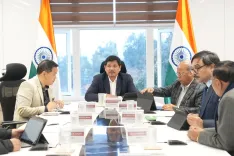
Meghalaya's police force is about to get a significant infusion of new personnel — and the rules governing how they are picked have just been overhauled. Meghalaya Chief Minister Conrad Sangma announced on Thursday, 19 November 2026 that the state Cabinet has approved revised Uniform Guidelines for the recruitment of police personnel, alongside a reconstitution of the Central Recruitment Board (CRB) that will oversee the process.
A Bigger Board, a Broader Mandate
The reconstituted CRB now includes additional members drawn from different ranges across the state — specifically the Eastern and Western Ranges — as well as technical members. The intent, as CM Sangma outlined, is to make the recruitment process 'more participatory and comprehensive,' distributing decision-making beyond a narrow central body and anchoring it in regional representation. In a state whose geography stretches across distinct hill ranges and administrative zones, that territorial spread in the board's composition is more than symbolic.
Streamlined Rules: Fees, Physical Tests, Exam Centres
Beyond the board's composition, the revised guidelines tighten the procedural architecture of recruitment itself. The updated framework now specifically addresses registration fees, physical examination standards, and the distribution of examination centres — the three flashpoints where recruitment processes in Indian states have historically drawn the sharpest scrutiny. Standardising these elements across the board is a direct move toward the transparency and efficiency that police recruitment reforms in the Northeast have long promised but inconsistently delivered.
~2,000 Vacancies Coming — After 3,000 Hired Last Year
The timing matters. Following the recruitment of approximately 3,000 police personnel in the preceding year, CM Sangma confirmed that around 2,000 additional vacancies for Meghalaya Police are expected to be advertised shortly. That back-to-back recruitment cycle — if executed on schedule — would represent one of the more sustained expansions of the state's police strength in recent memory. For the thousands of young aspirants across Meghalaya's hills, the advertisement of those vacancies is now the moment to watch.
Across India's Northeast, states have been steadily strengthening police capacities in response to both border security demands and internal law-and-order pressures. Meghalaya's move to reform its recruitment architecture before advertising the next batch of vacancies signals a deliberate sequencing: get the rules right first, then open the gates.
Point of View
Sustained police expansion also carries a political dividend: in a state where youth unemployment is a live concern, large-scale government recruitment is tangible proof of delivery. The broadening of the CRB to include Eastern and Western Range members further signals an effort to defuse perennial Northeast anxieties about centralised, opaque hiring. Whether the promised 2,000 vacancies are notified on schedule will be the real test of this reform's credibility.
NationPress
19 Nov 2026
Frequently Asked Questions
What changes has Meghalaya made to police recruitment rules?
The Meghalaya Cabinet approved revised Uniform Guidelines for the recruitment of police personnel, covering registration fees, physical examination standards, and examination centres to make the process more transparent and efficient.
What is the Central Recruitment Board (CRB) in Meghalaya?
The Central Recruitment Board is the body that oversees police personnel recruitment in Meghalaya. It has been reconstituted to include additional members from the Eastern and Western Ranges as well as technical members, broadening its representation.
How many Meghalaya Police vacancies are expected to be advertised?
Approximately 2,000 additional vacancies for Meghalaya Police are expected to be advertised shortly, following the recruitment of around 3,000 personnel in the previous year.
Who announced the Meghalaya police recruitment reform?
Chief Minister Conrad Sangma announced the Cabinet approval of the revised recruitment guidelines and CRB reconstitution on 19 November 2026.
Why is Meghalaya expanding its police force?
Meghalaya is conducting back-to-back large-scale police recruitment drives to strengthen its law-and-order capacity, consistent with a broader Northeast India pattern of building state police strength amid border security and internal security needs.