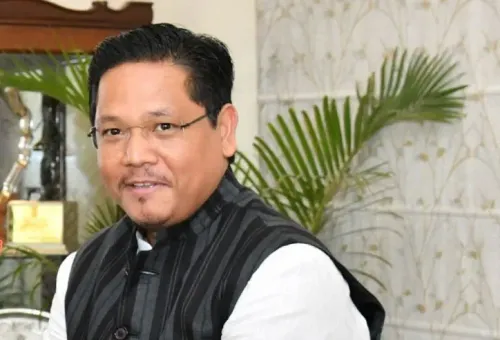
Meghalaya CM Conrad Sangma pushes for outcome-driven, tech-led policing
Synopsis
Meghalaya CM Conrad Sangma told senior police officers bluntly: recruiting 3,900 personnel means nothing if crime hasn’t fallen. At the SSP–COs Conference 2026 in West Garo Hills, he proposed a joint review mechanism linking the CM’s Office, Home Department, and DGP to drive time-bound decisions — a structural push to make accountability measurable, not ceremonial.
Key Takeaways
Chief Minister Conrad K.
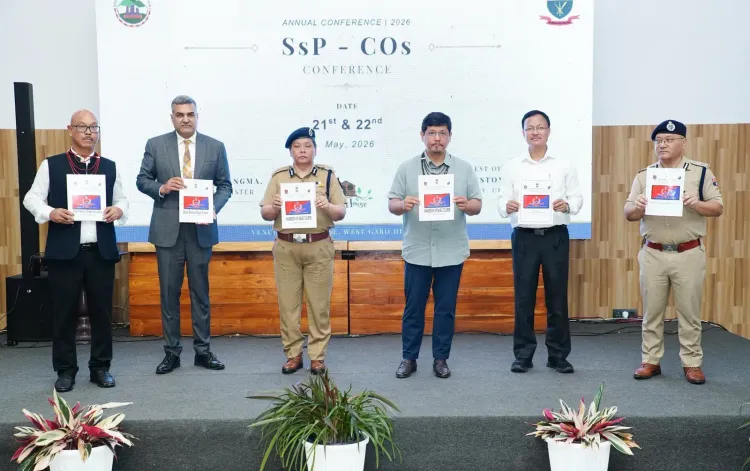
Sangma addressed the SSP–COs Conference 2026 at the Tree House, West Garo Hills on 21 May 2026 .
He stated that recruiting 3,900 personnel is not an achievement unless crime reduction and public safety improve.
Sangma proposed a joint review mechanism involving the CM’s Office, Home Department, DGP, and the concerned Minister for time-bound decisions.
Long-pending issues including National Pension System (NPS) concerns were flagged as not having reached the government in a structured manner.
Officers were directed to undergo training in behavioural sciences , intelligence gathering , and technology adoption , with exposure visits proposed to Maharashtra and Delhi .
Presentations covered cybercrime response , anti-narcotics initiatives , personnel management reforms, and infrastructure proposals.
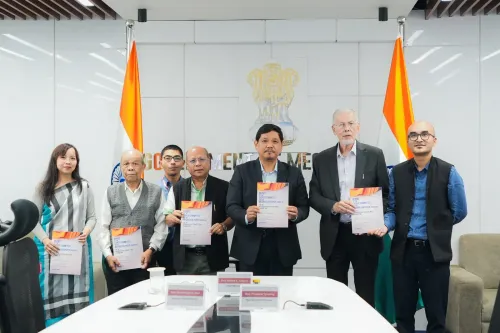
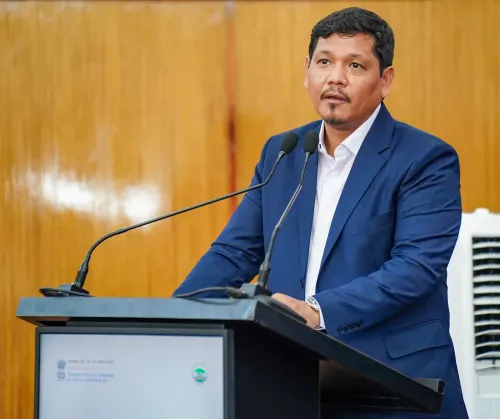
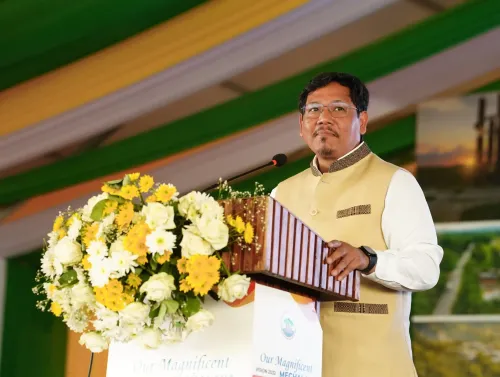
Meghalaya Chief Minister Conrad K. Sangma on Thursday, 21 May 2026 called for a fundamental shift in how the state measures policing success, asserting that recruitment numbers and infrastructure expansion are secondary to tangible outcomes such as reduced crime, saved lives, and improved public safety. He made these remarks while addressing the Senior Superintendents of Police and Commandants of Police (SSP–COs) Conference 2026 held at the Tree House in West Garo Hills district.
Key Remarks by the Chief Minister
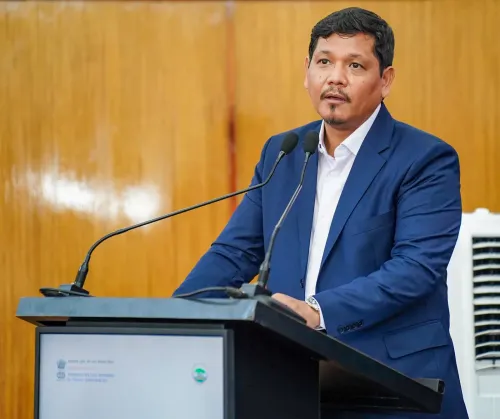
“Recruiting 3,900 personnel is not an achievement in itself. The real achievement is whether crime has reduced, lives have been saved, and public safety has improved,” Chief Minister Sangma told senior officers of the Meghalaya Police at the conference.
He stressed that policing must stay anchored to core priorities — law and order, crime prevention, and public safety — while building stronger institutional mechanisms, investing in continuous training, and accelerating the adoption of technology across the force.
Institutional Reforms and Communication Gaps
Sangma welcomed the regular conduct of the SSP–COs Conference, calling it a meaningful institutional improvement. He thanked State Director General of Police (DGP) I. Nongrang for ensuring these conferences are now held consistently, noting that irregular interactions in previous years had created communication gaps that hampered departmental functioning and decision-making.
“The first step is to create a platform where issues can be openly expressed. That itself is the beginning of finding solutions,” the Chief Minister said, urging field-level officers to raise concerns candidly.
He directed that all presentations and issues raised during the conference be compiled and submitted to his office for detailed review.
Proposed Joint Review Mechanism
Chief Minister Sangma proposed a joint review mechanism involving the Chief Minister’s Office, the Home Department, the DGP, and the concerned Minister to enable time-bound decisions on key policing and administrative matters. He noted that certain long-pending issues — including concerns related to the National Pension System (NPS) — had not previously reached the government’s attention in a structured manner.
Training, Exposure Visits, and Technology Adoption
The Chief Minister underscored the need for continuous training in behavioural sciences, intelligence gathering, law and order management, and technology adoption. He suggested exposure visits for officers to states such as Maharashtra and Delhi to study best policing practices and modern operational systems.
The conference also featured detailed presentations by senior officers including Inspector General of Police (CID) A. Goenka, DIG (Administration) J.G. Momin, and IGP (Law and Order) D.N.R. Marak, covering law and order management, cybercrime response systems, personnel management reforms, amendment of Meghalaya Police Service rules, anti-narcotics initiatives, and infrastructure proposals.
What Comes Next
With a structured joint review mechanism now proposed and conference proceedings to be submitted to the Chief Minister’s Office, Meghalaya’s policing reforms are set to move from deliberation to time-bound implementation. The emphasis on measurable outcomes signals a shift from input-based accountability to results-driven governance in the state’s law enforcement framework.
Point of View
Bypassing the bureaucratic insulation that often shields underperformance. The real test, however, is whether this mechanism is institutionalised or remains a conference-room commitment. Meghalaya’s policing challenges — from border management to narcotics — demand sustained structural reform, not periodic review cycles that produce reports without consequences.
NationPress
19 Sept 2026
Frequently Asked Questions
What did Meghalaya CM Conrad Sangma say at the SSP–COs Conference 2026?
Chief Minister Conrad K. Sangma called for outcome-oriented, technology-driven, and citizen-centric policing at the SSP–COs Conference 2026 in West Garo Hills on 21 May 2026. He said the real measure of success is reduced crime and improved public safety, not recruitment numbers or infrastructure expansion.
What is the joint review mechanism proposed by CM Sangma?
Sangma proposed a joint review mechanism involving the Chief Minister’s Office, the Home Department, the DGP, and the concerned Minister to facilitate time-bound decisions on key policing and administrative issues. The aim is to ensure that field-level concerns and long-pending matters are resolved in a structured, accountable manner.
Why did CM Sangma highlight the National Pension System at the conference?
Sangma noted that NPS-related concerns raised by police personnel were among the long-pending matters that had not previously reached the government in a structured manner. He cited this as evidence of the communication gaps that the SSP–COs Conference mechanism is designed to address.
What training and exposure initiatives did CM Sangma recommend for Meghalaya Police?
He recommended continuous training in behavioural sciences, intelligence gathering, law and order management, and technology adoption. He also suggested exposure visits for officers to Maharashtra and Delhi to study best policing practices and modern operational systems.
Which senior officers presented at the SSP–COs Conference 2026?
Detailed presentations were made by Inspector General of Police (CID) A. Goenka, DIG (Administration) J.G. Momin, and IGP (Law and Order) D.N.R. Marak, covering areas including cybercrime response, anti-narcotics initiatives, and personnel management reforms.