CM Pema Khandu meets APWWS, lauds women's grassroots seva
Synopsis
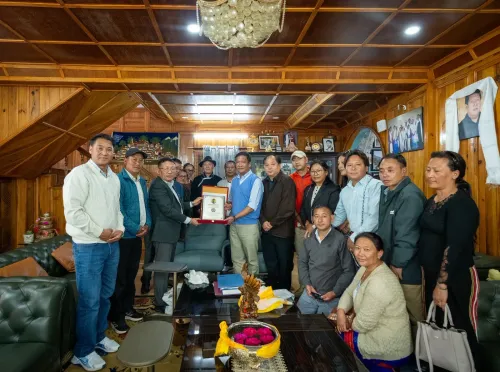
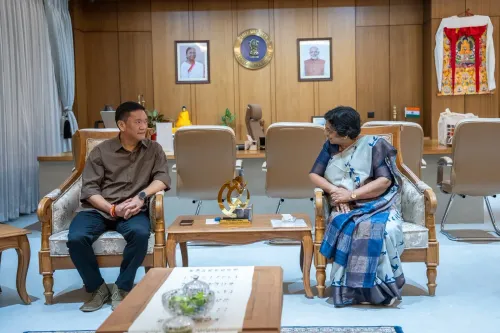
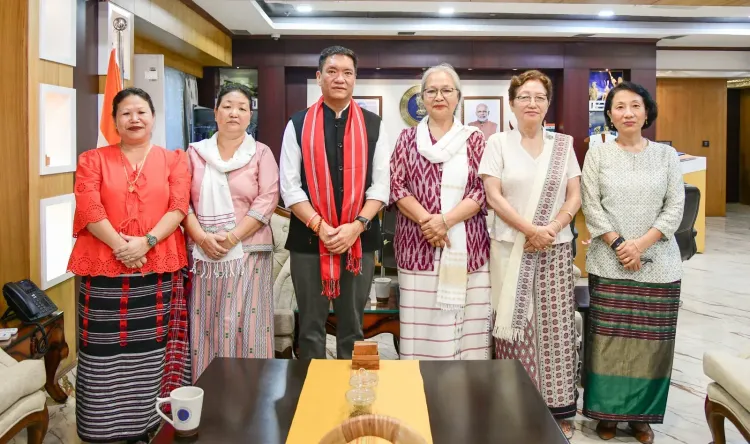
Arunachal Pradesh Chief Minister Pema Khandu met members of the Arunachal Pradesh Women Welfare Society on 29 May 2026, publicly commending their years of quiet grassroots service and calling their spirit of selfless work 'real seva bhaav'.
Key Takeaways
CM Pema Khandu met members of the Arunachal Pradesh Women Welfare Society (APWWS) on 29 May 2026 .
Khandu described the members as 'incredible women' doing 'truly remarkable' work for welfare and empowerment.
He praised the organisation's ethos as 'real seva bhaav ' — selfless, ground-level service spanning years.
The APWWS is a longstanding civil society group working across Arunachal Pradesh 's predominantly tribal districts.
The meeting aligns with the BJP government's broader emphasis on grassroots organisations complementing official welfare schemes such as Beti Bachao Beti Padhao .
Potential follow-up announcements on state funding or formal partnerships may emerge at the next assembly session or budget presentation.
Arunachal Pradesh Chief Minister Pema Khandu on Friday, 29 May 2026, met members of the Arunachal Pradesh Women Welfare Society (APWWS), praising the organisation's years of quiet, ground-level work for women's welfare and empowerment across the state.
Context
Posting on X after the meeting, CM Khandu described the APWWS members as 'incredible women' and said their work reflected 'real seva bhaav' — a spirit of selfless service. He extended his compliments and best wishes to the entire APWWS team for their 'continued service and commitment to the people.'
The APWWS is a longstanding civil society organisation operating at the grassroots level in Arunachal Pradesh, focused on social support, welfare outreach, and empowerment of women across the state's predominantly tribal districts.
Policy Backdrop
Women in Arunachal Pradesh face a distinct set of socio-economic challenges, shaped by the state's remote terrain, tribal social structures, and limited access to formal institutions. Civil society groups like the APWWS have historically filled critical gaps where state machinery has found it difficult to reach.
At the national level, the Beti Bachao Beti Padhao scheme, launched in 2015, set the policy tone for gender-inclusive governance, encouraging state governments to actively partner with non-governmental and community-based organisations to extend welfare reach. Successive Arunachal Pradesh administrations have followed this model, engaging NGOs as delivery partners in remote districts.
The BJP government's broader emphasis on seva-oriented governance — positioning grassroots volunteer organisations as co-contributors to public welfare — provides the ideological frame within which CM Khandu's public recognition of the APWWS sits.
Stakeholders and Impact
The primary beneficiaries of APWWS's work are women across Arunachal Pradesh's tribal communities, particularly in districts where access to state-run welfare services remains uneven. By operating at the village and community level, the society bridges the gap between government programmes and the women they are designed to serve.
Civil society groups in the Northeast have long served as crucial intermediaries, and public endorsement from a sitting Chief Minister carries practical weight — it can open doors to state funding, formal partnerships, and greater visibility for the organisation's work during budget and assembly sessions.
What's Next
The meeting could be a precursor to formal institutional engagement. Observers will watch the next Arunachal Pradesh assembly session and state budget presentation for any announcements on funding allocations or structured partnerships with the APWWS or similar civil society bodies.
More broadly, the Chief Minister's public recognition of the organisation signals that grassroots women's welfare groups in the Northeast are likely to feature more prominently in the state government's outreach and governance narrative in the months ahead.
Point of View
Lending ideological coherence to what might otherwise read as a routine civil society engagement. In the Northeast, where the state's administrative reach is uneven, publicly elevating grassroots women's organisations also serves a practical purpose — it signals to potential partners and donors that such groups carry official goodwill. The timing, ahead of what could be a budget cycle, raises the possibility that this recognition may translate into formal funding or programmatic collaboration. More broadly, it reflects a pattern of state-level BJP governments investing political capital in women-centric civil society as a complement to centrally sponsored schemes.
NationPress
13 Oct 2026
Frequently Asked Questions
What is the Arunachal Pradesh Women Welfare Society (APWWS)?
The APWWS is a longstanding civil society organisation in Arunachal Pradesh that works at the grassroots level on welfare, social support, and empowerment of women, particularly in the state's tribal districts.
Why did CM Pema Khandu meet APWWS members?
CM Pema Khandu met APWWS members on 29 May 2026 to acknowledge their years of grassroots work for women's welfare and empowerment, publicly commending what he called their 'real seva bhaav' — spirit of selfless service.
What is 'seva bhaav' and why did CM Khandu use the term?
'Seva bhaav' is a Hindi phrase meaning a spirit of selfless service or devotion to serving others. CM Khandu used it to describe the APWWS's commitment to quiet, sustained grassroots work for women across Arunachal Pradesh.
What women welfare schemes are active in Arunachal Pradesh?
At the national level, the Beti Bachao Beti Padhao scheme launched in 2015 supports women's welfare and education. In Arunachal Pradesh, civil society groups like APWWS complement these official programmes by working directly in remote tribal communities.
Could the APWWS receive state government funding after this meeting?
No formal funding announcement has been made, but observers note that such public recognition from a Chief Minister can open pathways to state partnerships or budget allocations, which may be announced at the next Arunachal Pradesh assembly session.