CM Pema Khandu Chairs Cabinet Meet Focused on People's Welfare
Synopsis
Arunachal Pradesh Chief Minister Pema Khandu chaired a cabinet meeting on June 16, 2026, reaffirming that all government decisions are anchored in the welfare of the state's people. No specific agenda items were disclosed publicly ahead of an official release.
Key Takeaways
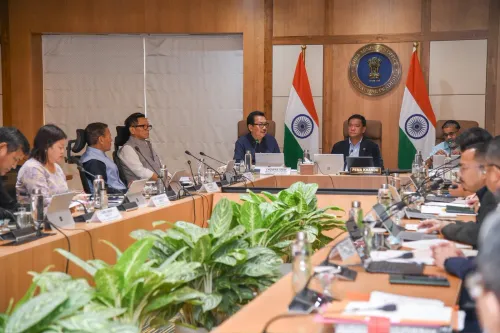
CM Pema Khandu chaired a cabinet meeting on June 16, 2026 in Arunachal Pradesh .
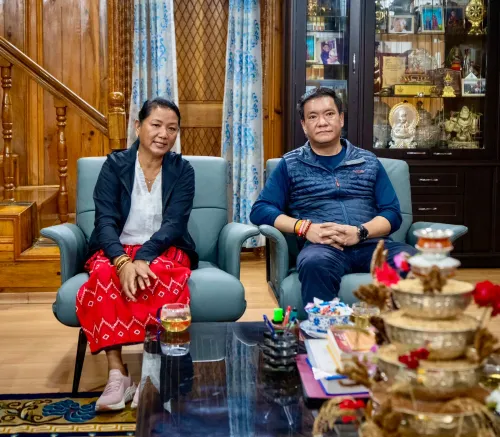
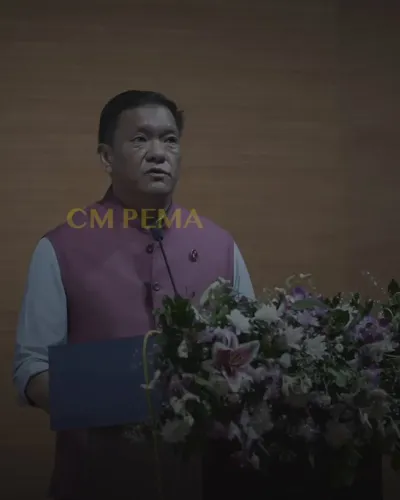
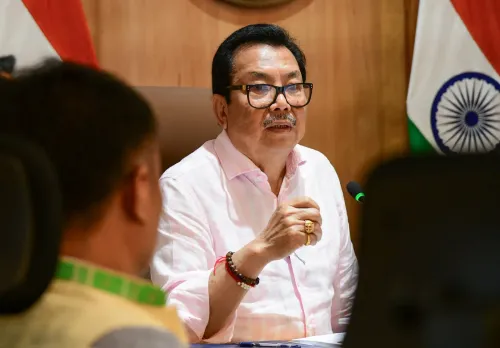
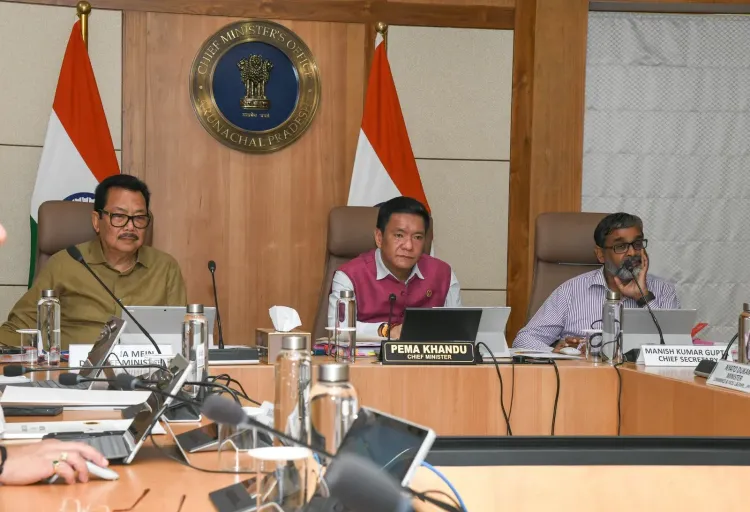
Khandu stated that every cabinet decision is guided by 'what is best for the people of Arunachal Pradesh.' The post was accompanied by four images from the meeting but did not detail specific decisions taken.
Pema Khandu has served as Chief Minister since July 2016 under the BJP .
Formal details of cabinet decisions are expected via official state government channels.
Arunachal Pradesh borders China and Myanmar , making its governance decisions strategically significant at the national level.
Arunachal Pradesh Chief Minister Pema Khandu on Tuesday, June 16, 2026, announced the conclusion of another cabinet meeting, reaffirming that every decision taken by his government is guided by the welfare of the people of Arunachal Pradesh.
Context
Posting on X alongside four images from the meeting, CM Khandu stated: 'Every decision we take is guided by one principle, what is best for the people of Arunachal Pradesh.' The brief but pointed message underscores a governance posture that the chief minister has consistently projected since assuming office in July 2016. Cabinet meetings in the state are held periodically to review and approve proposals spanning infrastructure, welfare, and administrative matters.
The post did not detail specific agenda items or decisions taken during the session, which is consistent with the pattern of high-level communication from state governments ahead of formal official releases.
Policy Backdrop
Pema Khandu became the Chief Minister of Arunachal Pradesh after the state government shifted support to the Bharatiya Janata Party (BJP) in 2016. Since then, the state administration has aligned its policy priorities with central government initiatives, particularly those focused on connectivity, border infrastructure, and welfare delivery in the Northeast.
Arunachal Pradesh, which shares borders with China and Myanmar, has been a focal point of national strategic and developmental attention. Cabinet decisions in the state frequently intersect with centrally-sponsored schemes aimed at accelerating growth in the northeastern region. The BJP-led government at the Centre has made northeast development a stated priority since 2014, and state cabinets like Arunachal Pradesh's serve as key implementation nodes for these programmes.
Stakeholders and Impact
The primary stakeholders of any cabinet decision in Arunachal Pradesh are its residents — a population spread across challenging terrain with ongoing needs in connectivity, healthcare, education, and livelihoods. Local administrative bodies are also key actors in translating cabinet approvals into on-ground delivery.
Routine cabinet communications of this nature signal to constituents and party workers that the government remains active and deliberate in its decision-making. For a state with a complex administrative geography, visible governance signalling carries political as well as administrative weight.
What's Next
Formal details of the decisions taken in the June 16 cabinet meeting are expected to be released through official state government channels, including possible announcements at the next state assembly session or through departmental orders. Observers tracking Arunachal Pradesh's development trajectory will watch for any new scheme approvals, budget reallocations, or infrastructure project clearances that emerge from this session.
As the state continues to navigate its dual role as a frontier region and a development priority under national policy, cabinet decisions carry implications well beyond routine administration — shaping how central funds and mandates are localised for the state's diverse communities.
Point of View
Deliberately light on specifics ahead of formal announcements. It fits a broader BJP pattern in the Northeast of projecting administrative diligence while keeping policy details within official channels. For a frontier state like Arunachal Pradesh, where development spending and central coordination are politically sensitive, such communication also serves to reassure constituents of continued governmental attention. The real test, as always, will be in the specifics that emerge from official releases following the session.
NationPress
20 Sept 2026
Frequently Asked Questions
What was decided in the Arunachal Pradesh cabinet meeting on June 16 2026?
Chief Minister Pema Khandu confirmed the cabinet met on June 16, 2026, but specific decisions were not publicly disclosed at the time of the announcement. Official details are expected through state government channels.
How often does the Arunachal Pradesh cabinet meet?
The Arunachal Pradesh cabinet meets periodically to review and approve proposals on infrastructure, welfare, and administration, though there is no fixed public schedule for each session.
What are the key policy priorities of the Arunachal Pradesh government?
The Arunachal Pradesh government under Pema Khandu has focused on connectivity, border infrastructure, and welfare delivery, aligning with central government initiatives for the Northeast region.
Why is Arunachal Pradesh significant for national policy?
Arunachal Pradesh shares borders with China and Myanmar, making it a strategic frontier state. It is a priority for national development programmes targeting the Northeast, and its governance decisions carry both developmental and strategic implications.