CM Fadnavis: Mumbai Metro 3 crosses 8 crore rides
Synopsis
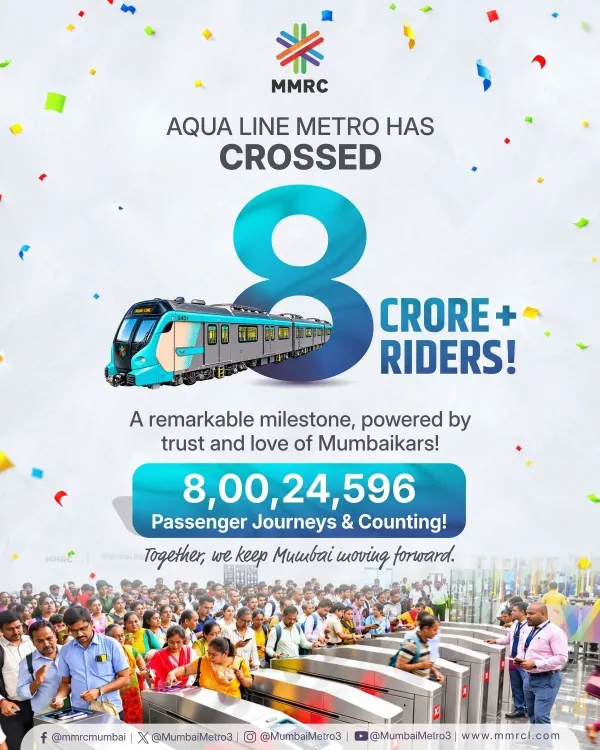
Maharashtra CM Devendra Fadnavis celebrated Mumbai Metro Line 3's Aqua Line surpassing 8 crore rides, calling the milestone proof that the underground corridor is transforming daily commutes across India's financial capital.
Key Takeaways
Mumbai Metro Line 3 (Aqua Line) has crossed 8 crore rides , according to CM Devendra Fadnavis's post on 19 November 2026 .
The line runs underground from Colaba to SEEPZ , operated by the Mumbai Metro Rail Corporation (MMRC) .
The project was backed by Central government support and JICA funding secured in the mid-2010s.
Mumbai's metro master plan including Line 3 dates to city mobility planning from the mid-2000s .
The Aqua Line is intended to integrate with Mumbai's broader metro network and existing suburban rail grid.
The ridership milestone underlines the state's push for sustainable, low-emission urban transport in India's financial capital.
Eight crore rides and still climbing — Mumbai's underground Aqua Line has quietly rewritten what daily commuting looks like in India's financial capital. Maharashtra Chief Minister Devendra Fadnavis marked the milestone on Thursday, 19 November 2026, declaring that 'Mumbai in Minutes' is no longer a slogan but a lived reality for Mumbaikars.
Eight crore reasons the Aqua Line has arrived
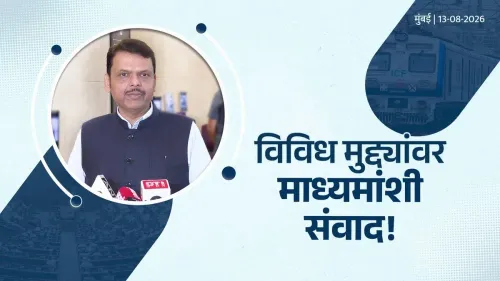
Posting on X, Fadnavis wrote: '8 Crore+ rides and counting… Mumbai has spoken — it trusts the Metro. Faster, Easier, Better.. Mumbai in Minutes is becoming a reality for Mumbaikars.' The ridership figure signals that the Mumbai Metro Line 3, branded the Aqua Line, has moved well beyond novelty status into everyday urban infrastructure.
The line runs underground from Colaba in south Mumbai to SEEPZ in the northern suburbs, threading through some of the city's most congested corridors. It is implemented by the Mumbai Metro Rail Corporation (MMRC), a special purpose vehicle set up to plan, build, and operate the corridor. The project drew on Central government support and funding from the Japan International Cooperation Agency (JICA), secured in the mid-2010s.
Decades in the making, now a daily habit
Mumbai's metro master plan, which included Line 3 as an underground corridor, dates to city mobility planning from the mid-2000s. Getting an underground metro running beneath a city built on reclaimed land — with dense heritage zones, high water tables, and some of the world's busiest suburban rail traffic running overhead — was an engineering and administrative marathon. The 8-crore-rides mark is, in that sense, the proof of concept finally arriving.
India's metro expansion story has accelerated sharply since the 2000s, with state governments racing to add underground and elevated lines to ease road congestion and cut urban emissions. Mumbai's Aqua Line is designed to eventually integrate with the broader multi-line metro network and the existing suburban rail grid — a combination that could fundamentally reshape how millions move across the metropolitan region.
What the ridership surge signals for sustainable mobility
The Chief Minister's emphasis on #SustainableMobility is deliberate. Every Metro ride is, broadly, a car journey or auto-rickshaw trip that did not happen. For a city that routinely ranks among the world's most congested, the Aqua Line's uptake represents a measurable shift toward low-emission public transport. The focus now shifts to full commercial operations across all phases of Metro Line 3 and any announced integration with adjacent metro corridors.
Eight crore journeys do not happen by accident — they happen when a network earns trust, one on-time train at a time.
Point of View
Voter-legible win on urban infrastructure — a policy domain that has historically frustrated Mumbai governments across party lines. Highlighting ridership rather than route length or capital expenditure is a deliberate pivot: it frames the Aqua Line as a service that commuters have chosen, not a project the state built and hoped people would use. For the BJP-led Maharashtra government, the milestone also feeds into a broader national narrative around metro-led urban transformation. The critical variable ahead is seamless multi-modal integration — without it, the Aqua Line risks plateauing as a premium corridor rather than a city-wide mobility backbone.
NationPress
19 Nov 2026
Frequently Asked Questions
How many rides has Mumbai Metro Line 3 completed?
Mumbai Metro Line 3, the Aqua Line, has crossed 8 crore (80 million) rides , as announced by Maharashtra CM Devendra Fadnavis on 19 November 2026 .
What is the Mumbai Metro 3 Aqua Line route?
Mumbai Metro Line 3 runs underground from Colaba in south Mumbai to SEEPZ in the northern suburbs, passing through the city's most congested central corridors.
Who built and operates Mumbai Metro Line 3?
The line is built and operated by the Mumbai Metro Rail Corporation (MMRC) , a special purpose vehicle. The project received Central government support and funding from JICA .
What does 'Mumbai in Minutes' mean?
'Mumbai in Minutes' is the state government's tagline for the Aqua Line, emphasising how the underground metro dramatically cuts travel time across congested south and central Mumbai.
How does Mumbai Metro 3 help with sustainable mobility?
By moving millions of commuters off roads and into electric-powered underground trains, the Aqua Line reduces vehicle congestion and carbon emissions, aligning with India's urban sustainable mobility goals.