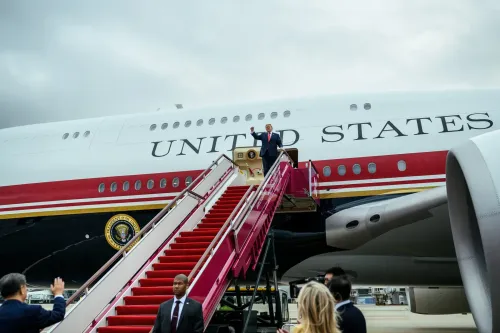
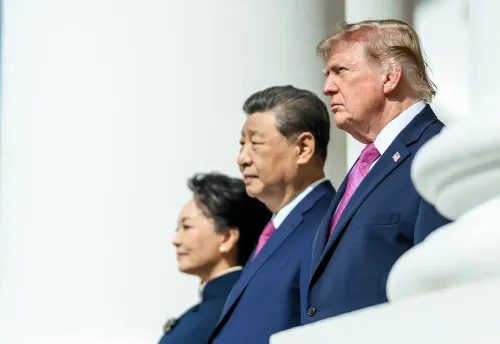
Trump Meets Putin at APEC Summit in Shenzhen
Synopsis
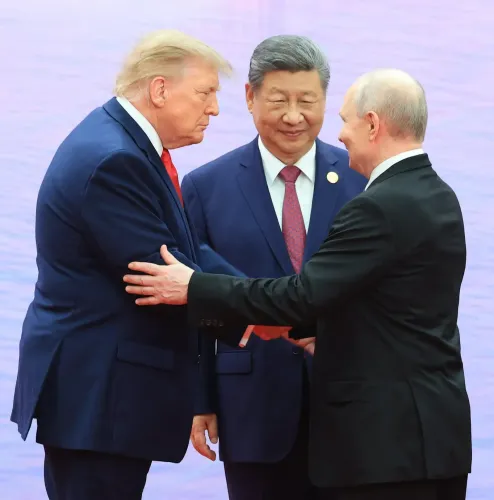
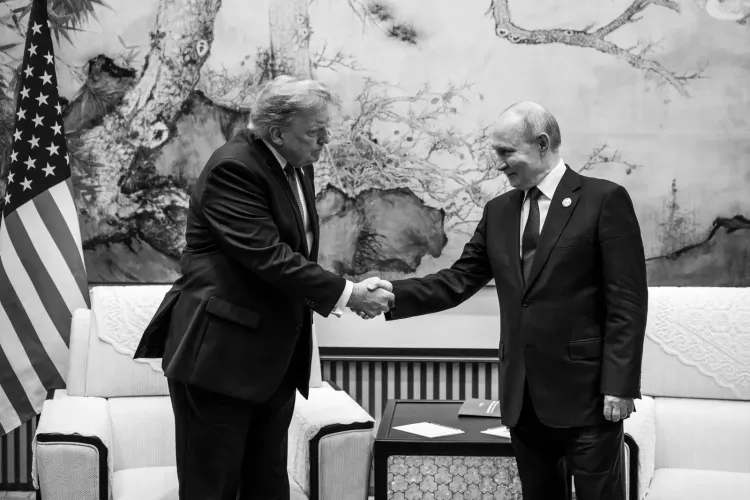
US President Donald Trump met Russian President Vladimir Putin on the sidelines of the APEC Summit in Shenzhen, China on November 19, 2026, marking a significant direct bilateral engagement between Washington and Moscow at a multilateral forum hosted by China.
Key Takeaways
Trump met President Vladimir Putin at the APEC Summit in Shenzhen, China on November 19, 2026 .
The meeting occurred on the sidelines of the Asia-Pacific Economic Cooperation forum, a venue historically used for high-stakes bilateral diplomacy.
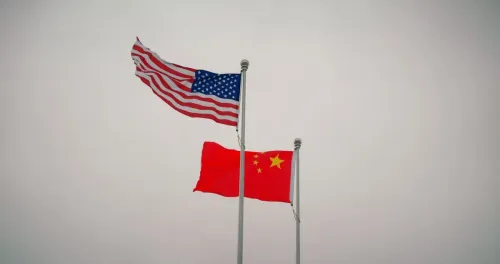
Shenzhen's role as a Chinese host city adds diplomatic layering, given concurrent US-China economic tensions at the same summit.
Prior US-Russia leader engagements at APEC include the 2017 Da Nang sideline meeting; the landmark standalone bilateral was the July 2018 Helsinki summit .
No joint statement has been confirmed; follow-up diplomatic channels will be the key indicator of the meeting's substance.
On the sidelines of the APEC Summit in Shenzhen, China, US President Donald J. Trump held a direct bilateral meeting with Russian President Vladimir Putin on Thursday, November 19, 2026 — a face-to-face encounter between Washington and Moscow that the world's diplomatic community had been watching for.
A Meeting China's Stage Sets in Motion
The Asia-Pacific Economic Cooperation forum has long served as more than a trade talk — it is a venue where the most consequential bilateral conversations happen in the margins. Shenzhen, China's southern technology and finance hub, provides a loaded backdrop: the host nation itself sits at the centre of US economic tensions, making the optics of a Trump-Putin exchange here distinctly layered. Any signal coming out of this meeting lands in a room where US-China economic negotiations are simultaneously in play.
Trump and Putin's Pattern of Direct Dialogue
This is not the first time these two leaders — or their predecessors in the same roles — have used a multilateral summit for direct diplomacy. The most significant prior engagement was the July 2018 Helsinki summit, a standalone bilateral that generated intense international debate. Beyond that, Trump-era US-Russia interactions occurred on the margins of APEC's 2017 Da Nang, Vietnam summit as well. The pattern is consistent: when both leaders are in the same city, a one-on-one tends to happen.
What Hangs Over the Room
Side meetings at APEC summits have historically addressed the full spectrum — trade frameworks, regional security architecture, and sanctions regimes. With US diplomats and Russian officials both present in Shenzhen, any joint statement or the emergence of new diplomatic channels in the coming hours will be the first concrete signal of what this meeting actually produced. The White House has confirmed the meeting took place; the substance, for now, is what the world waits on.
When two of the world's most heavily watched leaders sit across from each other in a Chinese city, the conversation rarely stays about economics — and the follow-up will tell the real story.
Point of View
The broader security architecture of the Indo-Pacific, and an ongoing US-China economic standoff. The choice of a multilateral forum as the venue gives both sides plausible deniability about the meeting's agenda while still allowing substantive exchange. Historically, APEC sidelines have been used to test diplomatic ground before more formal engagements; whether Shenzhen 2026 follows that pattern or produces something more concrete will define its legacy. For India and the wider Indo-Pacific region, the terms of any emerging US-Russia understanding carry direct implications for regional security alignments.
NationPress
19 Nov 2026
Frequently Asked Questions
Did Trump and Putin meet at the APEC Summit 2026?
Yes. The White House confirmed that President Donald J. Trump met Russian President Vladimir Putin at the APEC Summit held in Shenzhen, China on November 19, 2026.
Where is the APEC Summit 2026 being held?
The 2026 APEC Summit is being held in Shenzhen, China, a major southern Chinese city known as a global technology and finance hub.
Have Trump and Putin met before at international summits?
Yes. A notable prior engagement occurred at the APEC Summit in Da Nang, Vietnam in 2017, and the landmark standalone bilateral was held in Helsinki, Finland in July 2018.
What is APEC and why do bilateral meetings happen there?
APEC, the Asia-Pacific Economic Cooperation forum, is an intergovernmental grouping of major economies. Its annual summits bring world leaders together, making the margins a frequent venue for direct leader-to-leader diplomacy outside formal bilateral formats.
What could come out of the Trump-Putin Shenzhen meeting?
Analysts will watch for any joint statement, new diplomatic channel, or follow-up engagement. Historically, APEC-margin meetings have been used to test ground on trade, security, and sanctions frameworks.