Trump Lands in Shenzhen for APEC Summit and China Talks
Synopsis
President Donald J. Trump has arrived in Shenzhen, China for the 2026 APEC Summit, where he is set to hold bilateral meetings with Pacific Rim leaders on trade, technology, and supply chain issues that carry major implications for global markets.
Key Takeaways
President Trump arrived in Shenzhen, China on 18 November 2026 for the APEC Summit.
The Asia-Pacific Economic Cooperation forum unites 21 Pacific Rim economies focused on trade and investment.
Shenzhen is China's premier technology and manufacturing hub, a symbolically charged venue for US-China engagement.
The White House signalled 'historic meetings with world leaders' alongside the multilateral summit.
Key watch points include any movement on tariffs, semiconductor supply chains, and technology-transfer rules .
Trump's approach at previous APEC summits — notably Da Nang 2017 — combined multilateral optics with direct bilateral dealmaking.
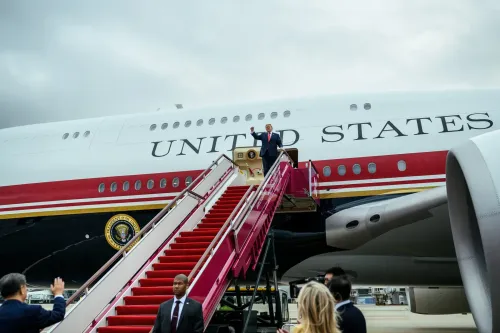
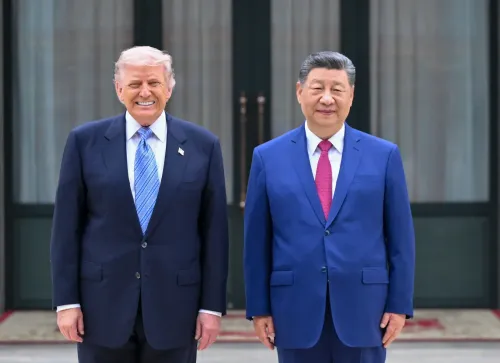
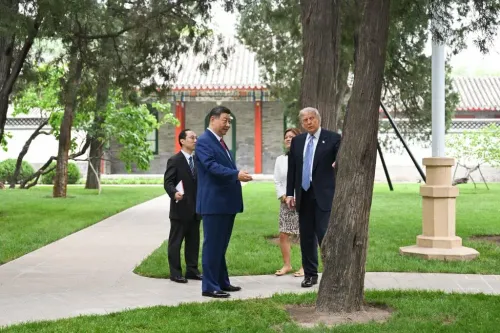
Shenzhen, China — Wednesday, 18 November 2026: President Donald J. Trump has touched down in Shenzhen, China's southern technology and manufacturing powerhouse, to attend the APEC Summit — a gathering that places him face-to-face with Pacific Rim leaders on some of the world's most consequential trade and security fault lines.
America's President in China's Silicon Valley
Shenzhen is no ordinary backdrop. The city, which transformed from a fishing village into a global tech titan in a single generation, signals immediately that this APEC edition sits at the intersection of innovation, supply chains, and geopolitical rivalry. The White House confirmed Trump's arrival on 18 November 2026, noting he would participate in 'historic meetings with world leaders' — language that telegraphs ambition well beyond standard summit pleasantries.
The Asia-Pacific Economic Cooperation forum brings together 21 Pacific Rim economies, collectively representing the bulk of global trade and GDP. For any US president, the summit stage is both a diplomatic forum and a pressure test — and for Trump, whose America First posture has repeatedly reshaped the terms of Pacific trade, the optics of showing up in Shenzhen carry particular weight.
Trump at APEC: A Pattern of Bilateral Business Inside the Multilateral Room
Trump's administration has consistently used multilateral forums as launchpads for direct, bilateral dealmaking — combining the optics of international engagement with hard-nosed one-on-one negotiations. His appearance at the 2017 APEC Summit in Da Nang, Vietnam, followed that exact playbook: a keynote on reciprocal trade framed against sweeping rhetoric on Indo-Pacific economic sovereignty. Expect a similar architecture this time.
The critical variables are the closed-door bilaterals. Any movement on tariffs, semiconductor supply chains, or technology transfer rules between Washington and Beijing would reverberate instantly across Asian markets and manufacturing corridors — including India, which has spent recent years positioning itself as an alternative production hub precisely because of US-China friction.
What Shenzhen Is Watching For
The summit's host city is itself a live exhibit of the tension on the table. Shenzhen is home to some of China's most globally contested technology firms — the same firms that have sat at the centre of US export-control battles and investment-screening debates. Holding APEC here is a pointed reminder, by Beijing, of how much economic gravity China commands in the Pacific.
Analysts will parse every statement for signals on joint communiqués, bilateral trade frameworks, or follow-up negotiating timelines. A joint statement — or the conspicuous absence of one — will define how this summit is remembered.
Trump has landed in Shenzhen. The Pacific is paying attention. What he walks out with will matter far beyond the summit hall.
Point of View
The administration projects confidence in direct engagement, consistent with its America First dealmaking doctrine that treats multilateral forums as vehicles for extracting bilateral concessions. For India, which has quietly absorbed investment and manufacturing contracts as a beneficiary of US-China friction, any softening of trade tensions or technology export controls agreed in Shenzhen could redraw the competitive map overnight. The summit's outcome — joint statement or pointed silence — will be the clearest indicator yet of where the US-China relationship stands heading into 2027.
NationPress
18 Nov 2026
Frequently Asked Questions
Why is Trump attending the APEC Summit in Shenzhen?
President Trump is in Shenzhen, China, for the 2026 APEC Summit, an annual forum of 21 Pacific Rim economies focused on trade and investment. The White House says he will also hold bilateral meetings with world leaders on the sidelines.
What is APEC and why does it matter for India?
APEC, the Asia-Pacific Economic Cooperation forum, brings together 21 Pacific Rim economies and shapes the trade rules, tariff frameworks, and supply-chain arrangements that govern a large share of global commerce. While India is not an APEC member, outcomes on US-China trade and technology policy directly affect Indian manufacturing and export competitiveness.
What could come out of Trump's meetings in Shenzhen?
Analysts are watching for any agreements or signals on tariffs, semiconductor supply chains, and technology-transfer rules between Washington and Beijing. A joint statement — or the absence of one — will be the key indicator of diplomatic progress.
Has Trump attended APEC before?
Yes. Trump attended the 2017 APEC Summit in Da Nang, Vietnam, where he outlined his vision of reciprocal trade and Indo-Pacific economic engagement, combining the multilateral forum with direct bilateral discussions.
Why is Shenzhen significant as the APEC host city?
Shenzhen is China's leading technology and manufacturing hub and home to firms at the centre of US export-control and investment-screening disputes. Hosting APEC there is a pointed assertion of China's economic gravity in the Pacific.