CM Fadnavis: Lonar Lake Earns Global Geological Heritage Tag
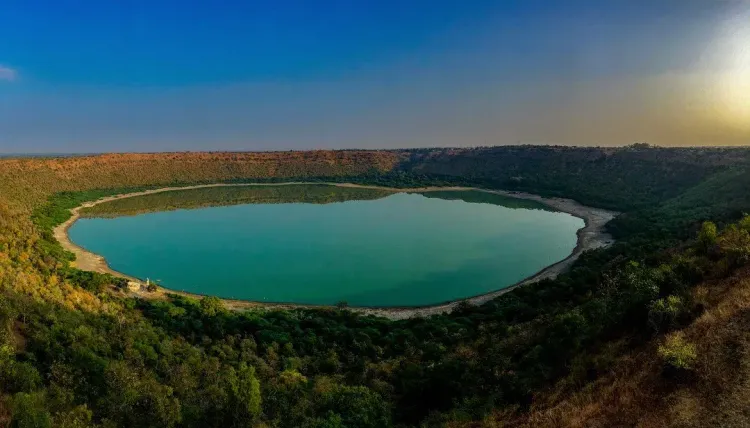
Synopsis
Lonar Lake in Maharashtra's Buldhana district has been inducted into the IUGS 'Third 100' Global Geological Heritage Sites list. CM Devendra Fadnavis hailed the recognition as a proud moment for Maharashtra, flagging new possibilities for conservation, research and tourism at the rare meteorite-impact crater lake.
Key Takeaways
Lonar Lake in Buldhana district, Maharashtra has been inducted into the IUGS 'Third 100' Global Geological Heritage Sites list.
The lake was formed by a meteorite impact on the Deccan basalt plateau and is one of only four such hypervelocity impact craters on basaltic rock in the world.
This is the third major international or national designation for Lonar Lake, following the Geological Survey of India's monument status (1970s) and a Ramsar wetland listing in 2020 .
CM Devendra Fadnavis highlighted that the recognition opens new avenues for conservation, research and tourism development in Vidarbha's Buldhana district .
The IUGS listing could support international scientific partnerships and geotourism infrastructure investment for the region.
A lake born from cosmic violence — a meteorite slamming into the Deccan plateau thousands of years ago — has just earned a place on the world's most prestigious geological honours list. Maharashtra Chief Minister Devendra Fadnavis announced on Wednesday, 18 November 2026 that Lonar Lake in Buldhana district has been officially inducted into the International Union of Geological Sciences (IUGS) list of the 'Third 100' Global Geological Heritage Sites.
What the IUGS designation actually means
The IUGS is the foremost global body governing geological sciences, and its heritage lists are compiled to identify, protect, and promote sites of exceptional scientific significance across the planet. The 'Third 100' batch is exactly what it sounds like: the third successive set of 100 sites worldwide judged to represent irreplaceable windows into Earth's geological story. Getting onto this list is not a ceremonial nod — it carries real weight in international conservation frameworks and can unlock pathways for research funding, structured tourism, and cross-border scientific collaboration.
Fadnavis framed the recognition as a feather in Maharashtra's cap — 'महाराष्ट्राच्या शिरपेचात मानाचा तुरा' (a prestigious honour in Maharashtra's crown) — and stressed that the listing opens 'new avenues for conservation, research and tourism development.'
Lonar Lake's layered scientific identity
Lonar Lake sits inside one of the four known hypervelocity meteorite impact craters on basaltic rock on Earth, making it virtually one of a kind. Its waters are simultaneously saline and alkaline — a rare geochemical combination that has drawn microbiologists and geochemists for decades. The Geological Survey of India designated it a national geological monument as far back as the 1970s, and in 2020 the Ministry of Environment added another layer of international recognition when it was listed as a Ramsar wetland site of international importance. The IUGS listing is the third major international or national designation the lake has received, stacking conservation obligations and scientific prestige simultaneously.
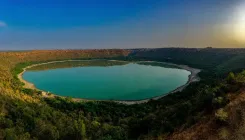
The crater itself spans roughly 1.8 kilometres in diameter, with the lake nestled at its floor, ringed by dense forest and ancient temples. The site sits in the Vidarbha region — an area that has historically lagged in tourism infrastructure compared to western Maharashtra — making every international spotlight that falls on it economically as well as scientifically meaningful.
Buldhana's moment and what comes next
For Buldhana district, the IUGS listing is a potential inflection point. Local communities dependent on pilgrimage and agricultural tourism now have a globally recognised geological attraction to anchor a more diversified economy. The state government has not yet announced a dedicated post-recognition conservation or tourism infrastructure plan, but the CM's post signals that such announcements are likely to follow.
India has been systematically pursuing international designations — Ramsar, UNESCO, IUGS — for its geological and ecological heritage in recent years, using the listings to build conservation frameworks that domestic legislation alone struggles to enforce. Lonar's hat-trick of recognitions makes it one of the best-protected crater lakes anywhere in the world on paper. The real test is whether the infrastructure and enforcement on the ground keep pace with the plaques.
Point of View
After the Geological Survey of India's monument status and its 2020 Ramsar tag — a trifecta that reflects India's deliberate strategy of stacking multilateral conservation credentials to strengthen legal protection for ecologically and scientifically unique sites. For CM Fadnavis, the announcement fits a consistent pattern of leveraging global recognition to signal Maharashtra's conservation ambitions ahead of potential tourism policy moves. The real political and policy test will be whether the state follows the designation with concrete investment in Buldhana — a Vidarbha district where economic returns from heritage tourism remain largely unrealised. Globally, IUGS heritage listings have increasingly been used by state governments to unlock international scientific partnerships and position sites for geotourism development.
NationPress
18 Nov 2026
Frequently Asked Questions
What is the IUGS Global Geological Heritage Sites list?
The International Union of Geological Sciences (IUGS) maintains a rolling list of sites worldwide that have exceptional scientific significance for understanding Earth's geological history. Sites are selected in batches of 100 — the latest is called the 'Third 100' — to promote conservation, research and responsible tourism.
Why is Lonar Lake scientifically important?
Lonar Lake is one of only four known hypervelocity meteorite impact craters on basaltic rock on Earth. Its waters are uniquely saline and alkaline, supporting rare microbial ecosystems, and the crater structure provides scientists a natural laboratory to study impact geology, geochemistry and astrobiology.
Where exactly is Lonar Lake located?
Lonar Lake is situated in Buldhana district in the Vidarbha region of Maharashtra, roughly 500 kilometres east of Mumbai.
Has Lonar Lake received other international recognitions before this?
Yes. The Geological Survey of India designated it a national geological monument in the 1970s, and in 2020 the Ministry of Environment listed it as a Ramsar wetland site of international importance. The IUGS listing is its third major designation.
What could the IUGS listing mean for Lonar Lake's tourism and conservation?
The listing can open pathways to international research collaborations, structured geotourism development and stronger conservation frameworks. Chief Minister Fadnavis has flagged that the recognition will create 'new avenues for conservation, research and tourism development,' though specific state government plans have not yet been announced.