Trump to hold nuclear talks with Xi and Putin in China next week
Synopsis
Trump is set to sit down with Xi Jinping and Vladimir Putin in China next week for a first-of-its-kind three-way nuclear reduction conversation — but US officials are already managing expectations, saying no agreement is expected. Add rare earths friction, Elon Musk in tow, and Ukraine conspicuously off the table, and this Asia trip is shaping up as one of the most consequential diplomatic forays of Trump's current term.
Key Takeaways
Donald Trump plans three-way nuclear reduction talks with Xi Jinping and Vladimir Putin during his China visit next week.
Senior US officials say no agreement is expected — the talks are described as 'the beginning of a conversation.' Iran will be discussed; Ukraine will not feature, with Russia-Ukraine talks proceeding on a separate track.
Trump's itinerary covers the Philippines (Quad, US-ASEAN summit, Thailand trade deal) and Shenzhen (APEC, Xi bilateral on Thursday).
Washington is dissatisfied with Chinese shipments of rare earths , a factor in limiting the Busan agreement extension to two months .
Elon Musk will accompany Trump on parts of the China trip but will not attend the Xi bilateral or the three-way nuclear talks.
US President Donald Trump is set to hold three-way discussions on reducing nuclear weapons with Chinese President Xi Jinping and Russian President Vladimir Putin during an Asia visit next week — though senior US officials caution the talks are not expected to produce any agreement. The meeting, scheduled to conclude Trump's stop in China, marks the first known attempt by the current US administration to bring all three nuclear powers to the same table on arms reduction.
What the Talks Are — and Are Not
A senior US official described the planned discussions as 'the beginning of a conversation about reducing nuclear arsenals,' explicitly distancing them from formal negotiations. 'We do not expect to get to any kind of agreement,' the official said, speaking on condition of anonymity. White House Assistant Press Secretary Olivia Wales confirmed the meeting would take place as the final leg of Trump's China visit, following his stop in the Philippines.
Beyond nuclear arms, Trump intends to raise Iran during the three-way session. Notably, Ukraine will not feature on the agenda — a senior US official said discussions with Russia on Ukraine are proceeding through a separate channel. No bilateral meeting between Trump and Putin is currently scheduled, though the two leaders will attend other events together during the visit.
The Asia Itinerary: Philippines to China
Trump is set to depart Washington early Monday and arrive in Manila on Tuesday evening local time. In the Philippines, the schedule includes a meeting with Quad leaders, the signing of a trade deal with Thailand, and participation in a US-ASEAN special summit. A state welcome ceremony, bilateral talks with the Philippine president, and a banquet are planned for Wednesday.
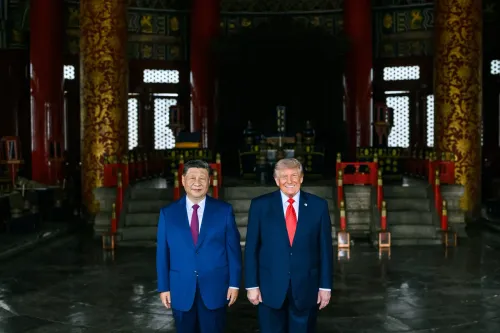
Trump will then travel to Shenzhen for an APEC leaders' dinner, followed by meetings with APEC counterparts and a bilateral session and working lunch with Xi on Thursday, Wales said.
Trade Tensions and Rare Earths Friction
On the trade front, a senior US official said discussions with China will focus on implementing existing arrangements rather than announcing any new tariff deal. US Trade Representative and Treasury officials had already met Chinese counterparts through the Board of Trade to discuss potential tariff changes and non-tariff barriers.
Washington remains dissatisfied with the pace and volume of Chinese shipments of rare earths and related products, the official said. That concern reportedly contributed to the so-called Busan agreement receiving a two-month extension rather than six. Trump is expected to raise the rare earths issue directly with Xi. Any tariff adjustments, the official noted, would require separate legal procedures including a possible notice-and-comment period — meaning no tariff announcement is expected from the leaders' meeting itself.
US officials also stressed that American export controls remain national security matters not subject to negotiation with China. Measures under consideration include extending licensing requirements to additional countries to address alleged chip smuggling and examining restrictions on remote access, though these remain under review rather than finalised policy.
Musk to Join Trip, Not the Key Meetings
Elon Musk is expected to accompany Trump for portions of the China visit, according to an official. However, Musk will not participate in the bilateral meeting with Xi or the three-way discussions with Xi and Putin — those sessions will involve officials only. The White House noted that a September meeting between Trump and Xi had advanced work on bilateral boards of trade and investment.
What to Watch
The three-way nuclear conversation — however preliminary — carries significant symbolic weight at a moment of elevated global tensions. Whether the talks evolve into a structured process or remain a one-off diplomatic gesture will depend heavily on outcomes that remain far from certain. All eyes will be on the Trump-Xi bilateral on Thursday for any concrete signals on trade, rare earths, and the trajectory of US-China relations heading into 2026.
Point of View
China, and Russia — however preliminary — is historically unusual and should not be understated. But the pre-briefing caveat that 'no agreement is expected' risks becoming a self-fulfilling frame; leaders rarely walk into talks explicitly labelled as non-binding and emerge with binding commitments. The more telling subplot is trade: Washington's rare earths frustration and the Busan extension shortfall suggest the US-China economic relationship remains fragile beneath the summit optics. Whether Trump can convert symbolic multilateral momentum on nuclear arms into structural progress on trade and tech controls in a single Asia swing is a very high bar — and the exclusion of Ukraine from the Putin conversation will raise eyebrows among European allies watching closely.
NationPress
14 Nov 2026
Frequently Asked Questions
What are the planned nuclear talks between Trump, Xi, and Putin about?
The three-way talks are described by US officials as the beginning of a conversation on reducing nuclear arsenals, not formal negotiations aimed at a treaty or pact. A senior US official explicitly said 'we do not expect to get to any kind of agreement.'
Where and when will Trump meet Xi Jinping and Vladimir Putin?
The meeting is scheduled to take place in China, concluding Trump's Asia visit next week. Trump is expected to hold a bilateral and working lunch with Xi in Shenzhen on Thursday, with the three-way session also taking place during the China leg of the trip.
Will Ukraine be discussed during the Trump-Putin talks?
No. Ukraine is not expected to be on the agenda for the three-way session. A senior US official said discussions with Russia on Ukraine are proceeding through a separate channel, and no bilateral Trump-Putin meeting is currently scheduled.
What is Trump's full itinerary for the Asia trip?
Trump departs Washington early Monday, arriving in Manila on Tuesday evening. The Philippines schedule includes Quad talks, a US-ASEAN summit, and a Thailand trade deal signing. He then travels to Shenzhen for an APEC dinner and meetings, including a bilateral with Xi on Thursday.
What role will Elon Musk play in Trump's China visit?
Elon Musk is expected to accompany Trump for portions of the China visit but will not participate in the bilateral meeting with Xi or the three-way nuclear discussions with Xi and Putin. Those key sessions will involve government officials only.