Trump, Xi, Putin Hold Historic Trilateral Talks in China
Synopsis
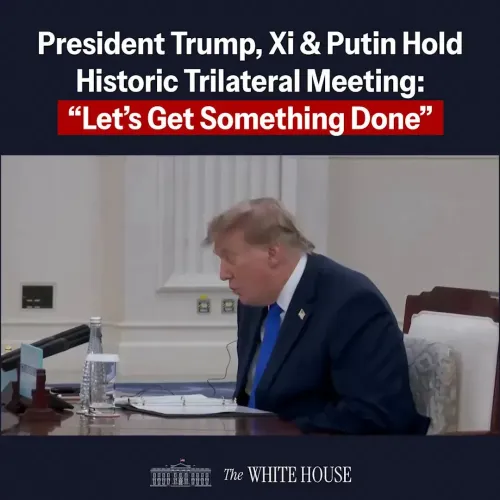
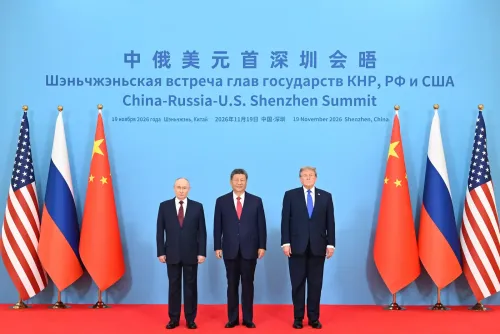
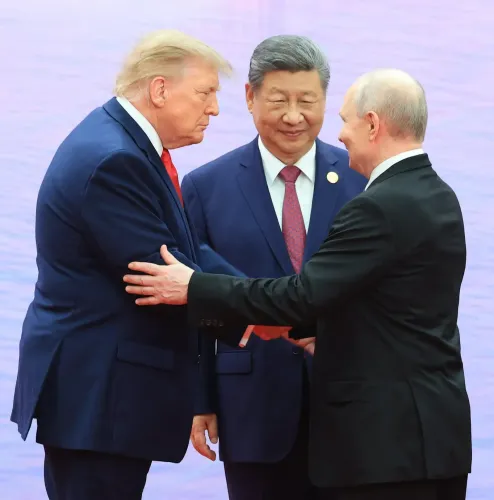
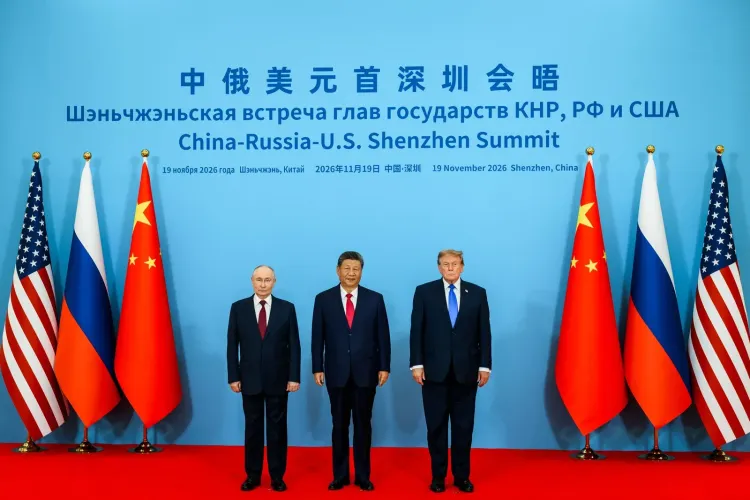
The White House announced that President Donald J. Trump, President Xi Jinping, and President Vladimir Putin held trilateral talks in China on November 19, 2026 — the first-ever standalone three-way summit among the leaders of the United States, China, and Russia.
Key Takeaways
President Trump, President Xi, and President Putin held a trilateral summit in China on November 19, 2026 .
The White House described it as 'a historic first on the world stage.' Trilateral formats among the US, China, and Russia have historically never occurred as standalone meetings — leaders previously met only bilaterally or within larger forums like the G20 or APEC .
China serving as host hands Xi Jinping a significant diplomatic convening advantage.
Joint statements, agenda items, and any follow-up bilateral visits are being closely watched by governments worldwide, including India .
All three leaders represent permanent members of the UN Security Council and nuclear-armed states, making the summit uniquely consequential in scope.
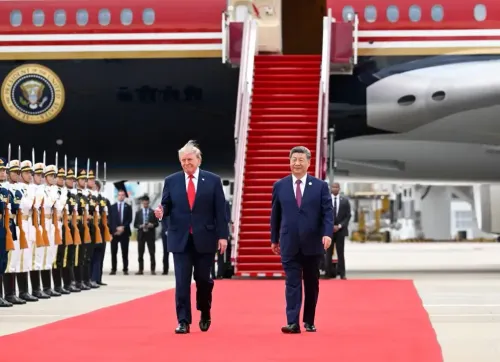
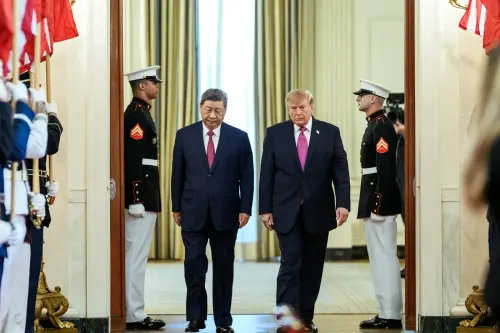
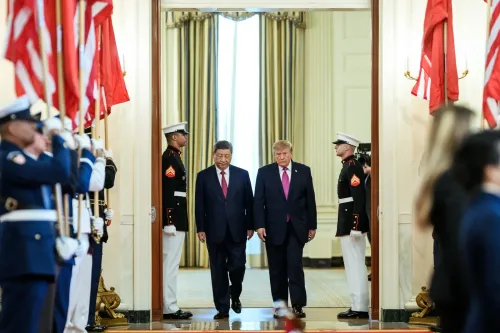
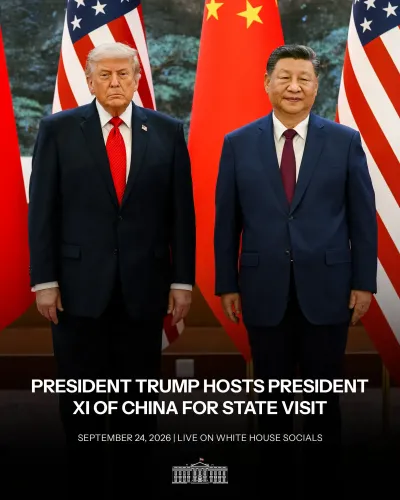
For the first time in modern diplomatic history, the leaders of the world's three most powerful nations sat down together — not on the sidelines of a multilateral summit, not via video link, but face-to-face on Chinese soil. The White House confirmed on Thursday, November 19, 2026 that President Donald J. Trump, President Xi Jinping, and President Vladimir Putin held trilateral talks in China, a meeting the official account of the Executive Office of the President called 'a historic first on the world stage.'
Why a Three-Way Summit Has Never Happened Before
Washington, Beijing, and Moscow have long preferred to manage their triangular relationships in pairs — keeping leverage, keeping secrets, keeping the third party guessing. Trump met Xi at Mar-a-Lago in April 2017 to press on trade and North Korea. He met Putin on the sidelines of the G20 in Hamburg in July 2017, with Syria and election-interference allegations dominating the room. Each bilateral carried its own carefully managed optics. A three-way format, by contrast, compresses all of that complexity into a single table — and forces each leader to perform for two audiences simultaneously.
Trilateral formats involving the US, China, and Russia have historically been confined to larger groupings such as the G20 or APEC, where the three leaders might exchange handshakes but never sit down alone together. The absence of a standing three-way mechanism reflects the structural tensions: any US-China alignment alarms Moscow; any US-Russia warming unsettles Beijing; and a Sino-Russian front is precisely what Washington has long sought to prevent. That all three chose to convene in China — on Xi Jinping's home turf — is itself a signal the world's diplomatic analysts will be parsing for weeks.
China as Host: The Weight of That Choice
Hosting a summit of this magnitude hands Xi Jinping a commanding piece of soft power. It frames Beijing not merely as a rising power but as the indispensable convener — the address where the most consequential conversations happen. For Trump, traveling to China for a trilateral represents a significant departure from the transactional, America-first bilateralism that defined his earlier diplomatic style. For Putin, attending alongside a US president signals a degree of international re-engagement that carries its own geopolitical weight.
The agenda emerging from the talks — joint statements, follow-up visits, or specific agreements on trade, arms control, or regional security — will determine whether this meeting is remembered as a genuine inflection point or an elaborate photo opportunity. What is not in dispute is the symbolism: three nuclear powers, three permanent members of the UN Security Council, together in one room for the first time.
What India and the Wider World Are Watching
For New Delhi, a summit that reshapes the geometry of US-China-Russia relations is never a spectator event. India maintains strategic autonomy precisely because it navigates all three relationships independently. Any trilateral understanding — on trade architecture, on regional security in Asia, on arms control — redraws the map on which India's own foreign policy operates. South Asian capitals, Indo-Pacific partners, and NATO allies will be reading every communiqué with acute attention.
The White House has called it historic. The harder question — historic in which direction — will be answered by what comes next.
Point of View
Which was deliberately built on bilateral tracks to prevent any two powers from perceiving a coordinated alignment against them. For India, which has carefully cultivated equidistance from all three capitals, an emerging trilateral understanding could narrow that strategic space significantly. The choice of China as host also reinforces Beijing's sustained campaign to position itself as the indispensable anchor of multipolar world order — a framing that challenges both Washington's alliance network and New Delhi's own regional influence. Whether the meeting produces binding outcomes or remains symbolic, the optics alone recalibrate global expectations about what great-power diplomacy looks like in 2026.
NationPress
19 Nov 2026
Frequently Asked Questions
What happened at the Trump Xi Putin trilateral summit in China?
President Donald J. Trump, President Xi Jinping, and President Vladimir Putin held trilateral talks in China on November 19, 2026 — an event the White House described as 'a historic first on the world stage.' It is the first standalone three-way summit among the leaders of the United States, China, and Russia.
Has there ever been a US-China-Russia trilateral summit before?
No. Prior to this meeting, the leaders of the US, China, and Russia had only interacted bilaterally or within larger multilateral forums such as the G20 and APEC. A standalone trilateral among all three is historically unprecedented.
Why is China hosting the Trump-Putin-Xi summit significant?
China hosting the summit gives President Xi Jinping a powerful convening advantage, framing Beijing as the central venue for the world's most consequential diplomatic conversations. It signals a degree of Chinese diplomatic authority that carries major implications for US alliance networks and regional powers like India.
What could the Trump Xi Putin summit mean for India?
India maintains strategic autonomy by managing its relationships with the US, China, and Russia independently. Any trilateral understanding among the three powers on trade, arms control, or regional security could reshape the geopolitical environment in which India operates, potentially narrowing New Delhi's room for manoeuvre.
What agenda items are expected from the US China Russia trilateral talks?
The specific agenda has not been fully disclosed, but analysts are watching for joint statements, follow-up bilateral visits, and any agreements touching on trade architecture, arms control, or regional security — themes that have historically dominated US-China and US-Russia interactions.