Trump cites India's 7% GDP growth to press Fed for rate cuts
Synopsis
Trump used India's 7% GDP growth as a live benchmark at a Washington press conference, arguing the US could triple its own growth rate if the Federal Reserve stopped raising rates on good economic news. The remarks underscore a deepening White House-Fed standoff — and put India's macro performance at the centre of a charged US monetary policy debate.
Key Takeaways
Donald Trump cited India's 7 per cent GDP growth on Friday to argue the US could achieve 14–20 per cent growth with lower interest rates.
Trump called the Federal Reserve 'very political' and accused it of raising rates when economic data is strong.
He estimated a one percentage point rate cut would save the US $650 billion in debt servicing costs.
Trump cited 10 consecutive months of manufacturing growth and a 21 per cent rise in equipment investment this year.
Crude oil prices have fallen 20 per cent since early November , with petrol prices down 60 cents per gallon in a month, according to Trump.
Key investments cited: Audi's $4 billion plan and a $5 billion Toyota plant in the United States.
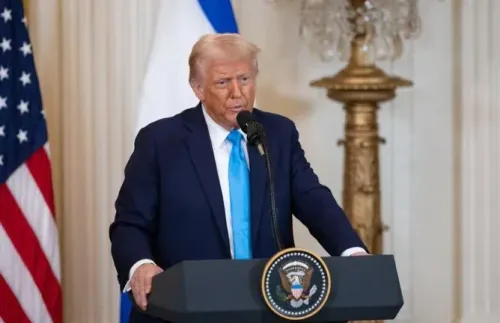
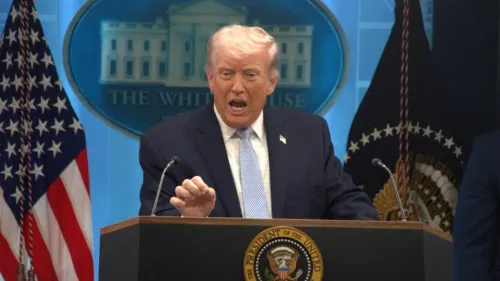
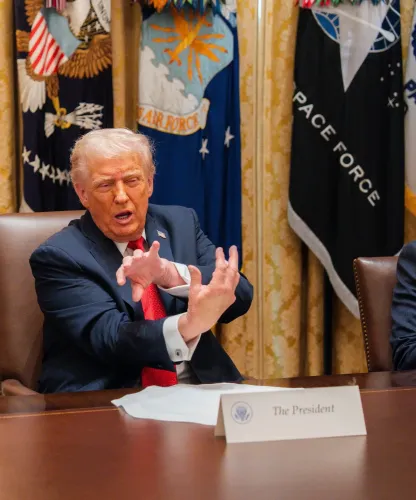
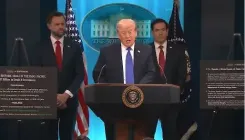
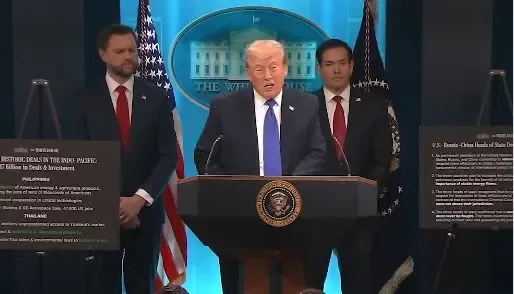
US President Donald Trump on Friday invoked India's 7 per cent economic growth as a benchmark to pressure the Federal Reserve into cutting interest rates, claiming the United States could achieve GDP growth of up to 20 per cent if borrowing costs were lowered. Trump made the remarks at a Washington news conference following a four-day visit to Asia.
The India Comparison
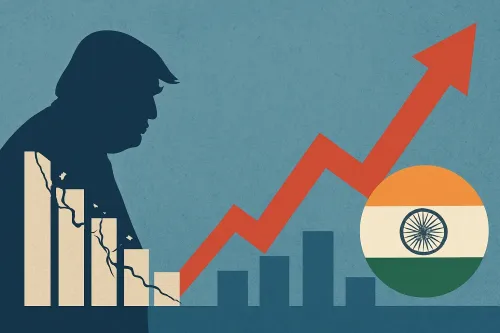
'If you look at India, they have low interest rates and they have a 7 per cent GDP. We'd have a 14, 15, maybe even a 20 per cent GDP,' Trump said. He put current US growth at 4 per cent, though he did not specify the reference period for either country's figure, nor did he detail what size of rate cut he believed would be necessary to achieve his projected US growth numbers.
Trump's Case Against the Fed
The US President accused the Federal Reserve of raising rates in response to strong economic data — a practice he sharply criticised. In his view, robust growth signals a better credit risk, which should translate into lower borrowing costs rather than higher ones. 'When you have good numbers, you have better credit,' Trump said. He called the Fed 'very political,' though he stressed his criticism was aimed at the institution broadly rather than any single individual. He praised former Fed Chairman Alan Greenspan for, in Trump's account, being willing to reduce rates during periods of economic strength.
Debt, Energy and Manufacturing
Trump also framed lower rates as essential to managing the national debt, estimating that a one percentage point reduction in rates would save $650 billion. He gave no timeframe or methodology for the figure. On the economy more broadly, Trump cited 10 consecutive months of manufacturing growth and a 21 per cent rise in new equipment investment this year. He attributed the manufacturing rebound to his tariff policies, pointing to a $4 billion investment plan by Audi, a $5 billion Toyota plant, and a Ford plant in Detroit that he said had reversed closure plans and was now operating around the clock, seven days a week. Trump also said crude oil prices had fallen 20 per cent since the start of November, with Americans reportedly paying 60 cents less per gallon of petrol than a month earlier. He added that future petrol prices would partly depend on whether Washington reached a deal with Iran.
How the Fed Actually Works
The Federal Reserve operates under a Congressional mandate to promote maximum employment and stable prices. Its rate-setting committee considers both inflation and labour market conditions when adjusting its target for overnight bank lending — a rate that filters through to borrowing costs across the broader economy. Trump's characterisation of the Fed raising rates on good economic news reflects a long-running tension between his administration and the central bank over monetary independence. This is not the first time Trump has publicly criticised the Fed; similar pressure campaigns marked his first term as well.
What to Watch
The Fed's next scheduled policy meeting will be closely watched for any signal on rate direction. Trump's remarks are likely to intensify political scrutiny of the central bank, though the Fed has historically maintained that its decisions are data-driven and insulated from executive pressure. Whether the India comparison gains traction in Washington's economic debate remains to be seen.
Point of View
Demographic dividend, and growth drivers are structurally different from the United States, making a direct rate-to-GDP extrapolation misleading at best. The more significant story is the sustained White House pressure on Fed independence: Trump's first term ended without breaking the central bank's autonomy, but the cumulative effect of repeated public attacks is worth monitoring. The $650 billion debt-savings figure, offered without a timeframe or methodology, exemplifies a pattern of headline numbers that resist scrutiny. Meanwhile, India should note that its own monetary policy is now being cited selectively in a foreign political campaign — a sign of its growing macro credibility, even if the context is reductive.
NationPress
21 Nov 2026
Frequently Asked Questions
Why did Trump mention India's GDP in his Federal Reserve comments?
Trump used India's 7 per cent GDP growth as a comparator to argue that low interest rates drive high economic output, claiming the US could achieve 14–20 per cent growth if the Fed cut rates. He presented India as evidence that lower borrowing costs and strong growth can coexist.
What is Trump's main criticism of the Federal Reserve?
Trump accused the Fed of raising interest rates when the government reports strong economic numbers, which he argues is counterproductive. In his view, good economic data signals lower credit risk and should result in cheaper borrowing, not more expensive debt.
How much does Trump say a rate cut would save the US?
Trump claimed a one percentage point reduction in interest rates would save the United States $650 billion in debt servicing costs. He provided no timeframe or calculation methodology for the figure.
What manufacturing data did Trump cite to show US economic strength?
Trump said US manufacturing had grown for 10 consecutive months and that investment in new equipment was up 21 per cent this year. He credited tariffs for prompting Audi to announce a $4 billion investment plan and Toyota to build a $5 billion plant in the US.
Can the US President force the Federal Reserve to cut rates?
No. The Federal Reserve is an independent institution operating under a Congressional mandate to promote maximum employment and stable prices. Its rate-setting committee makes decisions based on inflation and labour market data, and the President has no direct authority to override those decisions.