Why is Trump Criticizing Powell and Demanding Interest Rate Cuts?
Synopsis
In an explosive critique, President Trump condemns Fed Chair Powell for his refusal to reduce interest rates, arguing it jeopardizes the economy and national security. Trump's statements also highlight his views on tariffs and their impact on government revenue. Can immediate rate cuts revitalize the economy?
Key Takeaways
Trump's critique of Powell emphasizes economic and national security concerns.
Calls for immediate interest rate cuts reflect a push for economic stimulus.
Tariffs are linked to revenue generation and interest rate policy by Trump.
Powell maintains that monetary policy is independent and assessed on a case-by-case basis.
The intersection of tariffs and interest rates remains a contentious issue in U.S. economic policy.
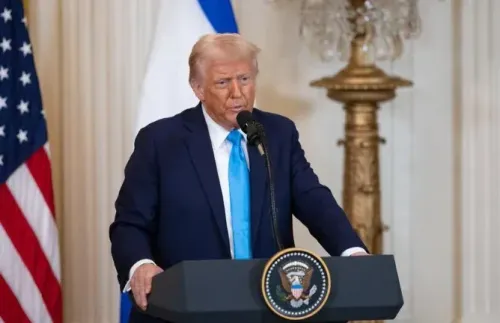
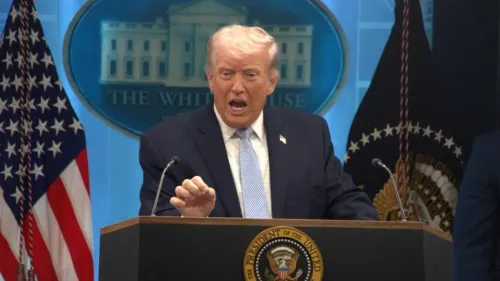
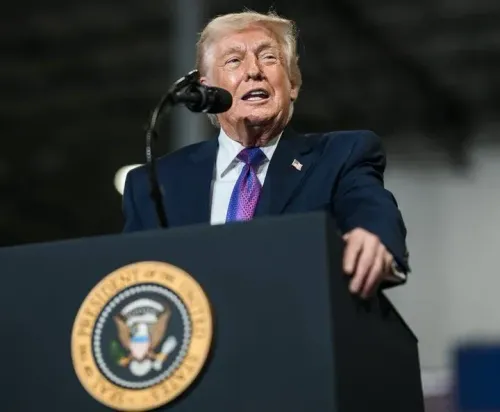
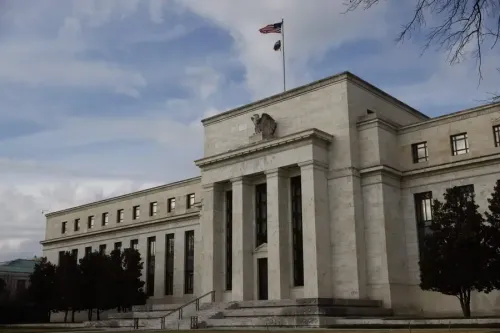
Washington, Jan 29, (NationPress) US President Donald Trump on Thursday launched a fierce critique against Federal Reserve Chair Jerome Powell, just one day after the Central Bank opted to maintain interest rates, claiming that this inaction is detrimental to the US economy and national security due to his reluctance to decrease borrowing costs.
In a statement on his Truth Social platform, Trump stated that Powell “once more declined to lower interest rates, despite having no justification for keeping them elevated.”
“He is harming our nation, and its National Security,” Trump added.
Trump asserted that inflation is no longer a pressing issue and accused the Fed leader of unwarranted caution. “We should currently have a significantly lower rate now that even this individual admits inflation is no longer a problem or a threat,” he stated.
The President indicated that existing interest rates are placing a heavy burden on the government. He mentioned that Powell's actions “are costing America hundreds of billions of dollars each year in unnecessary and unjustified interest expenses.”
Trump linked his argument to US tariff strategies, which he believes have strengthened the economy and increased government revenues. “Due to the substantial influx of funds into our country from tariffs, we should be enjoying the lowest interest rates of any nation globally,” he remarked.
He noted that other countries gain from lower borrowing costs because of US policies. “Most of these nations operate as low-interest-rate cash machines, perceived as elegant, solid, and prime, solely because the USA permits them to be,” Trump stated.
Trump continued to argue that tariffs are generating billions for the United States while still allowing many countries to maintain trade surpluses. “The tariffs imposed on them, while bringing in billions for us, still allow most of them to retain a significant trade surplus, albeit smaller,” he explained.
He acknowledged that the United States has been generous to its trading partners. “I have been very accommodating, kind, and considerate to nations across the globe,” Trump noted. He claimed that stronger tariff measures could yield even more revenue. “With just a stroke of the pen, billions more could flow into the U.S.A.,” he asserted.
Trump reiterated his call for immediate action from the Fed. “The Fed must significantly lower interest rates, NOW!” he urged.
He stated that tariffs have restored U.S. dominance. “Tariffs have made America strong and powerful again, far surpassing any other nation,” Trump claimed. He added that U.S. interest rates should mirror that strength. “We should be paying lower interest rates than any other country in the world!”
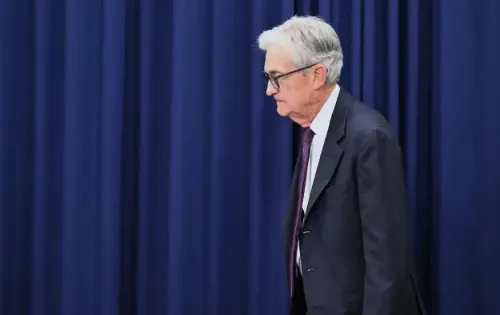
These remarks followed Powell's announcement that the Federal Open Market Committee decided to keep the benchmark federal funds rate unchanged within a range of 3.5 to 3.75 percent. Powell mentioned that while inflation has lessened from its peak in 2022, it remains “somewhat elevated.”
Powell also indicated that high goods inflation has been “influenced by the effects of tariffs,” while disinflation persists in services. He emphasized that monetary policy is “not on a set course” and that future decisions will be evaluated during each meeting.
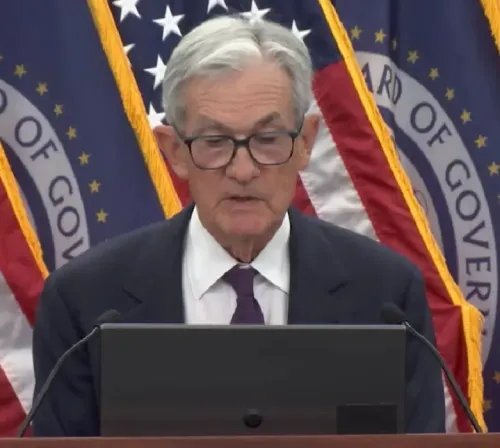
During the press conference, Powell defended the independence of the central bank from political pressure, labeling it as a standard practice in advanced democracies and cautioned that restoring credibility would be challenging if lost.
Point of View
We recognize the significance of Trump's remarks on monetary policy and tariffs. The discourse around interest rates affects not only economic stability but also national security. It's essential to observe how these discussions evolve and their potential implications for American citizens and the economy at large.
NationPress
3 Oct 2026
Frequently Asked Questions
What prompted Trump's criticism of Powell?
Trump criticized Powell after the Federal Reserve decided to keep interest rates unchanged, arguing it harms the economy and national security.
What does Trump suggest regarding interest rates?
Trump urges the Fed to significantly lower interest rates, claiming that the current rates are unjustified and burdensome.
How does Trump relate tariffs to interest rates?
Trump argues that the revenue from tariffs should allow the U.S. to have the lowest interest rates globally.
What was Powell's response to these criticisms?
Powell defended the Fed's independence and stated that monetary policy decisions are evaluated meeting by meeting.
What impact could these discussions have on the economy?
The debate on interest rates and tariffs could significantly influence economic growth, inflation, and overall financial stability in the U.S.