US Fed holds rates at 3.5–3.75% as oil shock drives inflation to 3.5%
Synopsis
The Fed held rates steady even as oil-driven inflation hit 3.5% — and Powell used what may be one of his final press conferences to warn about threats to central bank independence. With his 15 May departure looming and no rate cut in sight, the next chair inherits a stagflation-adjacent dilemma with no clean exit.
Key Takeaways
The FOMC held its policy rate at 3.5–3.75% on 30 April , citing the current stance as "appropriate." Total PCE inflation rose 3.5% in the 12 months to March , driven by the Middle East conflict -linked oil price surge.
Core inflation stood at 3.2% , partly reflecting tariff pass-through on goods prices.
The US unemployment rate was 4.3% in March; job growth has slowed due to lower immigration and participation rates.
Jerome Powell will step down as Fed Chair on 15 May but will remain on the board as a governor.
Powell warned of "legal attacks" threatening the Fed's political independence — a rare public statement on institutional pressure.
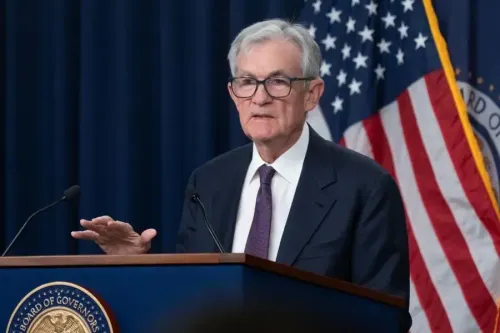
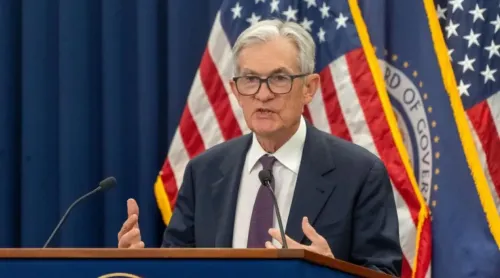
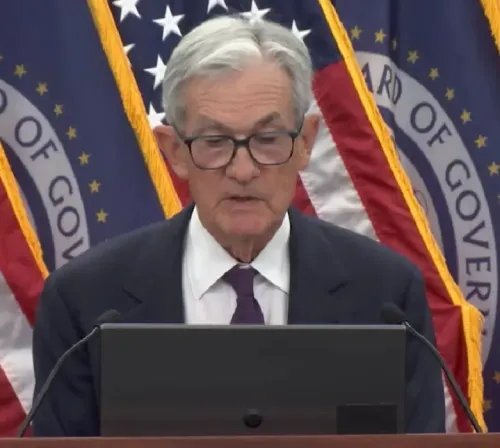
The US Federal Reserve held its benchmark policy rate steady in the 3.5 to 3.75 per cent range on 30 April, as surging global energy prices tied to the Middle East conflict pushed headline inflation higher and policymakers flagged deepening uncertainty over the economic outlook. Federal Reserve Chair Jerome Powell confirmed the decision after the Federal Open Market Committee (FOMC) meeting, describing the current monetary stance as "appropriate" to support economic stability.
Inflation Picture
Powell said total PCE (Personal Consumption Expenditures) prices rose 3.5 per cent over the 12 months ending in March, boosted significantly by the spike in global oil prices resulting from the ongoing Middle East conflict. Core inflation — which strips out volatile food and energy components — stood at 3.2 per cent, reflecting in part the pass-through impact of tariffs on goods prices.
"Higher energy prices will push up overall inflation," Powell said, while cautioning that the broader economic impact "remains unclear, as does the future course of the conflict itself." He acknowledged that energy shocks are typically temporary but noted the current situation has yet to peak.
Economic Conditions: Resilient but Uneven
Powell painted a mixed picture of the broader US economy. Consumer spending remains resilient and business investment is strong, he said, adding: "The US economy has just powered through shock after shock." However, he acknowledged that job gains have slowed, the housing sector remains weak, and higher fuel costs are beginning to squeeze household budgets.
The unemployment rate stood at 4.3 per cent in March, with "little change in recent months," according to Powell. He attributed the slowdown in job growth partly to lower immigration and declining labour force participation rates.
Fed's Policy Stance: Wait and Watch
Despite the elevated inflation reading, the Fed signalled it is not rushing into further policy tightening or easing. "Monetary policy is not on a pre-set course," Powell said. "We will make our decisions on a meeting-by-meeting basis." He added that the central bank is in a position to "wait and see" how inflation evolves, particularly given uncertainty around oil prices and trade disruptions.
This cautious posture reflects the Fed's difficult balancing act — its dual mandate of maximum employment and stable prices is being pulled in opposite directions by slowing job growth on one side and sticky, energy-driven inflation on the other.
Institutional Independence Under Pressure
In a notable aside, Powell underscored risks to the Fed's institutional independence, citing what he described as "legal attacks" that could threaten the central bank's ability to operate free of political influence. "It is so important… that they can depend over time on a central bank that operates that way, free of political influence," he said. The remarks come amid a broader debate in Washington over executive oversight of independent agencies.
Powell's Departure and What Comes Next
Powell confirmed he will step down as Fed Chair on 15 May but plans to remain on the board as a governor for a period, citing the need for continuity during a period of ongoing challenges. Markets and policymakers will be closely watching his successor's first signals on rate direction, particularly if oil prices remain elevated and inflation does not moderate as expected in the coming months.
Point of View
But the context makes it fraught. With PCE at 3.5% and energy prices unresolved, the central bank is effectively betting that the oil shock is transitory — the same bet it lost in 2021-22. Powell's parting warning about political interference is the more consequential signal: it suggests the Fed's next chair may face pressure to cut rates for reasons that have nothing to do with the dual mandate. Markets should price that institutional risk, not just the rate path.
NationPress
24 Sept 2026
Frequently Asked Questions
Why did the US Federal Reserve hold interest rates on 30 April?
The Fed held its policy rate at 3.5–3.75% because policymakers judged the current stance appropriate given rising but uncertain inflation and a stable labour market. Chair Jerome Powell said the Fed would assess developments on a meeting-by-meeting basis rather than follow a pre-set course.
How high is US inflation right now?
Total PCE inflation rose 3.5% in the 12 months ending March, boosted by the surge in global oil prices linked to the Middle East conflict. Core inflation, excluding food and energy, stood at 3.2%, partly reflecting the impact of tariffs on goods prices.
When is Jerome Powell stepping down as Fed Chair?
Jerome Powell confirmed he will step down as Federal Reserve Chair on 15 May, though he plans to remain on the board as a governor for a period to ensure continuity during ongoing economic challenges.
What did Powell say about the Middle East conflict's impact on the US economy?
Powell said higher energy prices resulting from the Middle East conflict have pushed up overall inflation and added to economic uncertainty. He noted that the broader impact "remains unclear, as does the future course of the conflict itself," and that the current energy shock has yet to peak.
What is the current US unemployment rate?
The US unemployment rate stood at 4.3% in March, with little change in recent months. Powell attributed the slowdown in job growth partly to lower immigration and declining labour force participation rates.