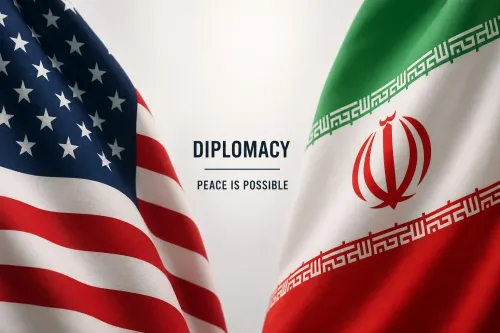
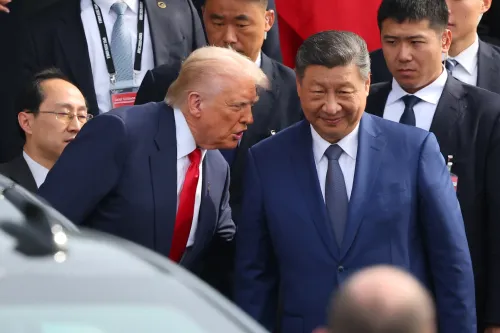
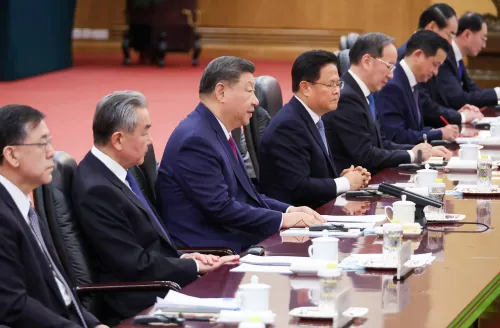
Iran-US conflict poses new strategic dilemmas for China, report finds
Synopsis
The dominant post-ceasefire narrative cast China as the clear winner of the Iran–US conflict — but a new analysis in The Diplomat argues that Beijing now faces a growing list of strategic headaches: a postponed Arab summit, deepening Gulf rifts, and the looming Strait of Hormuz question that puts China's energy security directly at odds with its partnership with Tehran.
Key Takeaways
The Iran–US conflict , which began on 28 February , has created complex strategic challenges for China , not simply diplomatic gains, according to The Diplomat .
The China-Arab States Summit originally planned for June was postponed indefinitely, reflecting growing regional complexity.
Iran's domestic political shift after the conflict has strengthened support for Tehran's claims over the Strait of Hormuz , posing a direct dilemma for China as the world's largest energy importer.
The report argues the US retains significant opportunities in the region despite short-term reputational costs, including roles in security cooperation, tech partnerships, energy exports, and Iran's reconstruction.
The situation is described as neither straightforward American failure nor unambiguous Chinese success, but a fluid redistribution of regional leverage.
The Iran–US conflict, which erupted on 28 February, has generated a more complex strategic landscape for China than the prevailing narrative of Chinese triumph suggests, according to an analysis published in online magazine The Diplomat. While Beijing has strengthened its diplomatic standing in the short term, the report warns that a series of emerging challenges could complicate China's long-term position across the Middle East.
The Prevailing Narrative and Its Limits
Following the outbreak of hostilities and the subsequent ceasefire agreement between Washington and Tehran, a widely held view took hold in international discourse: that China was the primary beneficiary of the crisis, while the United States had suffered a major strategic setback. The Diplomat's report challenges this framing directly.
'A broader assessment of the evolving realities facing the United States, China, Iran, and the wider Middle East suggests that the situation cannot be simply characterised as a case of American failure and Chinese success,' the report stated. It argues that as the regional order enters a new phase of adjustment, China may confront a growing number of challenges, while the US may discover fresh strategic opportunities.
Challenges Mounting for Beijing
According to the report, the conflict has created a new set of diplomatic and strategic pressures for China. The war deepened rifts among Gulf Arab states and complicated Beijing's multilateral diplomacy in the region. The China-Arab States Summit, originally scheduled for June, was postponed indefinitely — a concrete signal of the growing complexity facing Chinese foreign policy in the area.
Notably, this is not a peripheral disruption. China has invested heavily in positioning itself as a neutral, constructive broker in the Middle East, most visibly through its role in the Saudi Arabia–Iran normalisation deal. The conflict has put that image under stress.
The Strait of Hormuz Dilemma
Among the emerging challenges, the report identifies the Strait of Hormuz as potentially the most sensitive flashpoint for Beijing. Following the conflict, domestic political opinion within Iran shifted significantly, reinforcing support for Tehran's claims over the Strait and adjacent waters in the Persian Gulf.
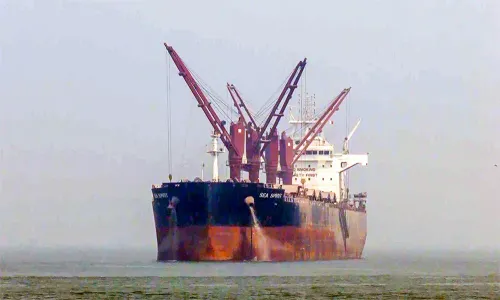
The report notes that Tehran's efforts to tighten control over the Strait — and potentially introduce formal transit or passage fees — enjoy considerable domestic political backing and are closely tied to Iran's broader strategic interests. 'For China, this creates a difficult policy dilemma,' The Diplomat stated. As the world's largest energy importer, a major shipbuilding nation, and a leading maritime trading power, China depends heavily on the stability of critical sea lanes, including the Strait of Hormuz.
'How Beijing responds to Iran's evolving claims regarding Hormuz will become a major test of its Middle East policy,' the report noted.
US Position: Setback or Opportunity?
The report also pushes back against the notion that Washington has been comprehensively weakened. Despite suffering political and reputational costs in the short term, the US continues to play a pivotal role in the region's security architecture. Significant opportunities reportedly remain for Washington in security cooperation, technological partnerships, energy exports, and a possible role in the reconstruction of Iran's economy following the ceasefire.
This framing suggests that the post-conflict environment is less a zero-sum outcome than a fluid redistribution of leverage — one that both powers will contest in the months ahead.
What Comes Next
The trajectory of US–Iran follow-on negotiations, the future of the Strait of Hormuz transit question, and the rescheduling — or permanent shelving — of the China-Arab States Summit will serve as early indicators of how the regional order is reshaping. For Beijing, the strategic calculus in the Middle East has grown considerably more complicated than the initial post-ceasefire headlines implied.
Point of View
America loses' read on the Iran–US conflict was always too clean. Beijing's Middle East strategy rests on being seen as a non-threatening, commercially reliable partner — a posture that becomes harder to sustain when Gulf states are fractured, summits are cancelled, and Iran is making moves on the Strait of Hormuz that directly threaten Chinese shipping economics. China cannot simultaneously back Tehran's Hormuz ambitions and reassure Gulf energy exporters. That contradiction is not new, but the conflict has sharpened it into a live policy test. Washington, meanwhile, has more room to manoeuvre than the ceasefire optics suggested — reconstruction contracts and security partnerships do not disappear because a war ended badly.
NationPress
25 Sept 2026
Frequently Asked Questions
What strategic challenges does the Iran-US conflict create for China?
The conflict has complicated China's multilateral diplomacy in the Middle East, deepened rifts among Gulf Arab states, and raised a difficult dilemma over the Strait of Hormuz. The China-Arab States Summit, planned for June, was postponed indefinitely as a direct consequence of regional tensions.
Why is the Strait of Hormuz a problem for China?
Following the conflict, Iranian domestic opinion shifted to strongly support Tehran's claims over the Strait of Hormuz, including potentially introducing transit or passage fees. As the world's largest energy importer, China depends heavily on free passage through the Strait, putting its energy security interests in tension with its partnership with Iran.
Did the US actually lose influence in the Middle East after the Iran conflict?
According to The Diplomat's analysis, the picture is more nuanced. Despite short-term political and reputational costs, the US continues to play a pivotal role in the region's security architecture and retains significant opportunities in security cooperation, technology partnerships, energy exports, and Iran's post-conflict reconstruction.
What was the prevailing view about China's gains from the Iran-US conflict?
After Washington and Tehran signed a ceasefire and launched follow-on negotiations, many international observers concluded that China was the primary beneficiary — gaining diplomatically, economically, and geopolitically — while the US had suffered a major strategic setback. The Diplomat's report argues this view is an oversimplification.
How does this conflict affect China's broader Middle East diplomacy?
The conflict strained China's image as a neutral broker in the region, a role it had cultivated most visibly through the Saudi Arabia–Iran normalisation deal. With Gulf Arab states divided and a key regional summit cancelled, Beijing faces a more contested and complicated diplomatic environment than before the conflict began.