China's Gulf ties strained as West Asia crisis tests Beijing's balancing act
Synopsis
China's decade-long strategy of cultivating both Gulf Arab states and Iran simultaneously is cracking under the pressure of West Asia's security crisis. Gulf nations, targeted by missile and drone attacks, are no longer satisfied with Beijing's calls for restraint — and the postponed China-Arab States Summit signals that the diplomatic gap between what Arab states expect and what China is willing to deliver may be widening irreversibly.
Key Takeaways
Several Gulf nations have quietly voiced frustration with China's calls for restraint during the West Asia security crisis, viewing them as insufficiently neutral.
Beijing facilitated the Saudi-Iran rapprochement in 2023 but is now facing scrutiny over its reluctance to publicly identify Iran as a source of regional threats.
China's reluctance to endorse multilateral initiatives criticising Iranian actions has reinforced perceptions among Gulf policymakers that Beijing's balance tilts toward Tehran .
The postponement of the China-Arab States Summit has fuelled diplomatic discussion about diverging expectations on both sides of the relationship.
Arab states increasingly expect China to assume greater political responsibility , while Beijing prefers to remain an economic partner insulated from security disputes.
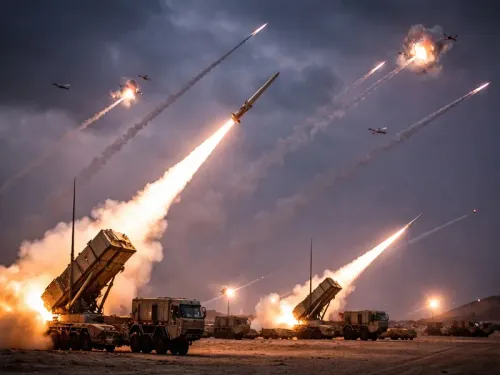
China's carefully constructed diplomatic balance in West Asia is facing its most significant test yet, as several Gulf nations have quietly voiced frustration over Beijing's response to the region's escalating security crisis. While China has consistently called for restraint, dialogue, and de-escalation during recent confrontations involving Iran, Israel, and Arab states, Gulf governments on the receiving end of missile attacks and drone strikes have found such calls far from neutral.
The Limits of Beijing's Balanced Diplomacy
For much of the past decade, China appeared to have achieved what few external powers in the Middle East had managed — the simultaneous cultivation of deep partnerships with rival regional actors. Beijing expanded economic ties across the Gulf, became the largest trading partner of several Arab states, deepened its strategic relationship with Iran, and capped its diplomatic ambitions by facilitating the Saudi-Iran rapprochement in 2023. This ability to engage all sides while sidestepping regional entanglements became a defining feature of China's West Asia strategy, according to a report by Mizzima News.
Yet the very crisis that should have demonstrated the advantages of this approach has instead exposed its structural limitations. As the report noted, 'While economic partnerships can be pursued simultaneously with competing actors, security crises inevitably force governments to reveal their priorities.'
Gulf Nations Question China's Neutrality
The core frustration among Gulf policymakers centres on a pointed question: is China prepared to publicly identify the source of threats that have directly endangered their security? Beijing's reluctance to endorse multilateral initiatives that explicitly criticise Iranian actions has, according to the report, reinforced a growing perception that China's diplomatic balance tilts toward Tehran whenever real pressure is applied.
Notably, the report underscores that whether this perception is entirely accurate matters less than the fact that it is gaining traction among the very regional policymakers whose trust China has spent years cultivating. For Gulf states that have absorbed direct security threats linked to Iran and its network of partners, calls for dialogue without attribution are increasingly viewed as insufficient.
China-Arab Summit Postponement Adds to Tensions
The strain has become particularly visible in multilateral forums and in the postponement of the China-Arab States Summit. While regional instability offers a plausible logistical explanation, the delay has prompted discussion within diplomatic circles about whether expectations on both sides of the relationship are beginning to diverge.
Arab states, the report argues, increasingly expect a major power with expanding regional interests to assume greater political responsibility. China, by contrast, continues to prefer the role of an economic partner insulated from regional security disputes — a posture that served Beijing well in calmer times but is now being tested by the realities of a fractured regional order.
The Structural Dilemma at the Heart of Beijing's Strategy
China's challenge is not incidental — it is embedded in the architecture of its regional strategy. Maintaining productive relations with both Tehran and the Arab Gulf simultaneously was always contingent on the absence of a direct, high-stakes confrontation between them. That contingency has now expired.
As Beijing's regional influence grows, so do expectations of its role. The gap between the political responsibility that Gulf nations expect China to shoulder and the economic-partner role Beijing prefers to occupy is widening — and, according to the report, it is becoming harder to paper over with diplomatic ambiguity. How China navigates this dilemma in the months ahead will likely define the trajectory of its relationships across the Gulf for years to come.
Point of View
Offend no one' strategy in West Asia was always a fair-weather construct — it worked precisely because the region's rival blocs tolerated ambiguity during periods of managed tension. A live security crisis, with Gulf states absorbing Iranian-linked strikes, has stripped that ambiguity away. Beijing's refusal to assign accountability is no longer read as principled neutrality; it is being read as a structural preference for Tehran. The postponed Arab Summit is a small but telling signal: transactional economic ties do not automatically translate into the political trust that great-power status demands. China must now decide whether it wants to be a genuine security stakeholder in West Asia or remain a commercial actor — because the region is making clear it will no longer treat those two roles as interchangeable.
NationPress
29 Sept 2026
Frequently Asked Questions
Why are Gulf nations frustrated with China over the West Asia crisis?
Gulf nations are frustrated because China has repeatedly called for restraint and dialogue during the security crisis without publicly identifying Iran as a source of threats. For states that have faced missile attacks and drone strikes linked to Iran and its partners, such calls are not seen as neutral but as an implicit tilt toward Tehran.
How did China build influence in West Asia before the current crisis?
Over the past decade, China expanded economic ties across the Gulf, became the largest trading partner of several Arab states, deepened its strategic relationship with Iran, and facilitated the Saudi-Iran rapprochement in 2023. This simultaneous engagement with rival regional actors was considered a defining achievement of Beijing's West Asia strategy.
What is the significance of the China-Arab States Summit postponement?
The postponement of the China-Arab States Summit has prompted discussion in diplomatic circles about whether expectations on both sides are diverging. Arab states increasingly expect China to take on greater political responsibility, while Beijing prefers to remain an economic partner removed from regional security disputes.
What is the core dilemma in China's West Asia strategy?
China's strategy of maintaining parallel partnerships with rival actors — Gulf Arab states and Iran — was viable during periods of relative stability. A direct security confrontation now forces Beijing to reveal its priorities, exposing the structural contradiction at the heart of its balanced approach.
What happens next in China-Gulf relations?
Analysts suggest that as China's regional influence grows, so will pressure on Beijing to assume greater political responsibility. How China responds to Gulf expectations in the coming months is likely to shape the trajectory of its relationships across the Arab world for years ahead.