India's Strategic Autonomy: A Balanced Approach in West Asia Conflict
Synopsis
As the West Asia conflict escalates, India upholds its commitment to a balanced strategy, engaging with all regional stakeholders. This approach ensures the safety of millions of Indians abroad and emphasizes the importance of dialogue and diplomacy.
Key Takeaways
Balanced Strategy: India engages all regional players impartially.
Strategic Autonomy: India prioritizes its national interests over alignment.
Citizen Safety: Thousands of Indians have been repatriated from the Gulf.
Diplomatic Focus: Dialogue is emphasized as the key to conflict resolution.
Regional Stability: India aims for a stable West Asia for the safety of its citizens.
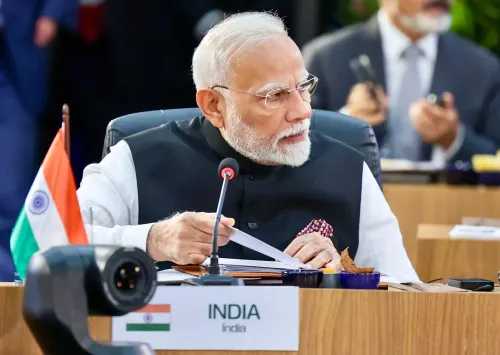
Jakarta, March 21 (NationPress) India's dedication to a balanced approach in the midst of the ongoing conflict in West Asia is evident through its leadership's engagement with all regional players since February 28, maintaining an impartial stance. For many years, India has practiced a carefully measured strategy to navigate geopolitical crises while protecting its diverse interests within a shifting global environment, as highlighted in a recent report.
“The current conflict involving Iran exemplifies this approach. It is founded on India's long-standing principle of strategic autonomy: New Delhi will not be coerced into taking sides; rather, it prioritizes national interests while considering historical, geographical, and prospective factors,” noted a report from 'The Jakarta Post'.
“Although the India-Israel partnership has expanded significantly over the years—especially in the field of technology—New Delhi has consciously refrained from aligning itself with any party in the present crisis. This nuanced strategy is influenced by India's extensive interests in the Persian Gulf and the broader West Asian region, which is home to 10 million Indian professionals and is a vital source of energy and investment,” the report elaborated.
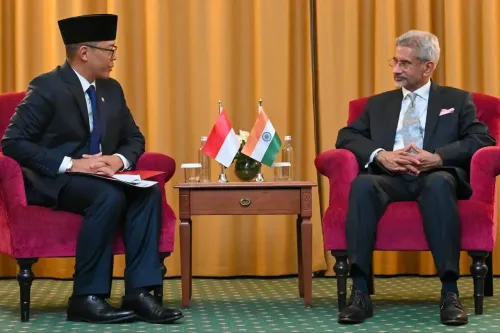
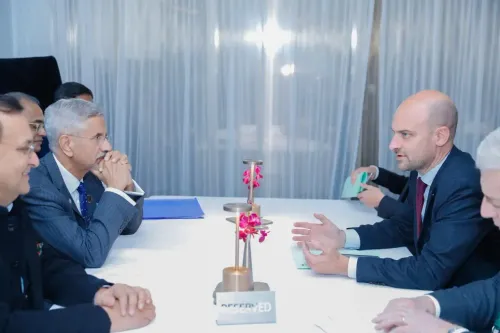
External Affairs Minister S. Jaishankar has conducted phone discussions with his Iranian counterpart following the escalation involving the US, Israel, and Iran.
Earlier this month, New Delhi also welcomed Iranian Deputy Foreign Minister Saeed Khatibzadeh during the Raisina Dialogue.
“Throughout these discussions, India's message has been consistent: dialogue and diplomacy are the only effective means to resolve conflict,” the report emphasized.
In a speech in the Rajya Sabha on March 9, Jaishankar stated that Prime Minister Narendra Modi is closely tracking the evolving circumstances in West Asia. He acknowledged that the ongoing conflict has intensified regional security concerns.
“The Prime Minister is vigilantly monitoring developments. We firmly believe that dialogue and diplomacy should be pursued to de-escalate tensions. Stability in West Asia is paramount, especially as millions of Indians reside in Gulf countries; their safety is a priority for us,” Jaishankar remarked.
The report highlighted the government's focus on protecting its citizens, indicating that New Delhi has already facilitated the return of thousands of Indians stranded in the Gulf region.
In his parliamentary remarks, Jaishankar also pointed out that the conflict has resulted in widespread devastation and the loss of several senior Iranian leaders.
Stressing the importance of dialogue and diplomacy to reduce tensions, he concluded, “It is also crucial that the sovereignty and territorial integrity of all nations in the region be upheld.”
Point of View
India's strategy in West Asia exemplifies a prudent balance between engagement and neutrality, focusing on dialogue and the safeguarding of its citizens' interests amidst a complex geopolitical landscape.
NationPress
23 Sept 2026
Frequently Asked Questions
What is India's approach to the West Asia conflict?
India is pursuing a balanced strategy, engaging with all regional actors without taking sides, rooted in its principle of strategic autonomy.
How many Indians live in the Persian Gulf region?
Around 10 million Indians reside in the Persian Gulf region, making it a crucial area for India's interests.
What has India's External Affairs Minister stated about the situation?
EAM S. Jaishankar has emphasized the importance of dialogue and diplomacy to de-escalate tensions in West Asia.
What actions has India taken to protect its citizens abroad?
India has facilitated the return of thousands of Indians stranded in the Gulf due to the ongoing conflict.
What is the significance of India's strategic autonomy?
India's strategic autonomy allows it to navigate geopolitical crises without being pressured to take sides, focusing instead on its national interests.