The Strategic Alliance of Russia and China: A Threat to US Influence?
Synopsis
A recent report reveals the careful support from Russia and China for Iran in the Middle East, highlighting the risks of American primacy being undermined. As Gulf states may lean towards Washington, the geopolitical landscape is shifting dramatically.
Key Takeaways
Russia and China are strategically backing Iran while avoiding direct confrontation with the U.S. .
This alliance poses significant risks to American influence in the Middle East .
The evolving geopolitical landscape may lead to a shift away from U.S. unipolarity towards a multipolar world.
Washington faces challenges in addressing the broader coalition supporting Iran .
Effective strategies are needed to counter Beijing's economic ties and Moscow's military partnerships.
Brussels, March 21 (NationPress) Russia and China have strategically aligned their support for Iran while steering clear of direct clashes with the United States amid the ongoing turmoil in West Asia. However, a recent report indicates that this balancing act is fraught with potential dangers, as Gulf nations might gravitate towards Washington if Beijing seems overly supportive of Tehran, and Russia could face challenges managing its military obligations.
"When Iran faces off against Israel and the United States, it does not act in isolation. Underpinning Tehran's resilience is the discreet yet impactful backing of China and Russia, two nations aiming to redefine the global landscape. Their support is not rooted in ideological alignment with Iran's clerical leadership; rather, it is focused on diminishing American dominance, broadening their own influence, and illustrating that Washington's control over the Middle East is waning," as detailed in the European Times.
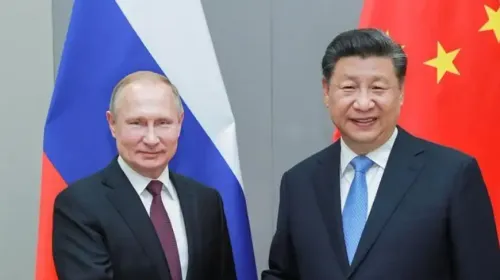
"Both Russia and China are united in their goal of undermining U.S. supremacy. Moscow, preoccupied with the conflict in Ukraine and facing Western sanctions, views Iran as a partner in resistance, a fellow outcast whose endurance supports the argument for a multipolar global order. On the other hand, Beijing aims to secure energy resources and broaden its Belt and Road Initiative influence while subtly destabilizing U.S. alliances in the Gulf region. Both nations gain from Iran's willingness to bear the burdens of direct conflict with Washington and Tel Aviv," the report further explained.
The evolution of events, according to the report, extends beyond a mere regional dispute and poses a challenge to the existing global order. The support China and Russia provide to Iran signifies a departure from the unipolarity dominated by the U.S..
"They are constructing a coalition of resistance, comprised of states that are prepared to defy U.S. pressure, endure sanctions, and assert their sovereignty against Western dictates. For Washington, the difficulty lies not only in Iran's defiance but in the broader network of support that sustains that defiance," the report noted.
Furthermore, the report emphasized that the U.S. must recognize that isolating Iran is not a unilateral task and that addressing Tehran's influence "demands not just military deterrence but also a strategic approach to counteract the allure of China's economic partnerships and Russia's military collaborations."
"Failing to consider the wider coalition behind Iran, Washington risks addressing mere symptoms while neglecting the root cause: the decline of its global dominance," it concluded.
Point of View
It is evident that the support from Russia and China for Iran represents a significant challenge to the United States' global standing. This evolving alliance not only reshapes regional dynamics but also signals a broader shift away from U.S. hegemony in international relations.
NationPress
22 Sept 2026
Frequently Asked Questions
What are the implications of Russia and China's support for Iran?
The support from Russia and China for Iran may lead to a realignment of alliances in the Gulf, potentially diminishing American influence and fostering a multipolar world order.
How might Gulf states react to the growing ties between Iran, Russia, and China?
Gulf states may reconsider their alignments, possibly drifting closer to the United States if they perceive China as overly supportive of Iran.