China Won't Fight for Iran Despite Strategic Partnership: Key Report
Synopsis
China has firmly signalled it will not provide military support to Iran despite their comprehensive strategic partnership, with Beijing insisting the alliance carries no collective defence obligation. Instead, China remains Iran's economic lifeline through massive oil purchases — wielding influence without firing a single shot.
Key Takeaways
China has confirmed its comprehensive strategic partnership with Iran does not include any military alliance or collective defence obligation, according to a Modern Diplomacy report published in April 2025 .
Professor Hu Chunchun of Shanghai International Studies University stated China "rarely participates in overseas conflicts through military means" and will not intervene militarily in the Gulf .
Foreign Ministry spokesperson Mao Ning declined to comment on whether China or Russia would provide military assistance to Iran , signalling deliberate ambiguity and restraint.
China remains Iran's largest crude oil buyer , providing a critical economic lifeline to Tehran amid international sanctions , under a reported $400 billion, 25-year cooperation deal signed in 2021 .
Beijing brokered the landmark Iran-Saudi Arabia normalisation agreement in March 2023 , positioning itself as a regional peacemaker — a role it would forfeit by taking Iran's side militarily.
Analysts warn Iran cannot rely on China or Russia for military backing, significantly limiting Tehran's strategic options in any direct confrontation with the US or Israel .
Beijing — Despite holding a comprehensive strategic partnership with Iran, China has made it unambiguously clear that it will not intervene militarily on Tehran's behalf as the West Asia conflict intensifies in April 2025. Internal discussions within Beijing, cited in a Modern Diplomacy report, confirm that China never committed to "take the bullet" for Iran — drawing a sharp line between diplomatic solidarity and military obligation.
China's Strategic Calculus: Partnership Without Military Commitment
Professor Hu Chunchun of the Shanghai International Studies University stated plainly in an interview with European media that China was unlikely to intervene militarily in the Gulf region. "China rarely participates in overseas conflicts through military means, nor does it tend to influence regional situations in this manner," he said.
Professor Hu further clarified that a comprehensive strategic partnership with Iran is not equivalent to a military alliance and carries no obligation of collective defence. This distinction is critical — it signals to both Tehran and Washington that Beijing's partnership has firm, self-defined limits.
This calculated restraint reflects a broader pattern in China's foreign policy doctrine, which has historically avoided direct military entanglement in third-country conflicts, preferring instead to leverage economic and diplomatic instruments to protect its interests.
Measured Diplomatic Response Amid Escalating Conflict
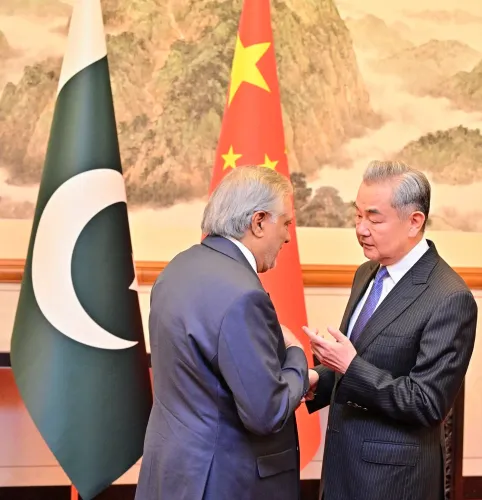
Chinese Foreign Minister Wang Yi, speaking with Russian counterpart Sergey Lavrov, condemned what he called the assassination of Iran's Supreme Leader, stating: "The blatant killing of a leader of a sovereign nation and the incitement of regime change are unacceptable." However, analysts noted this response was significantly more restrained compared to China's sharp condemnations of US actions in Venezuela or other theatres.
At a regular press briefing, Foreign Ministry spokesperson Mao Ning declined to comment on whether China and Russia would consider providing military assistance to Iran — a telling silence that underscored Beijing's deliberate reluctance to escalate its involvement.
This muted posture stands in contrast to the expectations many in Tehran may have held, given the two nations' deepening ties over the past decade, including joint military exercises with Russia and overlapping interests in countering US influence across the Indo-Pacific and West Asia.
Economic Lifeline: China's Real Leverage Over Iran
While China withholds military support, it remains Iran's most critical economic partner. Beijing has emerged as the dominant buyer of Iranian crude oil, absorbing a significant share of Iran's exports — exports that are a financial lifeline for Tehran amid crushing international sanctions imposed by the West.
The two countries share extensive cooperation in energy, infrastructure, and trade, underpinned by a long-term strategic partnership agreement signed in 2021 reportedly worth $400 billion over 25 years. This economic interdependence gives Beijing real leverage without requiring a single soldier to be deployed.
Analysts argue this is precisely the point — China's power over Iran is economic, not military. By remaining Iran's economic oxygen supply, Beijing retains influence over Tehran's behaviour without absorbing the geopolitical costs of open military alliance.
The Bigger Picture: Beijing's Balancing Act in West Asia
China's approach to the West Asia conflict reveals a sophisticated and pragmatic foreign policy. Beijing has cultivated relationships not just with Iran but also with Saudi Arabia, the UAE, and Israel — all parties with competing interests in the region. Committing militarily to Iran would jeopardise these multi-billion dollar relationships and threaten China's energy security, which is heavily dependent on Gulf oil.
Notably, China brokered a landmark Iran-Saudi Arabia normalisation deal in March 2023 — a diplomatic coup that demonstrated Beijing's preference for positioning itself as a regional peacemaker rather than a partisan actor. Military intervention on Iran's behalf would obliterate that carefully constructed image overnight.
Analysts cited in the Modern Diplomacy report emphasised that China's overriding priority is protecting its economic and strategic stakes across West Asia — including critical trade routes, energy pipelines, and Belt and Road Initiative projects — rather than ensuring the survival of any particular regime, including Tehran's.
What This Means for Iran — and the Region
For Iran, Beijing's clarification is a sobering reality check. Tehran has long positioned its relationship with China as a counterweight to Western pressure, but the absence of a military backstop significantly limits Iran's strategic options in any direct confrontation with the United States or Israel.
For India, which has its own complex relationships with both Iran — including the strategically vital Chabahar Port — and China, Beijing's restraint offers a window into how major powers calculate risk in volatile theatres. It also reinforces that economic partnerships in today's multipolar world do not automatically translate into security guarantees.
As the West Asia conflict continues to evolve, all eyes will be on whether Beijing's carefully maintained neutrality holds — or whether a dramatic escalation forces China to finally choose sides, a choice it has so far gone to extraordinary lengths to avoid.
Point of View
Not ideological commitments. Beijing is playing a longer, smarter game: it keeps Iran economically dependent through oil purchases while maintaining profitable ties with Saudi Arabia, the UAE, and even Israel. The real story here isn't Chinese restraint — it's Chinese dominance through economic leverage. India should take careful note: in today's multipolar world, strategic partnerships are instruments of national interest, not shields of solidarity.
NationPress
10 Oct 2026
Frequently Asked Questions
Will China provide military support to Iran in the West Asia conflict?
No. China has explicitly signalled it will not intervene militarily on Iran's behalf. Chinese academics and the Foreign Ministry have both clarified that the comprehensive strategic partnership with Iran does not constitute a military alliance or collective defence obligation.
What is the nature of the China-Iran strategic partnership?
China and Iran hold a comprehensive strategic partnership, including a reported 25-year, $400 billion cooperation agreement signed in 2021 covering energy, infrastructure, and trade. However, Beijing has made clear this partnership does not extend to mutual military defence.
Why is China reluctant to support Iran militarily?
China prioritises its broader economic and strategic interests across West Asia, including energy security and trade relationships with Gulf states like Saudi Arabia and the UAE. Military intervention for Iran would jeopardise these relationships and contradict China's self-image as a regional peacemaker.
How does China support Iran economically?
China is Iran's largest buyer of crude oil, absorbing a major share of Iranian exports that remain critical for Tehran amid international sanctions. This economic relationship gives Beijing significant influence over Iran without requiring military commitment.
What did China's Foreign Minister say about the Iran conflict?
Chinese Foreign Minister Wang Yi condemned what he described as the assassination of Iran's Supreme Leader, calling it 'unacceptable.' However, analysts noted the response was far more measured than China's condemnations of US actions in other regions, reflecting deliberate restraint.