India's Diplomatic Balancing Act: Uniting BRICS and the US in Turbulent Times
Synopsis
India's diplomatic prowess is emerging as a vital link between BRICS and the US. Amid global tensions, its relationships with Israel and Iran highlight a unique strategy that maintains national interests while fostering cooperation across conflicting geopolitical landscapes.
Key Takeaways
India's diplomatic strategy emphasizes strategic autonomy.
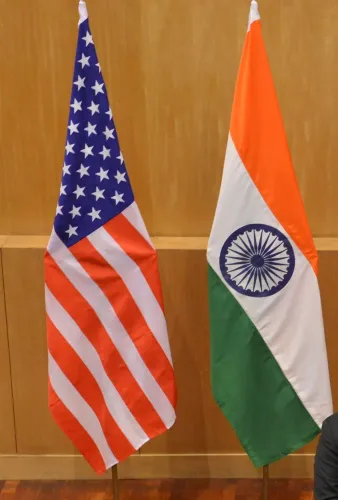
It serves as a bridge between BRICS and the US .
India maintains strong ties with both Israel and Iran .
The ongoing Iran conflict reveals vulnerabilities in US-Israel relations.
India's approach fosters cooperation amidst geopolitical tensions.
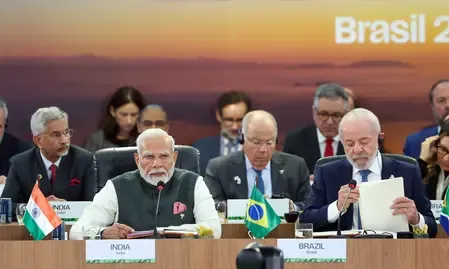
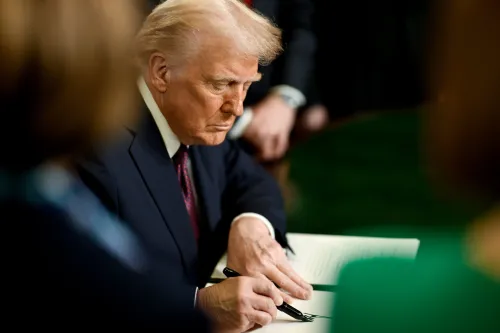
Johannesburg, March 25 (NationPress) India’s talent for managing relationships with various, often conflicting parties may emerge as a significant diplomatic asset, acting as a conduit between BRICS and the US. A report indicates that during President Donald Trump's tenure, the bloc was perceived as anti-American and a potential challenge to Washington.
The South African publication, The Citizen, discussed how India's ties with Israel could influence the solidarity among BRICS nations.
The ongoing conflict in Iran has revealed the limitations of the military supremacy held by the US-Israel alliance while also showcasing the strains that significant geopolitical crises impose on the framework of a new multipolar world.
According to the report, Donald Trump’s aggressive global strategy met its match when the US and Israel engaged in military actions against Iran. Unlike Venezuela, the Islamic Republic retaliated vigorously, even in the face of losing its supreme leader. The war's conclusion will undoubtedly leave lasting lessons for both America and Israel, with implications that extend beyond mere military engagements.
“The conflict has laid bare the fissures within major international alliances, such as the United Nations, NATO, and even BRICS, as member nations increasingly find their national agendas diverging,” the report stated.
The report further remarked that concerns surrounding New Delhi’s stance on Israel potentially jeopardizing BRICS unity fail to recognize a core aspect of Indian diplomacy – the country has consistently refrained from aligning with rigid geopolitical factions.
As noted, India’s diplomatic strategy has historically emphasized strategic autonomy, allowing it to balance relationships across competing alliances while safeguarding its national interests.
“This strategy is particularly evident in the Middle East, where India fosters robust partnerships with Israel in areas like defense technology, agriculture, and innovation, while simultaneously maintaining strong economic and energy connections with the Arab world and Iran,” the report asserted.
“This balancing act is not an inconsistency but a calculated strategy. For India, its deepening ties with Israel are based on practical considerations,” it added.
Highlighting India’s constructive role as a pragmatic global player, the report concluded, “Rather than undermining BRICS coherence, India’s position illustrates the dynamic nature of multipolar diplomacy, as seen in its amicable relations with Iran, Israel’s principal adversary.”
Point of View
India's diplomatic engagement reflects a pragmatic approach that prioritizes national interests while fostering collaboration among diverse global actors. The emphasis on strategic autonomy suggests a sophisticated understanding of global dynamics.
NationPress
24 Sept 2026
Frequently Asked Questions
How does India balance its relationships with BRICS and the US?
India employs a strategy of strategic autonomy, engaging with multiple global powers without aligning with rigid geopolitical camps, which allows it to navigate complex relationships.
What role does India's relationship with Israel play in BRICS?
India's ties with Israel are viewed as a pragmatic approach that may influence BRICS unity, reflecting India's ability to maintain strong partnerships across conflicting interests.
What are the implications of the Iran conflict for US-Israel relations?
The Iran conflict has exposed vulnerabilities in the US-Israel alliance, revealing divisions within international groupings like BRICS, as nations prioritize their own national interests.
Why is India's diplomatic strategy significant?
India's diplomatic strategy emphasizes balancing engagements across various blocs, showcasing its ability to adapt in a multipolar world while safeguarding its national interests.
What does strategic autonomy mean for India?
Strategic autonomy for India means maintaining independence in foreign policy decisions, allowing the country to engage with diverse nations without being confined to specific alliances.