Is India a Crucial Balancing Force Amid Geopolitical Turmoil?
Synopsis
As geopolitical tensions rise, Israel finds hope in India's BRICS leadership. Discover how India's strategic role could redefine alliances and bolster its international influence, while safeguarding its interests. This pivotal moment highlights the importance of multipolarity in global politics.
Key Takeaways
India as a balancing force: Plays a crucial role in stabilizing BRICS and preventing anti-Western sentiment.
Strategic autonomy: Israel must leverage India's independence to safeguard its interests.
Multipolarity focus: India's leadership aims to promote a multipolar world order.
Complex geopolitical landscape: India navigates challenges from both Western and Eastern powers.
Historical context: This presidency comes at a time of unprecedented global uncertainty.
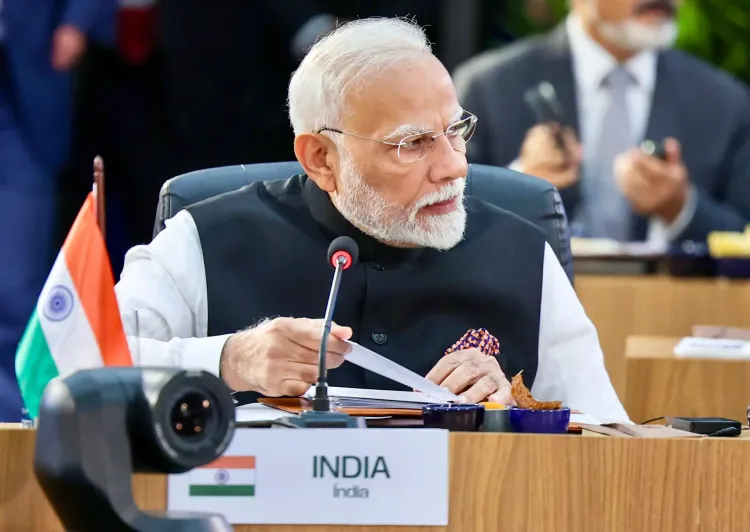
Tel Aviv, Jan 23 (NationPress) As the influence of Tel Aviv in the West diminishes and the discourse within American society becomes increasingly adversarial, Israel perceives India's role as the leader of BRICS to be critically important across multiple dimensions, as highlighted in a recent report.
“India continues to be the organization’s 'responsible adult'. New Delhi is focused on ensuring that BRICS does not morph into an overtly anti-Israel group or become dominated solely by the Chinese axis and anti-Israel elements. India's presidency guarantees that the organization will maintain a focus on economic and infrastructure matters, which provides Jerusalem with a crucial diplomatic shield. Israel needs to leverage India's strategic independence to safeguard its interests on the global stage, especially as international alliances are being redefined,” stated Oshrit Birvadker from the Jerusalem Institute for Strategy and Security (JISS).
Birvadker, who specializes in India-Israel, India-Gulf, and Indo-Pacific relations, noted that India's leadership of BRICS could act as a crucial barrier for Israel against the organization's rising politicization.
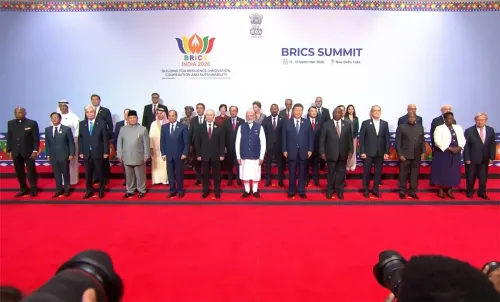
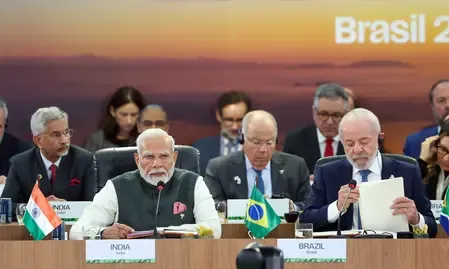
“As of 2026, India has officially commenced its role as the BRICS (Brazil, Russia, India, China, and South Africa) president, taking the helm at a pivotal geopolitical moment. The launch of the official logo and website on January 6 by External Affairs Minister Dr. S. Jaishankar signifies the start of a challenging initiative: prioritizing the interests of the ‘Global South’ amid competing internal agendas and increasing diplomatic pressure from Washington,” the JISS report indicated.
Birvadker elaborated that India’s presidency is influenced by two significant factors that are reshaping the international landscape: the transactional, US-centric foreign policy and the escalating competition regarding the interpretation and limits of ‘multipolarity’.
The report claims that for Israel, a nation historically allied with the West yet located in the East, India’s leadership of BRICS in 2026 presents both a “chance and a strategic challenge”.
“In a global scenario divided between traditional Western alliances and the economic rise of the East, India acts as a crucial balancing force. New Delhi’s capacity to mitigate anti-Western sentiments within the bloc and prevent its exploitation as a political instrument renders its presidency an essential support for Jerusalem in maintaining its diplomatic flexibility—even though, ultimately, Israel’s connection to the US remains too deep to allow for a genuinely balanced policy,” the opinion piece underscored.
The report emphasizes that India's involvement in BRICS and its current leadership reflect its commitment to fostering a multipolar world order with India as a key player. Concurrently, it aims to ensure that the organization does not become a vehicle for Chinese dominance or adopt an overtly confrontational or anti-Western position.
“Since embracing a proactive foreign policy grounded in multi-alignment, New Delhi has adeptly navigated the advantages of bilateral cooperation with multiple powers while playing a pivotal role in multilateral forums like the Quad—alongside the US, Australia, and Japan—aimed explicitly at countering China's influence. Although this is not India’s inaugural leadership of BRICS, it takes the current presidency at a time of unparalleled geopolitical instability and global uncertainty,” the report concluded.
Point of View
Recognizing its potential as a diplomatic anchor for Israel while navigating the complexities of international relations. As editors, we remain committed to delivering balanced insights that reflect the multifaceted nature of global politics.
NationPress
2 Oct 2026
Frequently Asked Questions
What is the significance of India's BRICS presidency for Israel?
India's leadership in BRICS is seen as a crucial diplomatic safeguard for Israel, helping to mitigate anti-Israel sentiments and ensuring a focus on economic cooperation.
How does India's foreign policy impact its role in BRICS?
India's proactive foreign policy, rooted in multi-alignment, allows it to balance relations with major powers while maintaining its independence within BRICS.
Why is 2026 a critical year for India's presidency in BRICS?
2026 marks a pivotal moment as India assumes leadership at a time of unprecedented geopolitical instability, influencing both regional and global dynamics.
What challenges does India face as BRICS president?
India must navigate internal agendas and external pressures, particularly from the US, while preventing BRICS from becoming a tool for Chinese dominance.
How does India balance its relations with the West and the East?
India's role as a balancing force is vital in a polarized world, enabling it to temper anti-Western sentiments while fostering economic ties with Eastern nations.