How is New Delhi Responding to the Venezuela Raid? Russian Media Shows Confidence in BRICS Chair Amidst US Challenges
Synopsis
As India takes over the BRICS presidency, it faces the intricate task of addressing global trade challenges and geopolitical tensions. This article explores New Delhi's response to recent US actions in Venezuela and the implications for the Global South.
Key Takeaways
India's leadership in BRICS signifies a potential shift in global trade dynamics.
The bloc is expanding to include more countries, enhancing its global influence.
New Delhi's cautious response to US actions in Venezuela is noteworthy.
BRICS aims to promote a multipolar world order.
India faces significant challenges in balancing geopolitical interests.
New Delhi, Jan 6 (NationPress) A BRICS bloc with India leading is better positioned to navigate the intricate challenges of establishing a new trade framework compared to a more aggressive China, especially in light of an antagonistic US, as noted by an article from Russia’s international news television network.
According to the piece published on the state-controlled RT.com on Tuesday, “India’s primary responsibility is to guide the economic and political mandate of such a vast bloc. Simultaneously, it should strive to navigate the geopolitical intricacies of engaging with global powers whose interests span various sectors including economy, technology, energy, and essential minerals.”
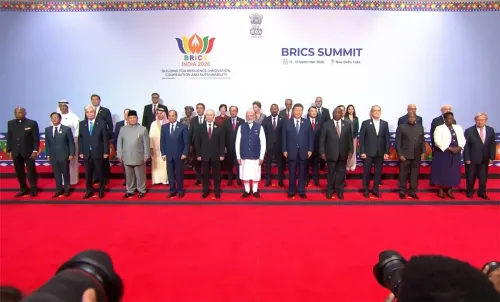
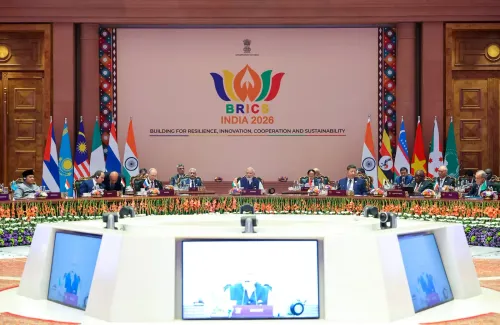
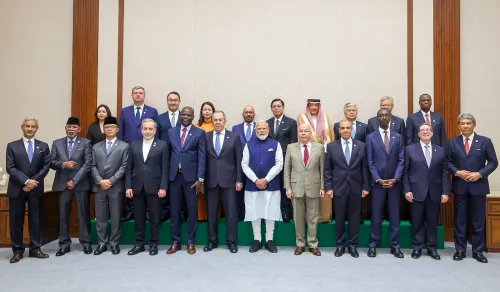
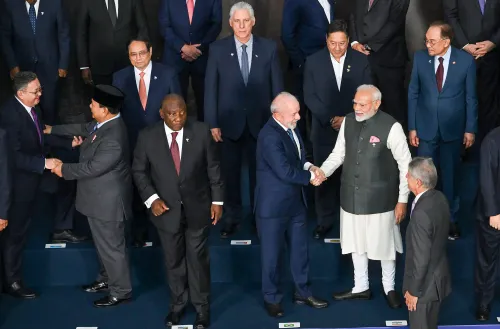
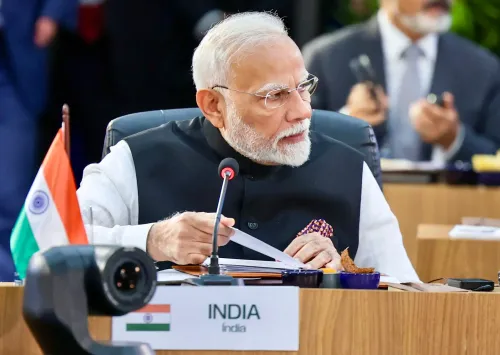
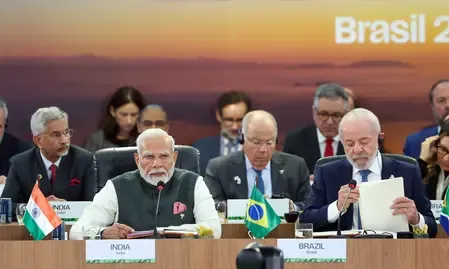
New Delhi has officially taken on the BRICS presidency for 2026, where it is anticipated to advocate for a development and trade agenda for the Global South while managing geopolitical strains and an expanded membership.
The current BRICS group includes 11 member nations: Brazil, Russia, India, China, South Africa, and recently added Saudi Arabia, Egypt, the United Arab Emirates, Ethiopia, Indonesia, and Iran.
This expansion signifies the growing significance of BRICS in the global economic arena, representing a substantial share of the world’s population and GDP.
The bloc is often perceived as a counterweight to Western-led institutions, aspiring to foster a multipolar global order. It provides a platform for collaboration among emerging economies, focusing on strengthening economic, political, and cultural connections.
The group seeks to amplify the influence of Global South nations in global governance and enhance the credibility and efficiency of international institutions such as the United Nations and the World Bank.
The report highlighted the US operation in Venezuela on Saturday, suggesting it presents BRICS nations with the chance to address concerns regarding the apparent shortcomings of global governance, particularly in reference to the United Nations.
“New Delhi’s leadership of BRICS in the New Year coincided with US forces conducting an operation in Caracas, capturing President Nicolas Maduro and his spouse,” the article stated.
The article commended New Delhi’s cautious response, especially since Washington’s actions have drawn widespread international criticism, particularly from BRICS members China, Brazil, and Russia, while asserting that “holding the BRICS presidency will require New Delhi to undertake a challenging balancing act on such matters.”
Furthermore, the report indicated, “India's leadership comes at a crucial moment as the BRICS coalition aims to broaden its influence. The 2026 presidency will be under scrutiny, especially given US President Donald Trump’s clear opposition to BRICS.”
Earlier this year, President Trump dismissed the bloc’s relevance, declaring “BRICS is dead.” However, he also threatened to impose a 100% tariff on imports from member nations should they pursue a common currency for trade, thus challenging the significance of the US dollar as the primary medium of exchange. The RT report concluded by noting that India’s assumption of the presidency coincides with ongoing trade negotiations with Washington.
“These discussions have been contentious since Trump imposed a 50% tariff on Indian goods, partly as a punitive measure for India’s oil imports from Russia.”
Point of View
Our position remains firmly aligned with the nation's interests. India's leadership in BRICS presents a unique opportunity to reshape global trade dynamics and assert the influence of the Global South. We recognize the challenges posed by US actions and emphasize the importance of strategic diplomacy in navigating these complexities.
NationPress
27 Oct 2026
Frequently Asked Questions
Why is India's presidency of BRICS significant?
India’s presidency is crucial as it comes at a time when the bloc is looking to expand its influence and address global trade issues while managing geopolitical tensions.
What recent event involved US forces in Venezuela?
US forces conducted an operation in Venezuela, capturing President Nicolas Maduro, which has drawn international criticism and raised concerns about global governance.
How does BRICS counter Western institutions?
BRICS aims to provide a counterbalance to Western-dominated institutions by promoting a multipolar world order and enhancing cooperation among emerging economies.
What challenges does India face as BRICS president?
India must navigate complex geopolitical tensions, manage an expanded membership, and advocate for a development agenda for the Global South while addressing US opposition.