India's BRICS Leadership: A Diplomatic Challenge Amid Middle Eastern Conflict
Synopsis
As India prepares for its BRICS presidency in 2026, it faces a complex diplomatic landscape influenced by escalating Middle Eastern tensions. Can India unite conflicting interests of its BRICS partners, including Iran, the UAE, and Saudi Arabia? This article explores the challenges ahead.
Key Takeaways
India's diplomatic skills will be rigorously tested during its BRICS presidency.
Conflicting interests of BRICS members, including Iran , UAE , and Saudi Arabia , complicate consensus-building.
A prolonged conflict in the Middle East poses significant economic and social challenges for India.
India must navigate complex relationships with global powers like the US , Russia , and China .
Successful diplomacy depends on India's ability to balance competing interests effectively.
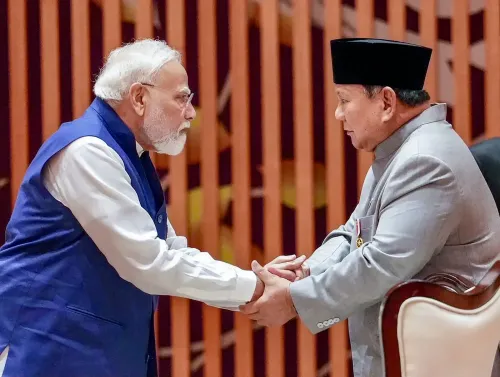
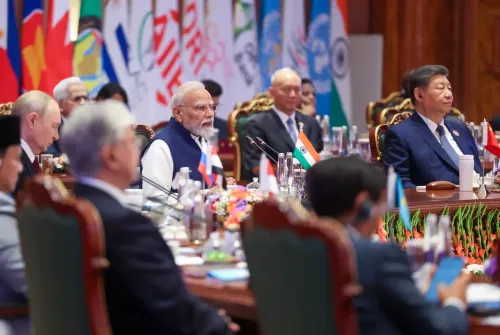
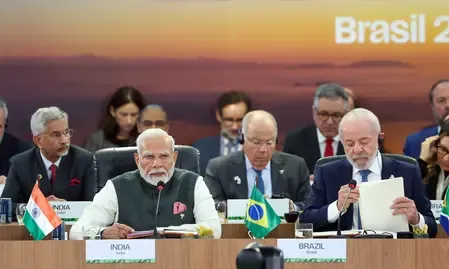
New Delhi, March 19 (NationPress) India's upcoming BRICS presidency in 2026 is poised to challenge New Delhi's diplomatic capabilities even more than its notably successful G20 presidency. With BRICS nations like Iran, the UAE, and Saudi Arabia having conflicting stances amid the intensifying Middle Eastern conflict, the pressing question is how India will manage to create a consensus that satisfies all parties involved.
Former Foreign Secretary Kanwal Sibal commented in India Narrative, stating that this "unwanted war" is causing significant disruptions in India’s relations with West Asia.
"Our leadership of BRICS this year will put our diplomatic skills to the test, even more so than our fruitful G20 presidency. Considering that Iran, the UAE, and Saudi Arabia are all BRICS members, how do we craft a consensus that resonates with both sides? Unlike India, both Russia and China—permanent members of the Security Council—possess critical diplomatic and economic leverage," Sibal noted.
He elaborated that India's association with the US, which has instigated this conflict, carries a different political dynamic compared to its ties with Russia and China. Close consultations with Russia, China, Brazil, South Africa, Egypt, and Indonesia will be essential to draft a consensus, which he believes India will successfully achieve.
Sibal emphasized that a prolonged conflict would severely impact India. "Persistently high oil and gas prices will affect not only our economy but also lead to social ramifications. Our burgeoning relationships with Gulf nations, where our interests are significant, will be jeopardized. The growth and technological future of Gulf countries, particularly the UAE, in collaboration with India, may be called into question. Balancing our relationships with Israel, Iran, the GCC nations, and the US, each with compelling interests, will be a daunting task for India," he wrote.
In his remarks, Sibal also referenced Donald Trump's fluctuating statements, asserting that the US President lacks a coherent strategy for resolving the war against Iran initiated by him and Israel. He pointed out that the US retains the capacity to continue its military actions against Iran and questioned the ultimate objective behind these maneuvers.
"Initially, Trump calculated that he could intimidate the Iranian regime into complying with his demands regarding its nuclear program, missile capabilities, and its destabilizing role in the region by significantly deploying US military assets in West Asia. This display of military might did not yield the expected results, much to the surprise of his advisor Steve Witkoff, who wondered why Iran had not capitulated under pressure," the experienced diplomat explained.
He continued, "Trump subsequently dealt a significant blow by authorizing the elimination of Iran's top leadership: the Supreme Leader, several family members, and senior Iranian generals. The assumption that this would cripple the clerical regime, leading to a disarrayed Iran, has proven erroneous," Sibal articulated in India Narrative.
Sibal asserted that the war must conclude at some point, noting that while Trump appears to seek an "off-ramp," Iran remains staunchly opposed to negotiations.
"For Iran, this is a matter of survival. Trusting any peace agreement with Trump is unthinkable because the US has twice engaged in negotiations only to attack Iran during those discussions. The US and Israel have made their desire to overthrow the clerical regime in Iran abundantly clear. This poses a threat that the US would gain control over Iran's resources and foreign policy, while Israel would achieve uncontested dominance in the region with US support," he remarked.
"The stakes are incredibly high for both parties. The US cannot afford to lose, nor can Iran. The critical question remains: who possesses greater endurance?" he concluded.
Point of View
India's upcoming BRICS presidency presents a formidable test of its diplomatic skills. The necessity for consensus among diverse BRICS members underscores the complexities of global politics, especially in the context of regional conflicts.
NationPress
24 Sept 2026
Frequently Asked Questions
What is the significance of India's BRICS presidency?
India's BRICS presidency is crucial as it tests the country's diplomatic abilities to unite member nations with conflicting interests amidst regional tensions.
Which countries are members of BRICS?
BRICS consists of Brazil, Russia, India, China, and South Africa, with additional partnerships including nations like Iran, UAE, and Saudi Arabia.
How does the Middle Eastern conflict affect India?
The ongoing conflict impacts India's economic ties, particularly with Gulf nations, and poses challenges to maintaining balanced relationships with Israel and Iran.
What role does the US play in the Middle Eastern tensions?
The US has initiated military actions against Iran, complicating diplomatic relations in the region and influencing India's foreign policy strategies.
What are the potential outcomes of India's diplomatic efforts?
The success of India's diplomatic initiatives will depend on its ability to create a consensus that addresses the interests of all involved parties.