What Lessons Can Europe Learn from India's Strategic Autonomy?
Synopsis
Discover how India's strategic autonomy offers pivotal lessons for Europe in navigating geopolitical challenges. This article explores the historical context of India's approach, its current diplomatic strategies, and the implications for European unity amidst economic and political fragmentation.
Key Takeaways
India's strategic autonomy emphasizes balance over dominance.
Historical experiences inform current diplomatic strategies .
Multi-alignment allows India to engage multiple powers simultaneously.
Economic resilience is vital for global influence .
India's defense modernization supports both sovereignty and strategy.
New Delhi, Jan 12 (NationPress) In 2025, India actively pursued strategic autonomy not to dominate the global landscape but to create a balance within it, utilizing its historical experiences and prioritizing institutional continuity, economic resilience, and multidimensional diplomacy, as highlighted in a recent European report.
During the Mughal era, the Indian subcontinent acted as a stabilizing force in a fragmented regional system, not through perpetual military expansion but through administrative cohesion, economic strength, and adept management of rivalries, according to an analysis on EuropaWire.
In a similar vein, modern New Delhi employs a comparable strategy, steering clear of absolute alliances while investing in institutional continuity and leveraging economic resilience alongside multidimensional diplomacy as instruments of geopolitical influence, the report detailed.
The analysis delves into how India’s evolving foreign policy, characterized by strategic autonomy, has become a cornerstone of its global interactions, offering critical insights for Europe amidst its own challenges of fragmentation, economic pressures, and geopolitical uncertainties.
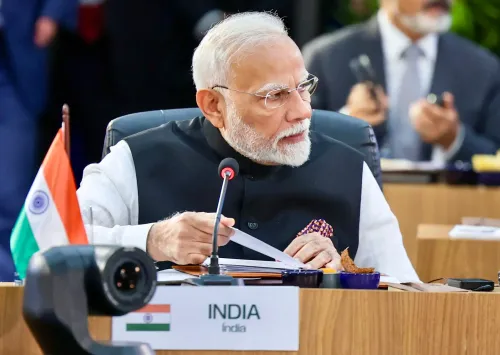
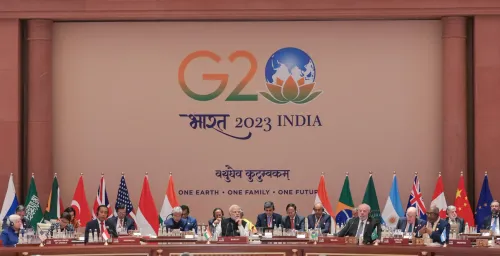
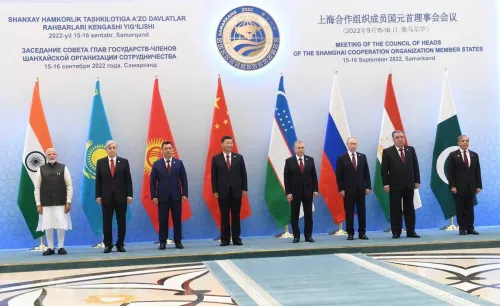
India’s approach is not a passive form of non-alignment but an active multi-alignment, engaging with the United States, the European Union, and other entities like BRICS and G20 simultaneously, while avoiding reliance on any single bloc.
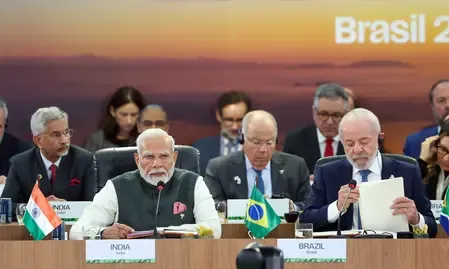
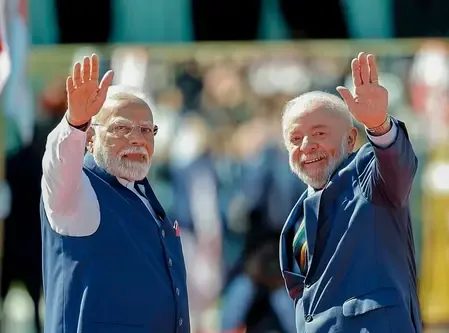
At the BRICS Summit in Rio in 2025, India advocated for Global South representation and multilateral collaboration. Last year’s G20 Summit in Johannesburg saw India prioritize climate resilience and developmental needs, reinforcing its position as a mediator between developed and developing countries.
These initiatives underscore India’s capability to influence agendas without being overshadowed by larger powers, enabling it to optimize leverage, diversify partnerships, and maintain adaptability in a multipolar environment.
The report also emphasized that political stability under Prime Minister Narendra Modi has fortified India’s ability to withstand external pressures; even aggressive U.S. trade policies during Donald Trump’s administration did not derail New Delhi’s progress, thanks to its internal cohesion and economic fortitude.
With respect to China, ongoing border tensions and systemic divergences remain pivotal in India’s strategic assessments, where New Delhi capitalizes on its democratic framework as a counterbalance to Beijing’s authoritarianism.
Furthermore, the report noted that India’s economic growth serves as the bedrock of its global clout, maintaining one of the highest growth rates among major economies in 2025, with a GDP increase of around 6.7% and surpassing 8% in one quarter, driven by robust domestic demand and investments.
India’s exports and trade displayed remarkable resilience in the face of international headwinds, the analysis remarked.
Total goods and services exports, estimated at $73.99 billion in November 2025, rose by 15.5% year-over-year, while cumulative exports from April to November reached approximately $562 billion, marking a 5.4% increase.
These statistics reflect the government’s focus on manufacturing and skills development, which are yielding results, transforming trade policy into a versatile tool for foreign policy.
Additionally, India secured improved access to vital markets through free trade agreements (FTAs) with New Zealand, the United Kingdom, and Oman, while also strengthening relations with Gulf nations and Southeast Asia, paving the way for new agreements, including with the United States in 2026. Concurrently, New Delhi remained focused on national security.
In the wake of achieving its objectives during a brief conflict with Pakistan, in response to the Pahalgam terrorist attack, New Delhi renewed its commitment to modernizing its armed forces and developing indigenous defense technologies.
Operations targeting Pakistani military infrastructure under Operation Sindoor showcased India’s enhanced precision and operational capabilities, while New Delhi signaled its intention to act as a responsible global power by avoiding unnecessary escalations.
Simultaneously, substantial investments in indigenous defense technology and military modernization are regarded as both a safeguard of sovereignty and a means for strategic leverage.
As Europe grapples with inflation, geopolitical instability, and reliance on external entities, New Delhi’s focus on unity, predictability, and strategic coherence is particularly pertinent to the euro crisis and geopolitical fragmentation, the report concluded.
The article advocates for deeper India-EU collaboration in trade, technology, and defense as essential for preserving sovereignty against the economic power plays of major players, with the India-EU FTA anticipated to be solidified later this month.
Point of View
I believe that India's strategic autonomy provides a vital framework for countries like those in Europe. By focusing on institutional continuity, economic resilience, and multidimensional diplomacy, India showcases a model that can enhance international cooperation and stability, particularly in times of uncertainty.
NationPress
30 Sept 2026
Frequently Asked Questions
What is India's strategic autonomy?
India's strategic autonomy refers to its foreign policy approach that seeks to balance relationships with multiple global powers rather than aligning strictly with any single bloc.
How has India's historical context shaped its current foreign policy?
India's historical experience during the Mughal period, where it maintained regional stability through economic strength and governance rather than expansion, informs its contemporary approach to international relations.
What are the implications of India's economic growth?
India's sustained economic growth enhances its global influence, positioning it as a key player in international trade and diplomacy, especially in the context of geopolitical challenges.
How does India's approach to China differ from its engagements with the West?
India leverages its democratic model as a counterbalance to China's authoritarianism, focusing on maintaining strategic stability while engaging in dialogue and cooperation with Western nations.
What significance do the India-EU FTAs hold?
The India-EU free trade agreements are crucial for enhancing economic cooperation and safeguarding sovereignty against the economic power dynamics of larger global actors.