India Solidifies Strategic Ties with EU: Latest Insights
Synopsis
Explore how India is transforming its relationship with the EU from trade to a robust strategic partnership, focusing on technology, defense, and a stable Indo-Pacific. This shift marks a pivotal moment in global diplomacy.
Key Takeaways
Strategic Partnership: India is shifting its relationship with the EU from trade to strategic collaboration.
Enhanced Bilateral Relations: EU countries are deepening ties with India through various strategic initiatives.
India as a Stabilizer: New Delhi is increasingly viewed as a key player in the Global South.
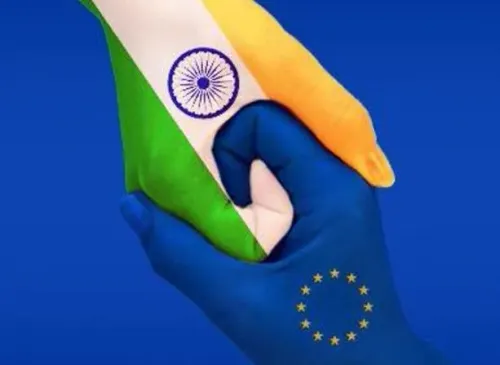
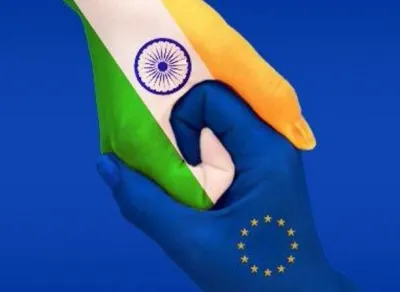
New Delhi, March 9 (NationPress) India’s relationship with Germany and the European Union (EU) has evolved beyond simple trade interactions into a comprehensive strategic partnership that includes economics, technology, and a mutual commitment to a stable Indo-Pacific region, as highlighted in a recent report.
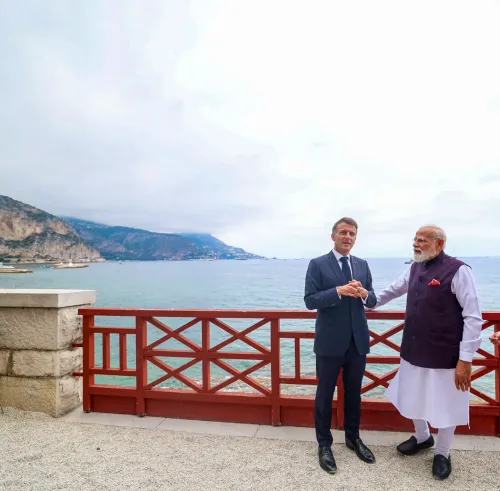
According to an article by India Narrative, “Recent high-level diplomatic visits and enhanced frameworks with Germany, France, Italy, Finland, and EU leaders have solidified Europe as India’s second strategic arena following the core Quad network in the Indo-Pacific.”
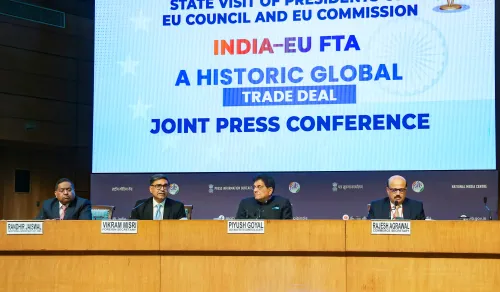
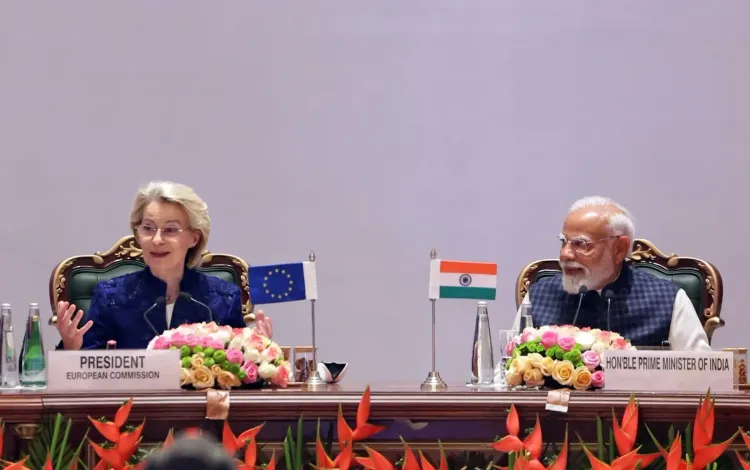
Previously dominated by trade, aid, and politics tied to the diaspora, India’s connections with Europe have shifted to encompass strategy: focusing on technology supply chains, defense co-production, clean energy transitions, and collaborative efforts in the Indo-Pacific. Over the last five years, Brussels has begun recognizing New Delhi as a systemic stabilizer and a pivotal voice for the “Global South,” as evidenced by the unprecedented visit of the EU College of Commissioners to India in February 2025, the article notes.
At the same time, key EU member states have “bilateralized” their strategic engagements with India. France has upgraded its relations to a “Special Global Strategic Partnership”; Germany is celebrating 25 years of its Strategic Partnership; Italy has released a thorough Joint Strategic Action Plan for 2025-2029; and Finland has enhanced its strategic partnership through high-level ministerial and presidential discussions in early 2026.
This creates an intricate framework: EU-level agreements on trade, digital collaboration, and connectivity, supplemented by state-level defense, industrial, and technological cooperation that directly support India’s growth and security aims, as per the article by Anushree Dutta.
The article emphasizes that Germany’s relationship with India has traditionally been grounded in economic complementarity, but the recent shift is towards a strategic partnership focusing on industrial and green transition. Chancellor Friedrich Merz’s visit to India in January 2026 was deliberately positioned as a signal that Berlin recognizes New Delhi as a central Indo-Pacific ally, rather than merely a peripheral market.
For India, German investments and technology are essential for mitigating risks in its China-exposed supply chains and advancing its domestic manufacturing and green energy initiatives. Conversely, for Germany, India presents both a significant market and an opportunity to diversify away from reliance on China, while also establishing a politically acceptable presence in the Indo-Pacific that aligns with Berlin’s evolving regional strategy.
Point of View
The evolving relationship between India and the European Union signifies a strategic realignment that could reshape global dynamics, positioning India as a key player in international affairs. This development highlights the importance of diversifying partnerships and enhancing cooperative frameworks for mutual growth.
NationPress
29 Sept 2026
Frequently Asked Questions
What has changed in India's relationship with the EU?
India's relationship with the EU has shifted from a focus on trade to a comprehensive strategic partnership that includes technology, defense, and stability in the Indo-Pacific.
How have member states of the EU engaged with India?
Key EU member states like France, Germany, Italy, and Finland have strengthened their bilateral relations with India, creating strategic partnerships that enhance cooperation across various sectors.
Why is India seen as a stabilizer for the Global South?
India is recognized as a systemic stabilizer and a crucial voice for the Global South, particularly in light of its growing influence and strategic ties with the EU.