India Rising: New Global Centre of Gravity Report Reveals
Synopsis
A Times of Israel report reveals India is no longer just an emerging economy — it is the world's new centre of gravity, bridging fractured geopolitical blocs, commanding a 35-million-strong diaspora, and projecting cultural influence from Silicon Valley boardrooms to global streaming platforms. India's quiet rise is now impossible to ignore.
Key Takeaways
India is identified as the world's new global centre of gravity in a Times of Israel analytical report published in April 2025 .
India serves as the central voice of the Global South and a preferred partner for digital infrastructure , pharmaceuticals , energy transition , and security cooperation .
India's 35-million-strong diaspora spans the most influential economies globally, including the United States , United Kingdom , and Gulf states .
Indian-origin executives shape Silicon Valley's technology landscape, while leaders of Indian heritage hold significant influence in British politics .
The Indian Premier League (IPL) has evolved from a domestic cricket tournament into a global commercial marketplace attracting sophisticated international investors.
India's cultural exports — including Bollywood , Tamil and Telugu cinema , and Indian cuisine — now reach global audiences across streaming platforms and urban food cultures worldwide.
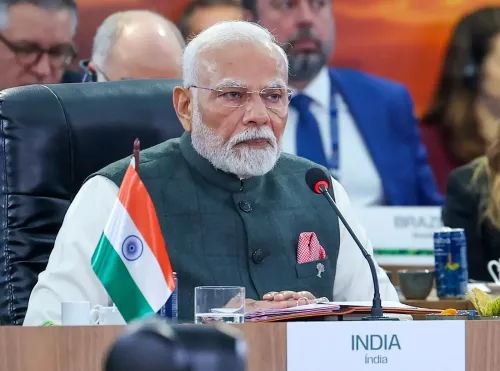
New Delhi, April 23: India is rapidly establishing itself as a new global centre of gravity, capable of bridging an increasingly fragmented world divided into competing geopolitical blocs, according to a detailed analytical article published in The Times of Israel. Beyond its status as the world's fastest-growing major economy, India's influence is being felt across diplomacy, technology, culture, and commerce — a transformation that is both historic and accelerating.
India as the Indispensable Bridge Nation
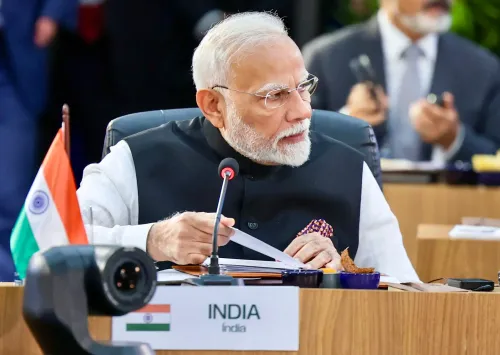
The report identifies India as the central voice of the Global South and a preferred strategic partner for digital infrastructure, pharmaceuticals, energy transition, and security cooperation spanning Africa, the Gulf, and Southeast Asia. What makes India's position uniquely powerful is its rare ability to engage simultaneously with Washington and Brussels without sacrificing credibility in Nairobi, Abu Dhabi, or Jakarta.
This diplomatic dexterity — rooted in India's long-standing policy of strategic autonomy — has become increasingly valuable as the world fractures along US-China fault lines. Where most nations are forced to choose sides, India has positioned itself as a trusted interlocutor for all parties, a role that carries enormous economic and political leverage.
"India's rise has unfolded quietly," the article notes, describing it as "a steady civilisational re-emergence carried by 1.4 billion people at home and its diaspora comprising tens of millions abroad."
The 35-Million Strong Diaspora Shaping Global Power
The article underscores the extraordinary reach of India's 35 million-strong diaspora, embedded across the world's most influential economies and political systems. In Silicon Valley, executives of Indian origin sit at the apex of the global technology landscape, shaping policies and ecosystems that drive international markets.
In the United Kingdom — the former colonial ruler of India — the political establishment is now deeply intertwined with Indian heritage, with leaders of Indian descent influencing the direction of British politics at the highest levels. The irony is historically profound: the colonised nation now shapes the coloniser's governance.
Across the Gulf states, millions of Indian professionals — from construction workers and surgeons to small business owners and senior executives — form the economic backbone of entire nations. This human capital export has generated billions in remittances while simultaneously building India's soft power in strategically vital regions.
Cultural Footprint: From Diwali in New York to IPL on Global Screens
India's rise is not confined to economics or geopolitics — it is profoundly cultural. Diwali now illuminates public squares from New York to Melbourne. Holi celebrations have become annual fixtures in cities that had no historical connection to the subcontinent just a generation ago.
Indian cuisine has transcended the outdated "curry house" stereotype. Dosa trucks in California, chaat bars in London, and biryani chains in Dubai represent a culinary tradition that has woven itself into global urban culture. Similarly, Indian cinema — from sweeping Bollywood musicals to Tamil and Telugu blockbusters — dominates streaming platforms worldwide, reaching audiences who may not speak Hindi or Tamil but intuitively grasp the emotional language of Indian storytelling.
The report cites cricket as perhaps the most striking symbol of India's cultural ascendancy. "What began as a colonial pastime has become a global commercial engine shaped decisively by India's scale and imagination," it states. The Indian Premier League (IPL) is no longer merely a domestic tournament — it has evolved into a global marketplace attracting some of the world's most sophisticated investors and media conglomerates.
Why This Moment Is Different: Historical Context and Strategic Depth
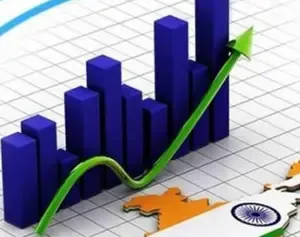
This assessment arrives at a pivotal moment. India recently surpassed China as the world's most populous nation and has overtaken the United Kingdom as the 5th largest economy by nominal GDP. The International Monetary Fund (IMF) has consistently ranked India as the fastest-growing major economy, projecting sustained growth above 6.5% annually through the decade.
Notably, India's influence is being built not through military dominance or colonial extraction — the traditional tools of great powers — but through connectivity, commerce, and credibility. This is a fundamentally different model of global power, one that resonates particularly in the Global South, where memories of Western imperialism remain fresh.
Critics, however, caution that India's internal challenges — including income inequality, infrastructure gaps, and social fault lines — must be addressed if its global ascent is to remain sustainable. The gap between India's global image and the lived reality of millions of its citizens remains a tension that policymakers cannot afford to ignore.
What Comes Next: India's Strategic Trajectory
As India prepares to host major multilateral events and deepens bilateral ties across continents, its role as a global swing state will only grow more consequential. The coming years will test whether India can translate its soft power and economic momentum into durable institutional influence — including a long-sought permanent seat on the UN Security Council.
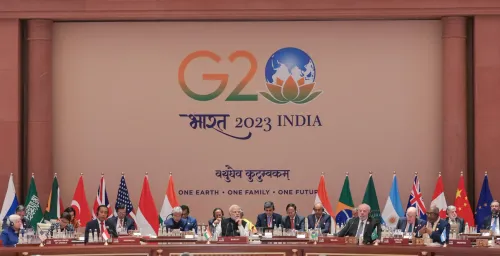
With the G20 legacy still fresh, the expansion of BRICS, and deepening partnerships under the Quad and I2U2 frameworks, India's multi-alignment strategy appears increasingly validated by global events. The world is watching — and in many capitals, it is watching with a new kind of respect.
Point of View
And it is structural. What makes this moment historically significant is that India is accumulating influence through a post-colonial playbook — connectivity, credibility, and cultural capital — rather than military or financial coercion. The deeper irony worth noting is that the UK, which once extracted wealth from India, now finds its own political identity shaped by Indian-heritage leaders. As the world fragments into blocs, India's refusal to be boxed in is not indecision — it is its greatest strategic asset.
NationPress
19 Sept 2026
Frequently Asked Questions
Why is India being called a new global centre of gravity?
India is being called a new global centre of gravity because it combines the world's fastest-growing major economy with a 35-million-strong diaspora, strategic diplomatic neutrality, and rising cultural influence across continents. A Times of Israel report highlights India's unique ability to engage both Western powers and Global South nations simultaneously.
What is India's role in the Global South?
India is recognised as the central voice of the Global South, serving as a preferred partner for digital infrastructure, pharmaceuticals, energy transition, and security cooperation across Africa, the Gulf, and Southeast Asia. Its non-aligned diplomatic posture gives it credibility that few other nations possess.
How large is the Indian diaspora and where is it most influential?
India's diaspora numbers approximately 35 million people spread across the world's most powerful economies. Indian-origin leaders are prominent in Silicon Valley's technology sector, British politics, and across Gulf economies where Indian professionals form the economic backbone of entire states.
How has Indian culture spread globally in recent years?
Indian cultural influence has expanded dramatically through cuisine, cinema, and cricket. Diwali and Holi are now celebrated in major cities worldwide, Indian films dominate global streaming platforms, and the Indian Premier League has attracted international investors, transforming cricket into a global commercial engine.
What challenges could slow India's rise as a global power?
Despite its impressive global trajectory, India faces internal challenges including income inequality, infrastructure deficits, and social disparities that could undermine its long-term ascent. Analysts caution that sustaining global credibility requires addressing the gap between India's international image and the lived realities of its citizens.