CM Chandrababu Writes to Amit Shah for Cyclone Relief Funds
Synopsis
Chief Minister Chandrababu Naidu has written to Union Home Minister Amit Shah seeking urgent interim central relief after Cyclones Arnab and Murasu inflicted preliminary losses of ₹1,919.59 crore in Andhra Pradesh, damaging crops across over 1.43 lakh hectares and affecting nearly 1.86 lakh farmers.
Key Takeaways
CM Chandrababu Naidu formally wrote to Union Home Minister Amit Shah seeking immediate interim central financial assistance for cyclone relief.
Preliminary damage from Cyclone Murasu alone is estimated at ₹1,919.59 crore across multiple sectors.
1,43,122 hectares of crops and 6,504.38 hectares of horticulture have been damaged, affecting over 1,98,000 farmers combined.
Power infrastructure, roads, housing, irrigation, and health facilities have all suffered severe damage from the storms.
The state government has committed to submitting a comprehensive damage report to the Centre within 15 days of floodwaters receding.
The request follows the established Disaster Management Act, 2005 protocol for unlocking NDRF/SDRF central assistance.
Two cyclones in rapid succession have left Andhra Pradesh counting a staggering preliminary loss of ₹1,919.59 crore from Cyclone Murasu alone — and Chief Minister Nara Chandrababu Naidu is now pressing New Delhi for immediate interim financial assistance. The Chief Minister's Office of Andhra Pradesh announced on Friday, 6 November 2026, that Naidu has formally written to Union Home Minister Amit Shah, citing the compounded devastation wrought by Cyclone Arnab and Cyclone Murasu and urgently seeking central relief.
What Murasu's trail of destruction looks like on the ground
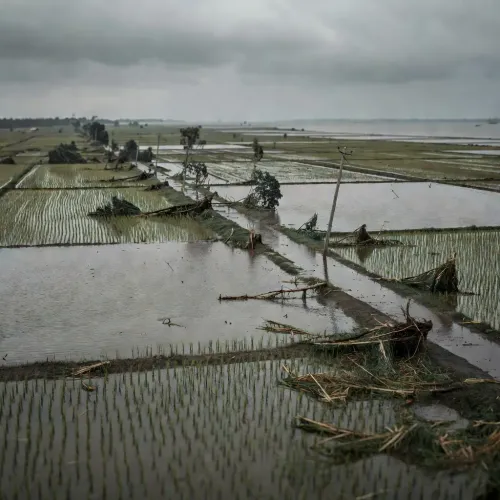
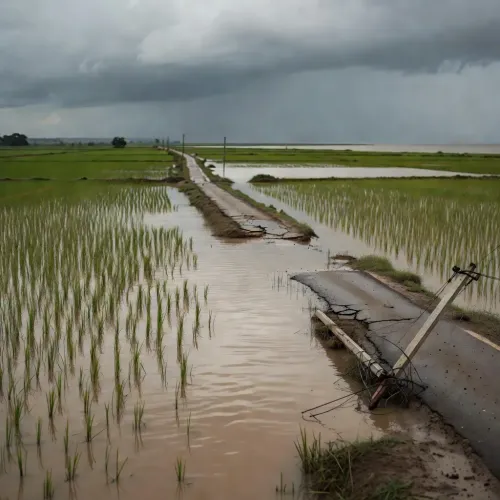
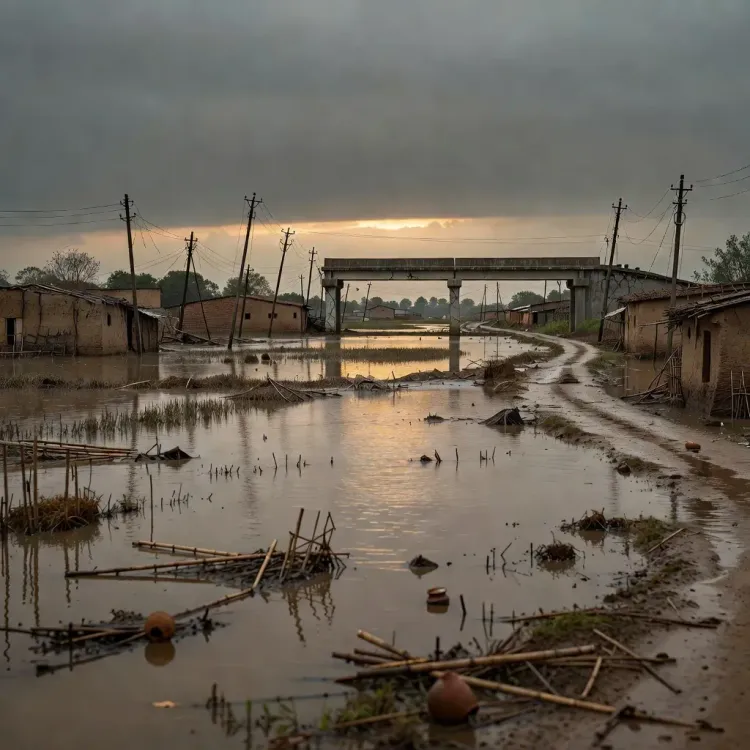
1,43,122 hectares of standing crops have been damaged, hitting 1,86,063 farmers directly. Horticulture losses compound the picture further — 6,504.38 hectares of horticultural crops destroyed, leaving 12,178 more farmers in distress. These are not abstractions: they are paddy fields underwater, mango orchards flattened, livelihoods suspended mid-season.
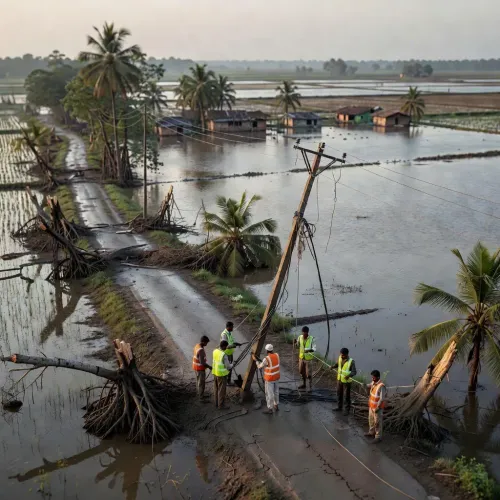
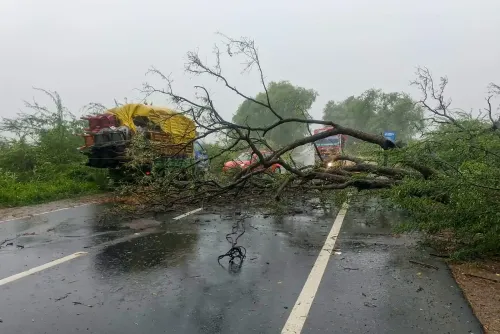
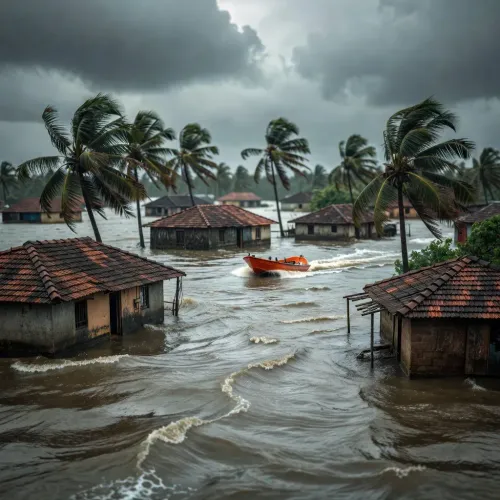
Beyond agriculture, the CM's letter flags severe damage across animal husbandry, aquaculture, housing, irrigation, power distribution, Panchayati Raj infrastructure, education facilities, and health institutions. Heavy rainfall and fierce winds snapped power lines and buckled roads — the arteries a coastal state depends on to move goods, people, and emergency supplies.
The letter to Amit Shah and what it formally requests
Naidu's communication to Shah invokes the established protocol under India's disaster management framework: an initial damage report triggers a request for interim central assistance, followed by a comprehensive assessment. The CM has committed to submitting a full-scale damage report to the Centre within 15 days of floodwaters receding — the standard window that gives ground teams time to reach inundated villages and tally losses sector by sector.
Under the Disaster Management Act, 2005 and NDRF/SDRF guidelines, the Home Ministry is the nodal authority for approving central relief disbursements to state governments. Shah's office will review the preliminary figures before deciding on an interim release ahead of the final report.
Andhra's vulnerability and the double-cyclone reckoning
Andhra Pradesh sits on the Bay of Bengal coastline — one of the world's most cyclone-active corridors. Successive storms within a single season stretch state disaster response capacity thin: relief camps are still winding down from one event when the next landfall begins. The back-to-back arrival of Arnab and Murasu has pressed exactly that pressure point, making the Centre's swift response not merely helpful but structurally necessary.
Chandrababu Naidu, who returned to the Chief Minister's chair in 2024, has consistently positioned infrastructure resilience as a flagship agenda for his administration. A prolonged central delay in releasing funds would slow the very reconstruction work his government has staked political capital on.
Floodwaters are still receding. The full damage bill, once every district submits its tally, is widely expected to exceed these preliminary figures. The 15-day clock on the comprehensive report starts now.
Point of View
Yet the speed and scale of the Centre's response will be watched closely as a test of that partnership. The double-cyclone hit in a single season also renews the debate about whether SDRF allocations to chronically vulnerable coastal states like Andhra Pradesh adequately reflect actual cyclonic risk. If the ₹1,919.59 crore figure swells further in the final report — as it almost certainly will — the pressure on New Delhi to act pre-emptively rather than reactively will intensify.
NationPress
7 Nov 2026
Frequently Asked Questions
What did CM Chandrababu Naidu write to Amit Shah about?
CM Naidu wrote to Union Home Minister Amit Shah requesting immediate interim central financial assistance after Cyclones Arnab and Murasu caused extensive damage to crops, infrastructure, and livelihoods across Andhra Pradesh, with preliminary losses from Cyclone Murasu alone estimated at ₹1,919.59 crore.
How much damage did Cyclone Murasu cause in Andhra Pradesh?
Cyclone Murasu caused a preliminary estimated loss of ₹1,919.59 crore in Andhra Pradesh, damaging 1,43,122 hectares of crops, affecting 1,86,063 farmers, and severely hitting infrastructure sectors including power, roads, housing, and irrigation.
How many farmers were affected by Cyclone Murasu in Andhra Pradesh?
A total of 1,86,063 farmers were affected by crop damage from Cyclone Murasu, while an additional 12,178 farmers suffered losses to horticultural crops across 6,504.38 hectares.
When will Andhra Pradesh submit its full cyclone damage report to the Centre?
The Andhra Pradesh government has stated it will submit a comprehensive damage report to the central government within 15 days of floodwaters receding, once full field assessments across all districts are completed.
What is the process for states to get central disaster relief funds in India?
Under the Disaster Management Act, 2005, states submit a preliminary damage report to the Union Home Ministry to request interim central assistance from the NDRF or SDRF, followed by a detailed assessment report for final fund release.