Universities must be public policy partners, says Delhi Speaker Vijender Gupta
Synopsis
Delhi Assembly Speaker Vijender Gupta used the Vice Chancellors' Conclave 2026 in Faridabad to make a pointed case: India's universities cannot stay on the sidelines of policymaking. With campuses framed as living laboratories for green solutions, his call for research-driven lawmaking puts higher education at the centre of India's sustainability challenge.
Key Takeaways
Delhi Assembly Speaker Vijender Gupta addressed the Vice Chancellors' Conclave 2026 in Faridabad on 22 August 2026 .
He called on universities to become active partners in providing research-based inputs to legislatures and governments.
The two-day conclave ( 22–23 August ) is themed 'Green Campus: Empowering Higher Educational Institutions for a Sustainable and Resilient Future.' Gupta identified three roles for universities in India's green transition: as models , educators , and research and solutions centres .
He flagged the Yamuna 's condition, air quality, and groundwater depletion in Delhi-NCR as public health and economic crises, not merely environmental ones.
The host educational group was congratulated on completing 30 years , with its motto 'Creating Better Humans' linked to planetary responsibility.
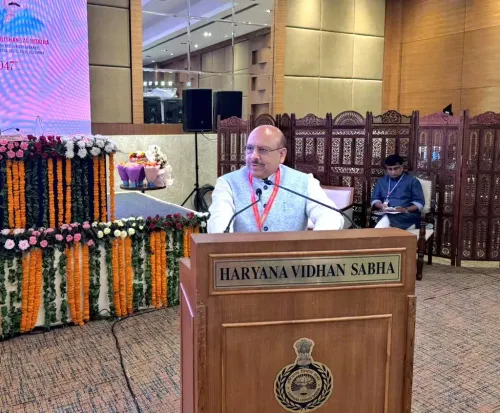
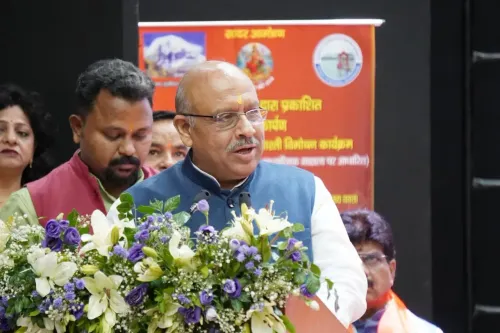
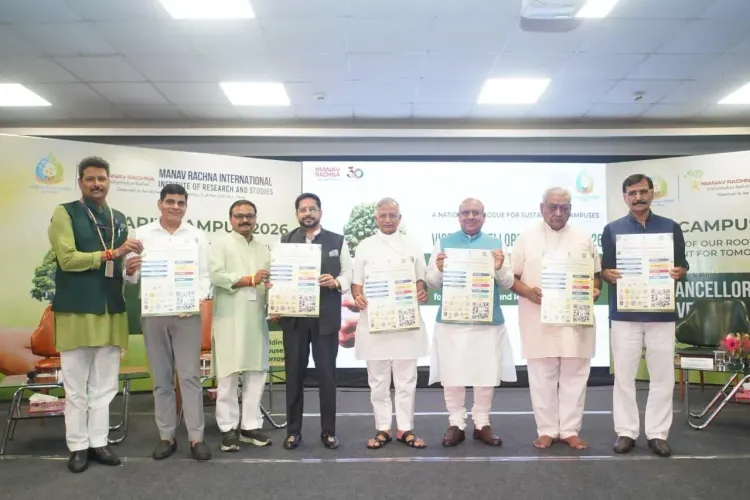
Delhi Assembly Speaker Vijender Gupta on Saturday, 22 August 2026 called on universities across India to become active knowledge partners for legislatures and governments, arguing that sound lawmaking demands credible research, verifiable data, and ground-level evidence. He was speaking at the inaugural session of the Vice Chancellors' Conclave 2026 held at an International Institute of Research and Studies in Faridabad.
Key Developments at the Conclave
The two-day conclave, running from 22 to 23 August, is themed 'Green Campus: Empowering Higher Educational Institutions for a Sustainable and Resilient Future.' The gathering drew Chancellors, Vice Chancellors, and Directors from universities across the country, along with representatives from IITs, IIMs, NITs, and IIITs, as well as faculty members and students. Dr Prashant Bhalla, President of the host group of educational institutions, Dr H.D. Charan, and members of Paryavaran Sanrakshan Gatividhi were also present.
What Gupta Said
Speaker Gupta outlined three distinct roles universities must play in India's green transition: as models, as educators, and as centres of research and solutions. He described university campuses as 'small cities' — self-contained systems of electricity, water, transport, food, buildings, and waste — that are uniquely positioned to demonstrate sustainability at scale. Initiatives such as solar power adoption, rainwater harvesting, 100 per cent waste management, waste segregation, and green infrastructure, he argued, could serve as replicable blueprints for state and national policy.
'Your campuses are our laboratories,' Gupta said, adding that successful campus models could give policymakers the confidence to scale them statewide and nationally.
Climate Crisis as a Policy Imperative
Gupta described climate change as a present reality rather than a future threat, citing record heat waves, winter smog, polluted air, sudden flooding, and falling groundwater levels across Delhi and the National Capital Region (NCR). He said the deteriorating condition of the Yamuna, worsening air quality, and groundwater depletion were not merely environmental concerns — they were questions of public health, economic stability, and the rights of future generations.
He stressed that laws and policies alone were insufficient; sustainability must also become a matter of values, habits, and lifestyle. 'If India's universities are not green, how can India's future be green?' he asked.
30 Years of the Host Institution
Gupta congratulated the host educational group on completing 30 years, noting that its motto — 'Creating Better Humans' — carried even greater weight when connected to the responsibility of building a better planet. 'Better human beings and a better Earth cannot be separate goals,' he said. He added that students who spend four or five years practising sustainable habits carry those values into their workplaces, communities, and families — allowing a single campus to shape an entire generation.
The conclave's second day on 23 August is expected to produce actionable recommendations on integrating sustainability into higher education policy frameworks.
Point of View
Or whether the bottleneck lies on the government side, not the university side. Calling on universities to lead India's green transition also sidesteps the accountability of the state itself — the Yamuna's condition and Delhi's air quality are failures of governance, not of academic disengagement.
NationPress
22 Aug 2026
Frequently Asked Questions
What did Delhi Speaker Vijender Gupta say at the Vice Chancellors' Conclave 2026?
Speaker Vijender Gupta called on Indian universities to become active partners in policymaking by supplying credible research, expert opinion, and ground-level evidence to legislatures and governments. He also outlined three roles for universities in India's green transition: as models, educators, and research centres.
Where and when was the Vice Chancellors' Conclave 2026 held?
The conclave was held at an International Institute of Research and Studies in Faridabad on 22–23 August 2026. It was themed 'Green Campus: Empowering Higher Educational Institutions for a Sustainable and Resilient Future.'
Who attended the Vice Chancellors' Conclave 2026?
The conclave was attended by Chancellors, Vice Chancellors, and Directors from universities across India, along with representatives from IITs, IIMs, NITs, and IIITs, as well as Dr Prashant Bhalla, Dr H.D. Charan, members of Paryavaran Sanrakshan Gatividhi, and faculty and students.
What environmental concerns did Vijender Gupta highlight?
Gupta pointed to record heat waves, winter smog, air pollution, sudden flooding, and falling groundwater levels across Delhi and the NCR. He said the state of the Yamuna, air quality, and groundwater depletion were issues of public health, economic stability, and intergenerational rights — not merely environmental problems.
Why did Gupta say university campuses are important for sustainability?
He described campuses as 'small cities' with their own energy, water, transport, and waste systems, making them ideal sites to demonstrate solar power, rainwater harvesting, and full waste management at scale. Successful campus models, he argued, can give policymakers the confidence to replicate them at state and national levels.