Rahul Gandhi in Pune: 'Women belong to themselves', slams Manusmriti mindset
Synopsis
At a Pune college ground packed with Gen Z women, Rahul Gandhi did not hold a rally — he cited data. With figures on foeticide, harassment, and property ownership, he reframed the Manusmriti not as a historical text but as a living framework of control, and told young women to break free from it. The political subtext was unmistakable even as he insisted the session was not about politics.
Key Takeaways
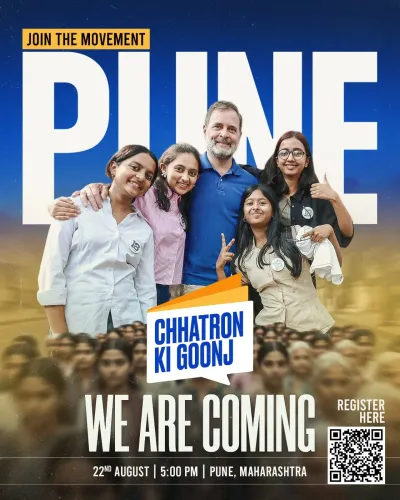
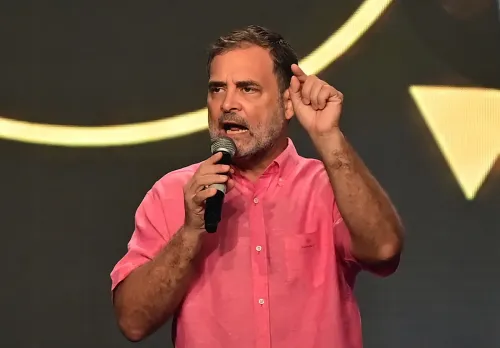
Rahul Gandhi addressed the 'Chhatron Ki Goonj' event at Shri Shivaji Preparatory Military School College Ground, Pune on 22 August .
He declared: 'Women do not belong to any man; you belong only to yourselves,' attacking what he called the 'Manusmriti mindset' .
Gandhi cited that nearly 4.5 lakh girls face female foeticide annually and only 8 per cent of Indian women own independent property.
80 per cent of women experience harassment, 30 per cent face physical abuse, and 60 per cent cannot leave home alone safely, he stated.
The event was framed as a non-political open dialogue with Gen Z female students , not a conventional political address.
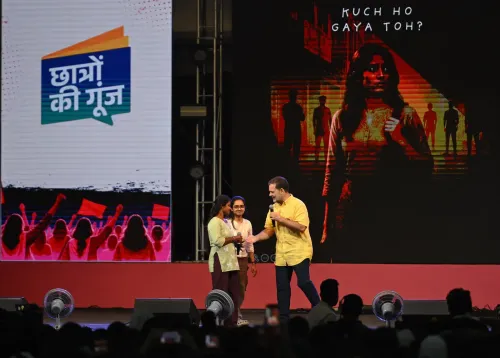
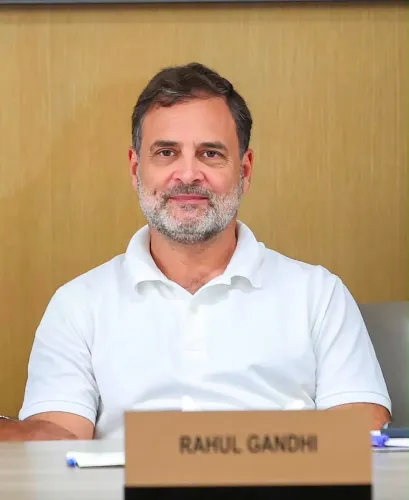
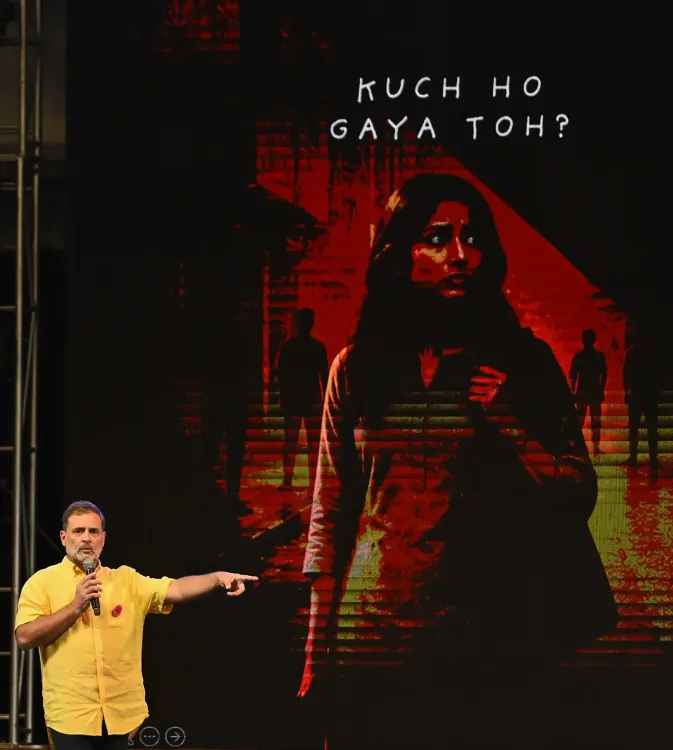
Congress leader and Leader of Opposition in Lok Sabha Rahul Gandhi on Saturday, 22 August launched a pointed attack on patriarchal frameworks at the 'Chhatron Ki Goonj' event in Pune, asserting that women are India's greatest strength and that keeping them dependent reflects a 'Manusmriti mindset'. Addressing a large gathering of Gen Z female students at the Shri Shivaji Preparatory Military School College Ground, Gandhi declared: 'Women do not belong to any man; you belong only to yourselves.'
Key Remarks at the Pune Event
Gandhi opened by stating that while many consider the economy or the military to be India's primary strength, he believes the country's real asset lies in the ideas and dreams of its 70 crore women. He emphasised that women naturally carry higher sensitivity, gentleness, and empathy — qualities he argued are undervalued by traditional societal structures.
Criticising frameworks like the Manusmriti for confining women to rigid identities — solely as daughters, wives, or mothers — Gandhi urged young women to 'break the cage' of social restriction and assert independence across every field.
Stark Statistics on Women's Safety and Opportunity
Gandhi cited a series of figures to underscore the scale of systemic discrimination. He stated that nearly 4.5 lakh girls face female foeticide annually, while 80 per cent of women experience some form of harassment and 30 per cent face physical abuse. He further noted that six in every 100 women experience direct physical assault or rape.
On economic participation, Gandhi pointed out that 50 per cent of women drop out of jobs or higher education due to fear of violence, 45 per cent exit due to marriage or domestic responsibilities, and 60 per cent of young women cannot leave their homes alone safely. Only 8 per cent of women in India own independent property, he added.
Format and Focus of the Interaction
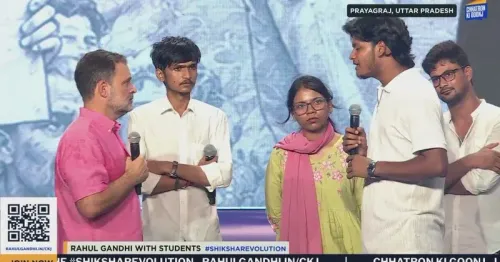
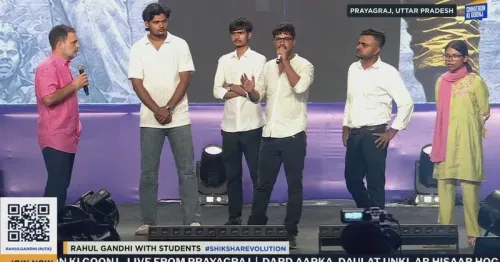
Gandhi clarified at the outset that the session was not a political address. The event was structured as an open dialogue, with Gen Z students raising questions and sharing personal challenges — several of whom joined him on stage. Topics spanned education, systemic discrimination, safety, social change, and the evolving concept of the 'Aadarsh Nari' (ideal woman) in contemporary India.
The interaction, he said, was centred on understanding youth perspectives and their expectations for the future — a deliberate pivot from conventional political rallies.
Broader Context
The Pune event is part of Gandhi's ongoing outreach to younger demographics, particularly Gen Z women, ahead of a politically charged period. His framing of women's rights as a structural, not merely rhetorical, issue — backed by data on foeticide, harassment, and property ownership — marks a sharper edge to Congress's gender discourse. Notably, this is not the first time Gandhi has invoked the Manusmriti as a symbol of entrenched caste and gender hierarchy; the reference carries deliberate ideological weight in the current political climate.
With women's safety and representation continuing to dominate public debate, Gandhi's Pune address signals that gender justice will remain a central plank of the Congress opposition narrative in the months ahead.
Point of View
It is a direct counter-signal to the BJP's cultural nationalism framing. The statistics he cited, on foeticide, harassment, and property ownership, are drawn from existing reports and carry credibility, but they also serve to build a data-backed opposition identity on gender. What is missing is any concrete legislative or policy proposal: the speech diagnoses the problem with precision but stops short of prescribing a remedy. That gap between rhetoric and programme is the Congress's recurring challenge on women's rights, and Pune did not close it.
NationPress
22 Aug 2026
Frequently Asked Questions
What did Rahul Gandhi say about women at the Pune event?
Rahul Gandhi declared that women belong only to themselves and not to any man, attacking what he called the 'Manusmriti mindset' of keeping women dependent. He spoke at the 'Chhatron Ki Goonj' event in Pune on 22 August, addressing a large gathering of Gen Z female students.
What is the 'Manusmriti mindset' Rahul Gandhi referred to?
Gandhi used the term to describe patriarchal frameworks that confine women to fixed roles — daughter, wife, or mother — and keep them economically and socially dependent. He argued this mindset is structurally embedded in Indian society and must be challenged by the younger generation.
What statistics did Rahul Gandhi cite on women's safety in India?
Gandhi stated that nearly 4.5 lakh girls face female foeticide annually, 80 per cent of women experience harassment, 30 per cent face physical abuse, and only 8 per cent own independent property. He also said 60 per cent of young women cannot leave their homes alone safely.
Was the Pune event a political rally?
Gandhi clarified at the outset that the session was not a political address. It was structured as an open dialogue with Gen Z students on education, safety, social change, and youth aspirations, though his remarks carried clear ideological and political undertones.
Who attended the 'Chhatron Ki Goonj' event in Pune?
The event was held at the Shri Shivaji Preparatory Military School College Ground in Pune and was dominated by Gen Z female students. Several students joined Gandhi on stage to share personal challenges and engage in direct dialogue.