Rahul Gandhi at Prayagraj student meet: jobs crisis, institutional capture, 'Mohabbat Ki Dukan'
Synopsis
Rahul Gandhi's Prayagraj student rally was less a political speech and more a grievance audit — with students citing flooded libraries, seven-year-old unfilled vacancies, and false FIRs. His 'Mohabbat Ki Dukan' framing is a deliberate brand pivot, but the harder question is whether Congress converts this student energy into a concrete recruitment and university reform agenda before the next UP election cycle.
Key Takeaways
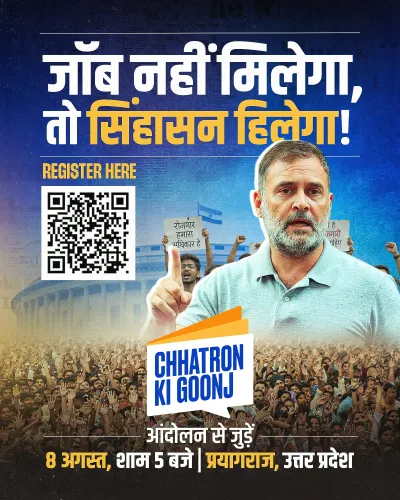
Rahul Gandhi addressed the 'Chhatron Ki Goonj' student event at KP Ground, Prayagraj on 8 August , arriving at 7 pm .
Gandhi cited the elimination of military employment, GST , and demonetisation as key drivers of the youth jobs crisis, and pointed to the absence of a 'Made in India' manufacturing base.
He alleged that a single party grew from ₹150 crore to over ₹10,000 crore in bank balance and installed RSS -aligned figures across universities, bureaucracy, and paramilitary forces — claims denied by the BJP and RSS.
Students from Allahabad University described a 30-day protest; a law student alleged a flooded library, risk of electric shocks, bouncer beatings, and false FIRs against demonstrators.
Student Avinash said he has been waiting since 2018 for a teacher recruitment drive, with nine to ten UPSSSC drives still pending despite existing vacancies.
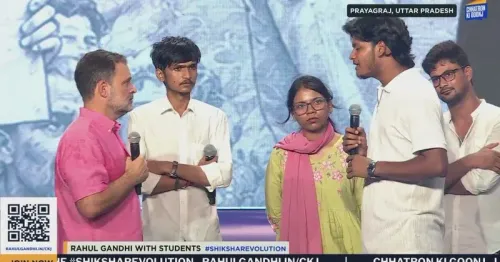
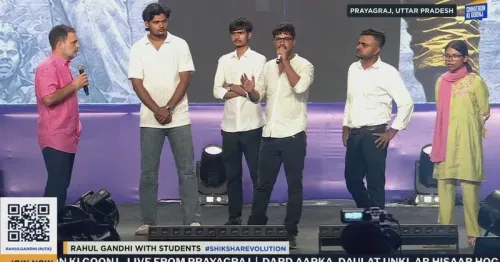
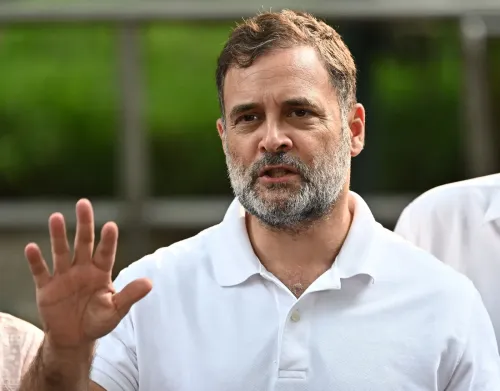
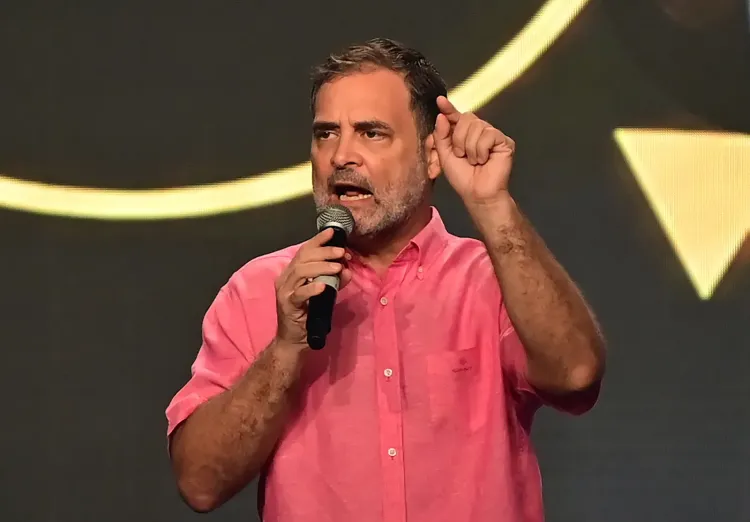
Congress leader Rahul Gandhi on Saturday, 8 August addressed thousands of students at the 'Chhatron Ki Goonj' event held at KP Ground, Prayagraj, urging youth to fight systemic injustice through love rather than hatred, while squarely blaming the ruling establishment for an employment crisis, university capture, and institutional decay. Gandhi arrived at the venue at 7 pm and spent an extended session listening directly to student grievances.
The Central Message: Love as Resistance
Gandhi opened with praise for the students, saying they had lit a 'beacon of light' amid systemic darkness — achieving through courage what their parents' generation could not. His recurring refrain was a call to non-violent struggle: 'There should be no hatred in any student's heart — only love… We need to change the system through love and affection.'
He urged students to open a 'Mohabbat Ki Dukan' — a shop of love — framing it as a direct counter to what he described as a politics of fear and division. Addressing the assembled youth as India's future, strength, and pride, Gandhi said that when he speaks of the nation's strength, he means specifically the country's 40 crore youth, not merely a crowd.
Employment Crisis and 'Made in India' Failure
Gandhi highlighted the employment crisis facing students who invest years and money in education only to find all doors closed, particularly in manufacturing. 'Across the world, one sees Made in China or Made in Vietnam, but not Made in India,' he said, attributing the hollowing out of manufacturing to GST and demonetisation, which he alleged had crippled the economic system.
He also alleged that military employment opportunities had been systematically eliminated — a reference critics have linked to the Agnipath scheme — leaving a generation of aspirants without a path into uniform.
Institutional Capture: Universities, Bureaucracy, Paramilitary
Gandhi alleged that a single political party — which he did not name by abbreviation but identified as the Bharatiya Janata Party (BJP) — had grown from a bank balance of ₹150 crore to over ₹10,000 crore and now effectively controls the political system. He further alleged that RSS-aligned individuals had been installed as Vice-Chancellors in universities and that RSS pracharaks had been placed across institutions including the bureaucracy, paramilitary forces, and higher education bodies.
These are contested claims; the BJP and RSS have consistently denied allegations of institutional capture. NationPress has not independently verified the financial figures cited.
Students Speak: Floods, False FIRs, Pending Recruitments
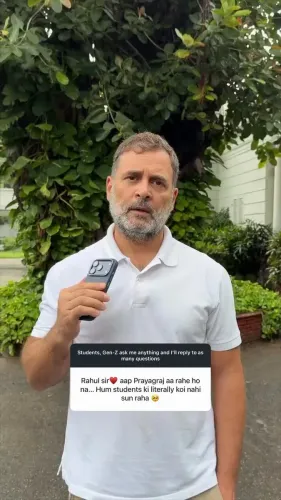
Gandhi invited students to share the podium. Kunal Pandey from Patna University spoke, as did the first female Vice President of the Patna University Student Union, who recounted a peaceful protest following detentions in Bihar — a demonstration she said ended in victory for students.
Students from Allahabad University and the Purvanchal region described a 30-day continuous protest, with participants treating the university campus as their home. A law student from Allahabad University alleged that the university library floods during monsoon rains, rendering books inaccessible, and that students have been warned that entering the library risks electric shocks. He alleged that protests against these conditions are met with beatings by bouncers and the filing of false FIRs against demonstrators.
A UPPSC aspirant raised concerns about the 'normalisation' process in competitive examinations. Another student, Avinash, said he had applied for a teacher recruitment drive in 2018 and was still waiting — with existing vacancies unfilled and no official recruitment conducted despite sit-ins and memoranda submitted over seven years. He noted that nine to ten recruitment drives under UPSSSC remain pending.
What Comes Next
Gandhi did not announce any specific legislative or policy response at the event, but framed the student movement as a long-term political force. The 'Chhatron Ki Goonj' gathering signals Congress's intent to consolidate student discontent in Uttar Pradesh ahead of future electoral cycles. Whether the party translates this grassroots energy into concrete policy demands — on recruitment, university funding, and examination reform — will determine the durability of this engagement.
Point of View
UPSSSC backlogs, or university infrastructure. The student testimonies at Prayagraj were specific and verifiable; Gandhi's responses were inspirational but policy-thin. In Uttar Pradesh, where the BJP has dominated two consecutive assembly elections, converting student anger into votes requires more than a philosophy of love — it requires a credible recruitment roadmap that students can hold a future government accountable to.
NationPress
23 Sept 2026
Frequently Asked Questions
What is the 'Chhatron Ki Goonj' event where Rahul Gandhi spoke?
'Chhatron Ki Goonj' is a student outreach event organised by the Congress party, held at KP Ground in Prayagraj on 8 August. It brought together students from Allahabad University, Patna University, and the broader Purvanchal region to voice grievances on employment, university conditions, and examination reform.
What did Rahul Gandhi say about the jobs crisis?
Gandhi said students invest years and money in education only to find all doors closed, particularly in manufacturing. He cited the absence of 'Made in India' products globally and blamed GST and demonetisation for crippling the economic system, while also alleging that military employment opportunities had been eliminated.
What allegations did Gandhi make about institutional capture?
Gandhi alleged that the BJP grew from a bank balance of ₹150 crore to over ₹10,000 crore and now controls the political system, with RSS-aligned individuals installed as Vice-Chancellors and RSS pracharaks placed in the bureaucracy, paramilitary forces, and universities. The BJP and RSS have consistently denied such allegations.
What specific problems did students raise at the event?
Students from Allahabad University described a 30-day protest over campus conditions, including a library that floods during rains and poses electric shock risks. A UPPSC aspirant raised concerns about the examination normalisation process, and student Avinash said he has been waiting since 2018 for a teacher recruitment drive, with nine to ten UPSSSC drives still pending.
What is Gandhi's 'Mohabbat Ki Dukan' and what does it mean?
'Mohabbat Ki Dukan' — literally 'shop of love' — is a phrase Gandhi used to urge students to fight systemic injustice through love and non-violence rather than hatred. He framed it as India's civilisational ethos of truth and non-violence applied to the current political struggle.