Rahul Gandhi Targets Job Crisis, Vows Prayagraj Expose
Synopsis
Rahul Gandhi announced a visit to Prayagraj to expose India's job crisis, extending his accountability campaign that previously targeted student extortion in Kota and exam paper leaks in Dehradun. The Congress leader framed the push as a response to rising student anger over recruitment failures.
Key Takeaways
Rahul Gandhi announced Prayagraj as the next stop in a city-by-city student accountability campaign.
Previous legs targeted alleged student extortion in Kota and paper leaks in Dehradun .
Prayagraj is a key hub for government recruitment examinations in Uttar Pradesh .
Gandhi cited the 'job crisis' as the central issue to be exposed in the Prayagraj visit.
The campaign frames student unrest over exam irregularities and unemployment as a national political issue.
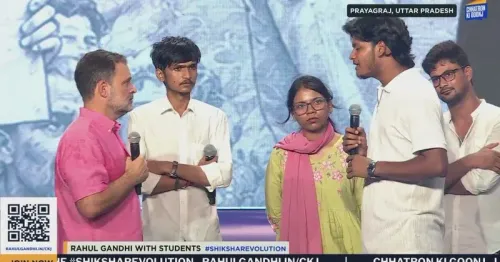
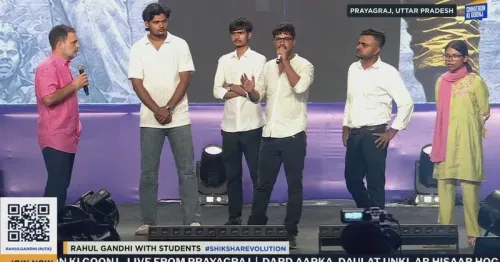
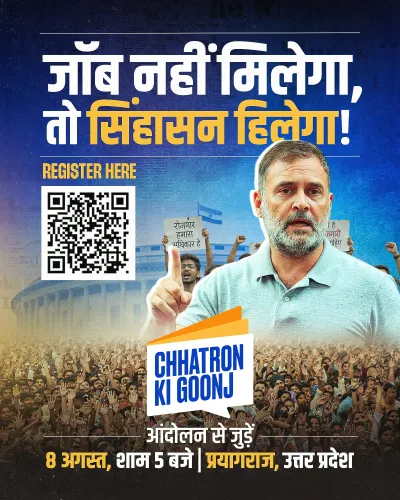
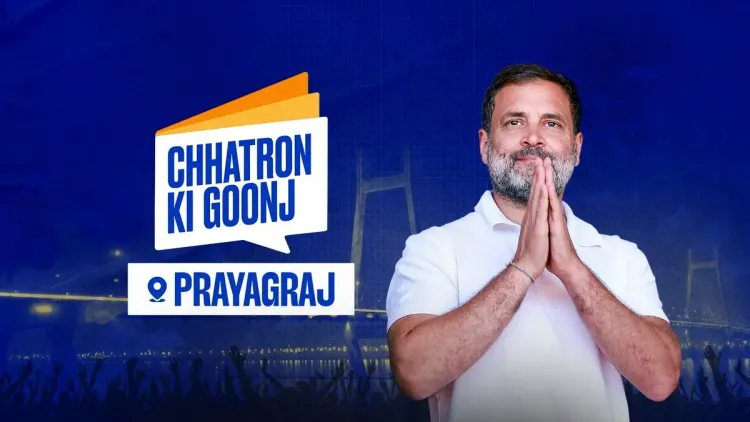
From coaching-hub Kota to exam-leak epicentre Dehradun, Congress leader Rahul Gandhi has been running what he frames as a ground-level accountability campaign — and on Tuesday, 4 August 2026, he announced the next stop: Prayagraj, where he says the true scale of India's job crisis will be laid bare.
Three cities, one campaign: what Gandhi is building
The post lays out a deliberate sequence. In Kota — the Rajasthan city synonymous with India's high-pressure student coaching industry — Gandhi says his team exposed what he calls an 'extortion machine feeding on students' dreams.' In Dehradun, the focus shifted to paper leaks, a recurring crisis that has invalidated competitive examinations across multiple states and left lakhs of aspirants in limbo. Now, Prayagraj — home to the Uttar Pradesh Public Service Commission and a city where hundreds of thousands of students congregate each year to sit government recruitment exams — is the declared next target.
Why Prayagraj and why now
Prayagraj sits at the nerve centre of government job recruitment in Uttar Pradesh, India's most populous state. The city draws aspirants from across the Hindi belt who spend years preparing for state civil services, police, and teacher eligibility tests. Youth unemployment and the slow pace of government hiring have made recruitment examinations a flashpoint across northern India, with protests erupting repeatedly over cancelled tests and alleged irregularities. Gandhi's framing — 'the students of our country have stood up' — positions the campaign as a response to, and amplification of, an existing grassroots mood among exam-going youth.
Paper leaks and the student anger fuelling the opposition push
Examination paper leaks have emerged as one of the most politically charged issues among India's youth in recent years. Multiple high-profile leaks — affecting medical entrance, railway recruitment, and state-level exams — forced cancellations that displaced millions of candidates who had spent years and significant money preparing. The Congress party, as the principal opposition, has sought to consolidate that anger into an electoral narrative, arguing that systemic corruption in recruitment is robbing an entire generation of opportunity. Gandhi's city-by-city rollout, each anchored to a specific grievance, is a structured attempt to keep that narrative alive and moving.
Whether the Prayagraj leg produces the disclosures Gandhi is promising, and whether they land with the same resonance as the Kota and Dehradun visits, will determine the campaign's next chapter — and how the ruling establishment chooses to respond.
Point of View
Dehradun, Prayagraj — is a disciplined opposition playbook: anchor abstract grievances (corruption, unemployment) to specific, emotionally resonant places and communities. By sequencing the campaign rather than making one broad charge, Congress sustains media attention across multiple news cycles. The choice of Prayagraj is pointed: Uttar Pradesh is the single largest electoral prize in Indian politics, and youth unemployment in the Hindi belt has been a persistent vulnerability for the ruling establishment. The campaign's real test is whether 'exposing' translates into verifiable disclosures that shift public debate, or remains a mobilisation exercise that energises the base without producing lasting accountability.
NationPress
19 Sept 2026
Frequently Asked Questions
What is Rahul Gandhi planning to do in Prayagraj?
Rahul Gandhi has announced he will visit Prayagraj to expose what he describes as the reality of India's job crisis, continuing a city-by-city accountability campaign targeting issues affecting students and young job seekers.
What did Rahul Gandhi expose in Kota?
In Kota , Gandhi claimed to have exposed an 'extortion machine' that he says preys on students who travel to the city to prepare for competitive entrance examinations at coaching institutes.
What happened during Rahul Gandhi's Dehradun visit?
In Dehradun , Gandhi said his campaign exposed a 'rigged system' behind examination paper leaks, which have repeatedly forced the cancellation of major government recruitment tests and displaced lakhs of aspirants.
Why is Prayagraj significant for government job seekers?
Prayagraj hosts the Uttar Pradesh Public Service Commission and serves as a major centre for state government recruitment examinations, drawing hundreds of thousands of aspirants from across the Hindi belt every year.
What is the broader issue behind Rahul Gandhi's student campaign?
The campaign targets youth unemployment, exam paper leaks, and alleged corruption in government recruitment — issues that have triggered widespread protests across India and represent a significant source of political discontent among young voters.