Rahul Gandhi Slams Modi Govt Over Paper Leaks, Youth Jobs
Synopsis
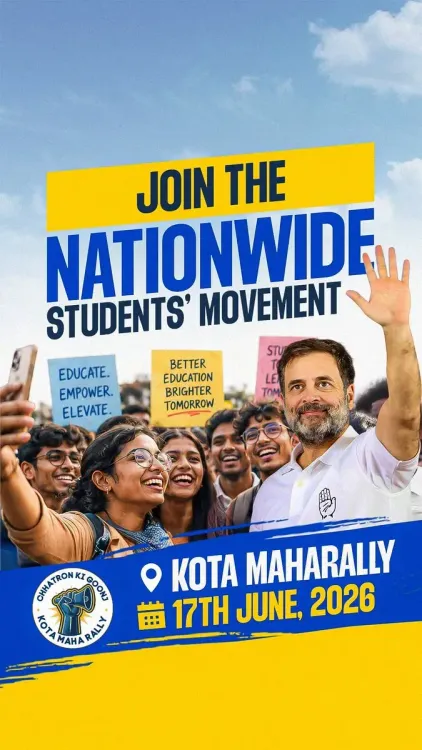
Congress leader Rahul Gandhi on June 16, 2026, accused the Modi government of failing India's youth, citing paper leaks, exam mismanagement, cancelled recruitments, and rising unemployment. He addressed the post directly to young Indians and Gen Z, asserting that securing every youth's future is the government's responsibility — one he says the current dispensation has abdicated.
Key Takeaways
Rahul Gandhi posted on June 16, 2026 , directly addressing India's youth and Gen Z.
He accused the Modi government of lacking both responsibility and honesty toward young Indians.
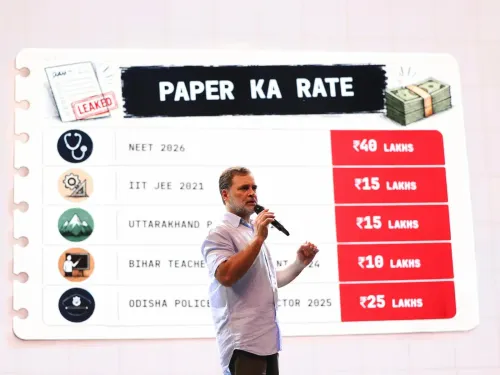
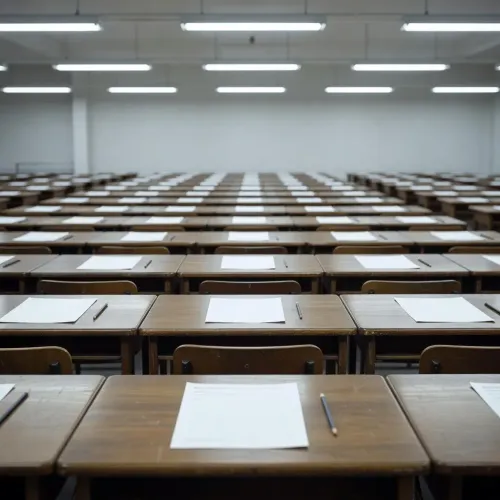
Four specific failures were cited: paper leaks , exam mismanagement , cancelled recruitments , and soaring unemployment .
The National Testing Agency (NTA) , set up in 2017 , has faced recurring controversies over examination integrity since its establishment.
Gandhi's critique aligns with broader Opposition demands for legislative action on exam fraud and independent oversight of recruitment bodies.
Youth employment and exam integrity are expected to remain key political flashpoints through the 2026–27 election cycle.
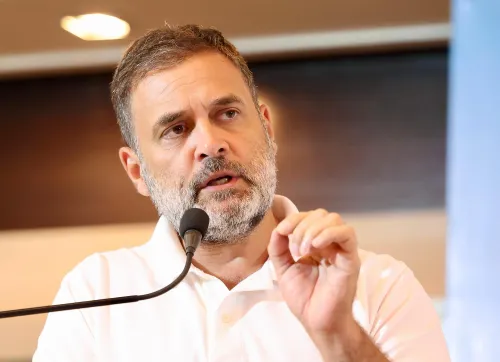
Congress leader Rahul Gandhi on Tuesday, June 16, 2026, directly addressed India's youth and Gen Z in a social media post, accusing the Narendra Modi-led government of failing its constitutional responsibility to secure the future of every young Indian. Gandhi cited paper leaks, examination mismanagement, cancelled recruitments, and soaring unemployment as evidence of what he called a government lacking both responsibility and honesty.
Context
Writing in Hindi to his 'yuva aur Gen Z saathiyon' (young and Gen Z companions), Gandhi stated plainly: 'ज़िम्मेदारी और ईमानदारी — दोनों मोदी सरकार की सोच से परे हैं' — 'Responsibility and honesty are both beyond the thinking of the Modi government.' The post singled out four specific failures: paper leaks, exam mismanagement, cancelled recruitments, and what he described as sky-high unemployment figures.
The post comes amid sustained public anger over the integrity of competitive examinations in India. Gandhi, as Leader of the Opposition in the Lok Sabha and MP from Rae Bareli, has consistently raised youth unemployment and institutional accountability as central planks of the Congress party's critique of the ruling dispensation.
Policy Backdrop
The National Testing Agency (NTA), established in 2017 under the Ministry of Education, was created to centralise and professionalise the conduct of major entrance and recruitment examinations — including NEET and JEE — previously managed by CBSE and other bodies. The consolidation was intended to bring uniformity and reduce irregularities, but recurring paper leak controversies have instead placed the agency at the centre of a credibility crisis.
The National Education Policy 2020 further emphasised standardised testing and skill development as pillars of educational reform. Critics argue, however, that the infrastructure to deliver secure, large-scale examinations has not kept pace with policy ambition, leaving millions of aspirants vulnerable to disruption every cycle.
Stakeholders and Impact
The most directly affected are crores of job aspirants and students who spend years preparing for government recruitment and entrance examinations. A cancelled exam or leaked paper does not merely delay a test — it can set back a candidate's career by a full year or more, with cascading effects on family livelihoods, particularly in smaller towns and rural areas.
Opposition parties, student unions, and civil society groups have repeatedly demanded stronger legislative penalties for paper leaks and independent oversight of examination bodies. The government has in the past defended the NTA's processes while acknowledging isolated lapses and promising corrective action.
What's Next
Attention will now focus on the security arrangements and conduct of 2026–27 entrance and recruitment examinations, as well as any legislative proposals to stiffen penalties for examination fraud. Gandhi's post, directed squarely at Gen Z voters, signals that youth unemployment and exam integrity will remain high-decibel issues heading into the next political cycle. Whether the government responds with structural reforms to the NTA or broader recruitment policy changes will be closely watched by aspirants, educators, and political observers alike.
Point of View
He is attempting to convert systemic frustration into political accountability. The direct Hindi address to 'yuva saathiyon' signals a deliberate effort to own the youth narrative ahead of the next electoral cycle. For the ruling party, the sustained salience of exam integrity issues represents an unresolved vulnerability that policy announcements alone have struggled to neutralise.
NationPress
15 Sept 2026
Frequently Asked Questions
What did Rahul Gandhi say about paper leaks in June 2026?
On June 16, 2026, Rahul Gandhi posted on X accusing the Modi government of failing India's youth through paper leaks, exam mismanagement, cancelled recruitments, and high unemployment, calling it a government that lacks both responsibility and honesty.
Which exam body is at the centre of India's paper leak controversy?
The National Testing Agency (NTA), established in 2017 under the Ministry of Education to conduct exams like NEET and JEE, has faced recurring allegations of paper leaks and mismanagement since its inception.
What is the National Testing Agency and why is it controversial?
The NTA is an autonomous body created in 2017 to centralise major entrance and recruitment examinations in India. It has been controversial because of repeated paper leak incidents and exam cancellations that have disrupted the careers of millions of aspirants.
How does paper leak affect students in India?
A leaked paper or cancelled exam can delay a candidate's career by a year or more, particularly affecting aspirants from smaller towns and rural areas who invest significant time and resources in preparation for government entrance and recruitment tests.
What is Congress's position on youth unemployment in India?
The Indian National Congress, led in the Lok Sabha by Rahul Gandhi, has consistently argued that the Modi government has failed to create adequate employment for youth and has compounded the problem through poor management of competitive examinations and recruitment processes.