India needs adaptation finance, tech ties to hit 500 GW clean energy goal: ASSOCHAM
Synopsis
India hit 54% non-fossil power capacity five years ahead of its 2030 target — but ASSOCHAM warns the real test starts now. Reaching 500 GW will require $2.5 trillion in investment, a grid and storage buildout, and tough negotiations at COP31 in Turkey over adaptation finance and the EU's carbon tariff that already covers 78% of India's relevant exports.
Key Takeaways
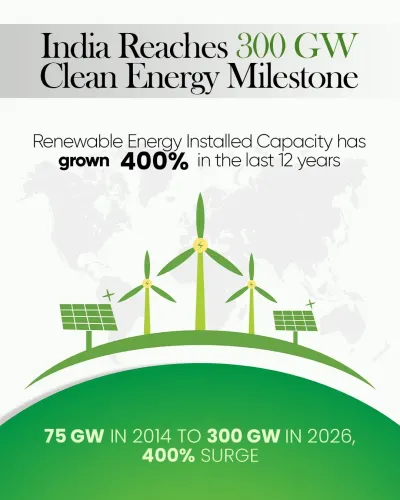
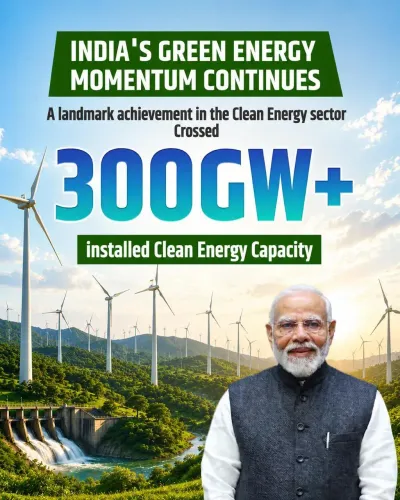
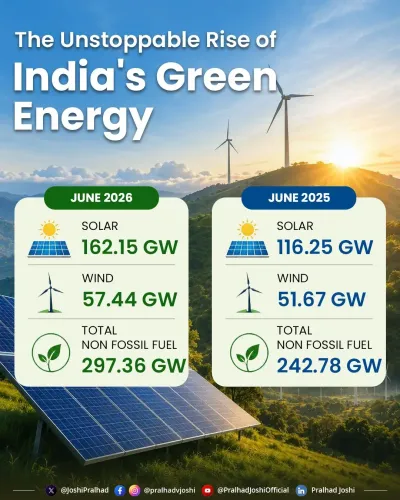
India's non-fossil fuel power capacity reached 300.5 GW in July 2026 , crossing 54 per cent of total installed capacity — five years ahead of the 2030 target.
A record 55.29 GW was added in FY26 , including 44.6 GW of solar capacity.
Achieving India's 2030 climate goals will require nearly $2.5 trillion in investment, according to ASSOCHAM .
Battery storage demand is projected to rise from 37 GWh by 2027 to 236 GWh by 2031–32 .
Iron and steel made up 78 per cent of India's EU CBAM -covered exports in 2023 , flagging trade competitiveness risk.
ASSOCHAM will submit recommendations to the Prime Minister's Office and NITI Aayog ahead of COP31 starting 9 November .
India's clean energy transition is accelerating toward its 500 GW non-fossil power target but will require sharper focus on climate investment, adaptation finance, technology cooperation and industrial competitiveness, industry body ASSOCHAM said on Friday, 30 October 2026, ahead of the COP31 climate summit in Turkey beginning 9 November.
Where India Stands on Clean Energy
India's non-fossil fuel power capacity reached 300.5 GW in July 2026, following a record addition of 55.29 GW in FY26 — including 44.6 GW of solar capacity alone. The country has crossed 54 per cent of non-fossil installed electricity capacity, a milestone that was originally targeted for 2030, effectively arriving five years ahead of schedule.
'The country has demonstrated that a fast-growing economy can scale clean energy, achieving over half of its installed electricity capacity from non-fossil sources five years ahead of schedule,' said ASSOCHAM President Nirmal K. Minda, adding that COP31 should focus on implementation with industry playing a central role.
The Investment Gap Ahead
Despite the early wins, the road to 2030 targets carries a steep price tag. Minda noted that achieving India's 2030 climate goals would require nearly $2.5 trillion in investment. Battery storage demand, a critical enabler, is projected to surge from 37 GWh by 2027 to 236 GWh by 2031–32. Strengthening grid infrastructure, storage capacity and commercially viable clean power will be essential to convert installed capacity into reliable electricity supply, he added.
ASSOCHAM Secretary General Saurabh Sanyal underscored that clean energy capacity must be grid-connected and commercially viable — not merely installed on paper. Industry and government, he argued, must work in tandem to translate climate commitments into bankable projects.
India's Asks at COP31
ASSOCHAM's framing of India's COP31 agenda centres on three pillars: mobilising climate finance, accelerating industrial decarbonisation, and protecting trade competitiveness. Dr. S. P. Sharma, Chief Economist at ASSOCHAM, pointed to a specific trade vulnerability: iron and steel accounted for 78 per cent of India's exports covered under the European Union's Carbon Border Adjustment Mechanism (CBAM) in 2023, making the sector acutely exposed to evolving EU carbon tariff rules.
India's 2035 climate targets include a 47 per cent reduction in emissions intensity from 2005 levels and a 60 per cent share of non-fossil sources in installed electricity capacity — ambitions that critics argue are achievable only if private capital scales up dramatically alongside public investment.
ASSOCHAM's Next Steps
The industry body said it will submit its recommendations to the Prime Minister's Office, NITI Aayog, and relevant climate-action groups. The report will outline actionable steps to mobilise climate finance and accelerate the decarbonisation of Indian industry. This comes amid growing pressure on emerging economies to demonstrate credible implementation plans rather than headline targets at successive COP summits — a pattern that has drawn scrutiny from climate negotiators globally.
Point of View
But ASSOCHAM's framing reveals a deeper anxiety: installed capacity without grid integration, storage, and finance is a statistic, not an energy system. The $2.5 trillion investment requirement is staggering against the backdrop of a global climate finance architecture that has repeatedly failed to deliver on its promised flows to developing economies. More pointed is the CBAM exposure — with iron and steel accounting for 78% of India's EU carbon-tariff-covered exports, COP31 is not just a climate forum for New Delhi; it is a trade negotiation in disguise. India's ability to push back on CBAM while credibly accelerating decarbonisation will define its diplomatic posture well beyond November.
NationPress
30 Oct 2026
Frequently Asked Questions
What is India's 500 GW clean energy target and how close is it?
India aims to reach 500 GW of non-fossil fuel power capacity as part of its 2030 climate commitments. As of July 2026, the country had reached 300.5 GW, having already crossed 54% of total installed capacity — five years ahead of its interim 2030 target.
How much investment does India need to meet its 2030 climate goals?
According to ASSOCHAM, India will need nearly $2.5 trillion in investment to achieve its 2030 climate goals. This includes grid infrastructure, battery storage expansion from 37 GWh in 2027 to 236 GWh by 2031–32, and commercially viable clean power systems.
What is COP31 and what does India want from it?
COP31 is the 31st UN Climate Change Conference, scheduled to begin on 9 November in Turkey and run for 11 days. India's key asks, as outlined by ASSOCHAM, centre on adaptation finance, private investment mobilisation, and protecting trade competitiveness — particularly against the EU's Carbon Border Adjustment Mechanism.
What is the EU Carbon Border Adjustment Mechanism and why does it matter for India?
The EU's Carbon Border Adjustment Mechanism (CBAM) imposes a carbon cost on imports from countries without equivalent carbon pricing. For India, it is a significant concern because iron and steel alone accounted for 78% of its CBAM-covered EU exports in 2023, making those industries vulnerable to higher tariffs as EU carbon rules tighten.
What are India's 2035 climate targets?
India's 2035 climate targets include reducing emissions intensity by 47% from 2005 levels and achieving a 60% share of non-fossil sources in total installed electricity capacity. These targets go beyond the 2030 goals and will require sustained investment and policy action across energy, industry, and infrastructure.