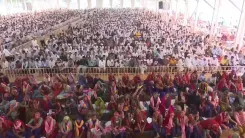
PM Modi Releases 24th PM-KISAN Instalment for Farmers
Synopsis
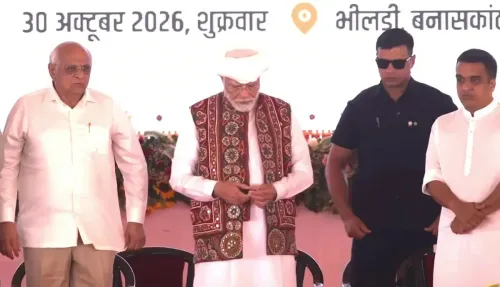
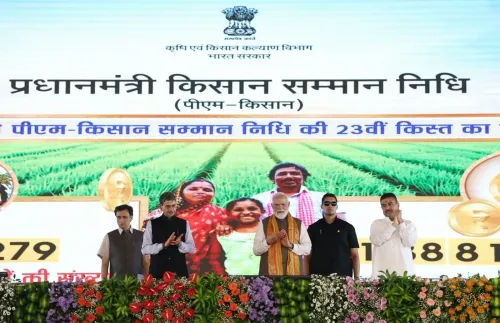
Prime Minister Narendra Modi transferred the 24th instalment of PM Kisan Samman Nidhi on 30 October 2026. Union Textiles Minister Giriraj Singh hailed the move as proof of the government's commitment to farmer prosperity and a stronger rural economy.
Key Takeaways
PM Narendra Modi released the 24th instalment of PM Kisan Samman Nidhi on 30 October 2026 .
Under PM-KISAN, eligible farmer families receive ₹6,000 per year in three instalments of ₹2,000 each via Direct Benefit Transfer.
The scheme was launched on 24 February 2019 as a central sector initiative targeting small and marginal landholding farmers.
Union Textiles Minister Giriraj Singh described farmers as the 'strong foundation of the country's economy and food security.' The annual ₹6,000 quantum has not been revised since launch, with farm groups watching the next Union Budget for a possible enhancement.
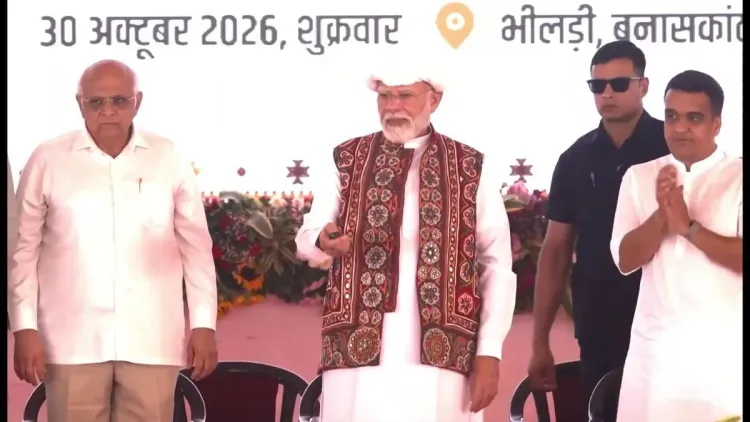
Every rupee that reaches a farmer's account is a direct bet on India's food security — and on Friday, 30 October 2026, Prime Minister Narendra Modi transferred the 24th instalment of the PM Kisan Samman Nidhi scheme, extending a cash-support chain that has run without interruption since 2019. Union Textiles Minister Giriraj Singh marked the moment with a post on X, calling farmers the 'strong foundation of the country's economy and food security.'
What the 24th instalment means for farm households
Under PM-KISAN, eligible landholding farmer families receive ₹6,000 a year, paid in three instalments of ₹2,000 each directly into their bank accounts through the Direct Benefit Transfer mechanism. The scheme, launched on 24 February 2019 as a central sector initiative, was designed to plug the income gap for small and marginal cultivators between harvests — covering seeds, fertilisers, and day-to-day liquidity when institutional credit is slow to arrive.
The 24th payout marks roughly seven years of unbroken quarterly releases, a consistency that has made PM-KISAN one of the most visible planks of the government's rural welfare architecture. Minister Giriraj Singh framed the transfer as a step toward 'farmer prosperity, agricultural progress, and a stronger rural economy' — kisaan kalyaan ke prati sarkaar ki pratibaddhataa (the government's commitment to farmer welfare).
PM-KISAN's place in India's rural support stack
PM-KISAN does not stand alone. It sits inside a broader Direct Benefit Transfer ecosystem that includes crop-insurance top-ups, soil-health cards, and minimum-support-price interventions — all aimed at making rural income less dependent on rainfall and market swings. The scheme's repeated activation also serves as a real-time stress test of the government's DBT infrastructure: each release is a mass disbursement event touching tens of millions of accounts simultaneously.
What the 24th instalment reinforces is that the political and administrative machinery behind the programme has held across multiple budget cycles, coalition pressures, and post-pandemic fiscal tightening — no small feat for a scheme of this scale.
Eyes on the next Budget for any enhancement
The annual quantum of ₹6,000 per family has remained unchanged since the scheme's launch, and with input costs — fertilisers, diesel, labour — rising steadily, farmer organisations have repeatedly called for a revision upward. The next Union Budget will be the clearest signal of whether the government intends to keep the figure flat or extend the support further. Each instalment release, like today's, keeps that conversation alive in Parliament and in village squares alike.
India's 'annadaata' — the food providers — have just received their latest direct transfer. The question the upcoming budget must answer is whether ₹2,000 a season is still enough to do the job it was designed to do.
Point of View
Not confined to the Agriculture Ministry alone. The unchanged ₹6,000 annual ceiling, however, is an increasingly visible pressure point: input-cost inflation has quietly eroded the scheme's real value since 2019, setting up the next Budget as a test of whether the government will defend or expand the programme's purchasing power.
NationPress
30 Oct 2026
Frequently Asked Questions
What is PM Kisan Samman Nidhi and how much money do farmers get?
PM Kisan Samman Nidhi is a central government scheme that provides ₹6,000 per year to eligible landholding farmer families, paid in three instalments of ₹2,000 each directly into their bank accounts through Direct Benefit Transfer.
When was the 24th instalment of PM-KISAN released?
Prime Minister Narendra Modi transferred the 24th instalment of PM-KISAN on 30 October 2026.
When was PM Kisan Samman Nidhi launched?
PM-KISAN was launched on 24 February 2019 as a central sector initiative to provide direct income support to small and marginal farmer families across India.
Who is eligible for PM Kisan Samman Nidhi?
Eligible landholding farmer families — primarily small and marginal cultivators — can receive PM-KISAN benefits, subject to certain exclusion criteria related to income and institutional affiliation.
Will the PM-KISAN amount of ₹6,000 be increased?
The annual amount has remained at ₹6,000 since the scheme's 2019 launch. Any revision is expected to be signalled in the next Union Budget, which farm organisations are closely watching.