PM Modi extends PM-KISAN scheme to 2030-31
Synopsis
Prime Minister Narendra Modi announced on 31 July 2026 that the Cabinet has approved extending PM-KISAN — India's flagship ₹6,000-per-year direct income support scheme for farmer families — through 2030-31, reinforcing the government's direct cash-transfer approach to agricultural welfare.
Key Takeaways
PM-KISAN extended to 2030-31 : Cabinet approval announced by PM Narendra Modi on 31 July 2026 .
The scheme provides ₹6,000 per year to landholding farmer families in three instalments of ₹2,000 each via direct bank transfer.
PM-KISAN was originally launched on 24 February 2019 after being announced in the 2018-19 interim budget .
The scheme targets small and marginal farmers to help cover seed, fertiliser, and other input costs.
The extension aligns with the government's broader farm-support architecture including crop insurance and soil health programmes active since 2014 .
Budgetary allocations for the extended period and state-level disbursement timelines are the key variables to watch next.
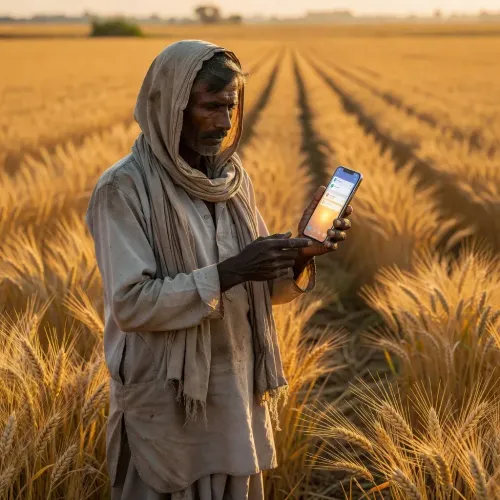
Every season, India's farmers face the same brutal arithmetic: seed costs, fertiliser bills, and uncertain rains — all before a single crop is harvested. On Friday, 31 July 2026, Prime Minister Narendra Modi announced that the Cabinet has approved the extension of the Pradhan Mantri Kisan Samman Nidhi (PM-KISAN) scheme all the way to 2030-31, keeping that direct cash lifeline flowing to farmer families across India for another five years.
Posting in Hindi on X, PM Modi wrote: 'देशभर के अपने किसान भाई-बहनों के सशक्तिकरण और समृद्धि के लिए हम संकल्पित हैं' — 'We are committed to the empowerment and prosperity of our farmer brothers and sisters across the country.' He added that the extension would help annadata (food providers) meet their needs for seeds, fertilisers, and other farming essentials, while also strengthening their economic footing.
What PM-KISAN delivers to India's fields
Launched on 24 February 2019 after being announced in the 2018-19 interim budget, PM-KISAN is a central sector scheme that transfers ₹6,000 per year directly into the bank accounts of landholding farmer families — paid in three equal instalments of ₹2,000 each. It is a direct benefit transfer: no middlemen, no state-level discretion on the core amount. The scheme targets small and marginal farmers, the backbone of India's agricultural workforce, who often lack access to formal credit and are most exposed to input-cost shocks.
The timing of the extension matters. Input costs — seeds, fertilisers, diesel for pumps — have remained a persistent pressure point for rural households. By locking in the scheme's continuation through 2030-31, the government signals that direct income support will remain a structural feature of its agriculture policy, not a short-term electoral measure.
PM-KISAN inside the broader farm-support architecture
PM-KISAN does not stand alone. Since 2014, the central government has layered it alongside crop insurance under the Pradhan Mantri Fasal Bima Yojana and the Soil Health Card programme — together forming a three-pronged approach to farm income, risk, and productivity. The extension of PM-KISAN fits that pattern: sustain the cash-transfer floor while other schemes address structural productivity gaps.
The key numbers to watch now are budgetary allocations for the extended period and how state governments coordinate on disbursement timelines — two variables that will determine whether the promise on paper translates into rupees in accounts before each sowing season.
For over 100 million farmer families, the question was never whether PM-KISAN worked — it was whether it would last. Today's approval answers that for the next five years.
Point of View
A model that has expanded steadily since 2019. Whether the ₹6,000 annual transfer, unchanged since launch, keeps pace with rising input costs remains the sharpest unresolved question in the programme's design.
NationPress
15 Sept 2026
Frequently Asked Questions
What is PM-KISAN and how much money do farmers get?
PM-KISAN (Pradhan Mantri Kisan Samman Nidhi) is a central government scheme that gives landholding farmer families ₹6,000 per year in three equal instalments of ₹2,000 each, transferred directly to their bank accounts.
When was PM-KISAN extended to 2030-31?
The Cabinet approval to extend PM-KISAN through 2030-31 was announced by Prime Minister Narendra Modi on 31 July 2026.
Who is eligible for PM-KISAN?
Landholding farmer families across India are eligible, with the scheme primarily targeting small and marginal farmers who need support for seeds, fertilisers, and other agricultural inputs.
When was PM-KISAN first launched?
PM-KISAN was formally launched on 24 February 2019 after being announced in the 2018-19 interim budget as a direct benefit transfer scheme.
Will the ₹6,000 annual amount under PM-KISAN increase after the extension?
The government announcement as reported covers the extension of the scheme to 2030-31; no change to the ₹6,000 annual amount has been confirmed in this announcement.