CM Mohan Yadav Hails Cabinet Nod to Extend PM-KISAN Till 2031
Synopsis
The Union Cabinet, chaired by PM Narendra Modi, has approved the extension of PM-KISAN through 2030–31 with a ₹3.15 lakh crore outlay. MP CM Dr. Mohan Yadav hailed the decision as a historic step for farmer welfare and agricultural prosperity.
Key Takeaways
The Union Cabinet approved the continuation of PM-KISAN from 2026–27 to 2030–31 .
Total financial outlay committed: ₹3.15 lakh crore over five years.
PM-KISAN provides ₹6,000 per year in direct transfers to eligible landholding farmer families.
The scheme was originally launched in December 2018 as a central sector direct benefit transfer programme.
Mohan Yadav credited PM Modi and called the extension 'another historic step towards farmer welfare.'
A scheme that has quietly transformed rural income security just got a five-year lease on life — and a price tag to match. Madhya Pradesh Chief Minister Dr. Mohan Yadav on Friday, July 31, 2026 welcomed the Union Cabinet's decision to extend the Pradhan Mantri Kisan Samman Nidhi (PM-KISAN) scheme from 2026–27 through 2030–31, backed by a total financial outlay of ₹3.15 lakh crore.
Posting on X in Hindi, Dr. Yadav framed the Cabinet's move in sweeping terms: 'किसान का सम्मान, समृद्ध भारत की पहचान' — 'Honouring the farmer is the hallmark of a prosperous India.' He credited Prime Minister Narendra Modi, who chaired the Cabinet meeting, calling the approval 'another historic step towards farmer welfare.'
What PM-KISAN Does — and What Five More Years Means
Launched in December 2018 as a central sector scheme, PM-KISAN delivers ₹6,000 per year in three equal instalments directly into the bank accounts of eligible landholding farmer families — no middlemen, no leakage. It is one of the largest direct benefit transfer programmes in the world by beneficiary count.
The Cabinet's approval locks in that support through 2030–31, extending what has become a structural pillar of rural income policy. For farming households whose earnings swing with monsoons and market prices, the annual transfer functions as a floor — modest, but predictable. That predictability is the point.
The Broader Arc: Direct Transfers as Agricultural Policy
The extension fits a clear pattern under the Modi administration: using direct benefit transfers to cushion agricultural households against income volatility rather than relying solely on procurement prices or input subsidies. Each renewal of PM-KISAN has been accompanied by scale-ups in outreach — linking beneficiary lists to land records, Aadhaar, and e-KYC to tighten eligibility and speed disbursement.
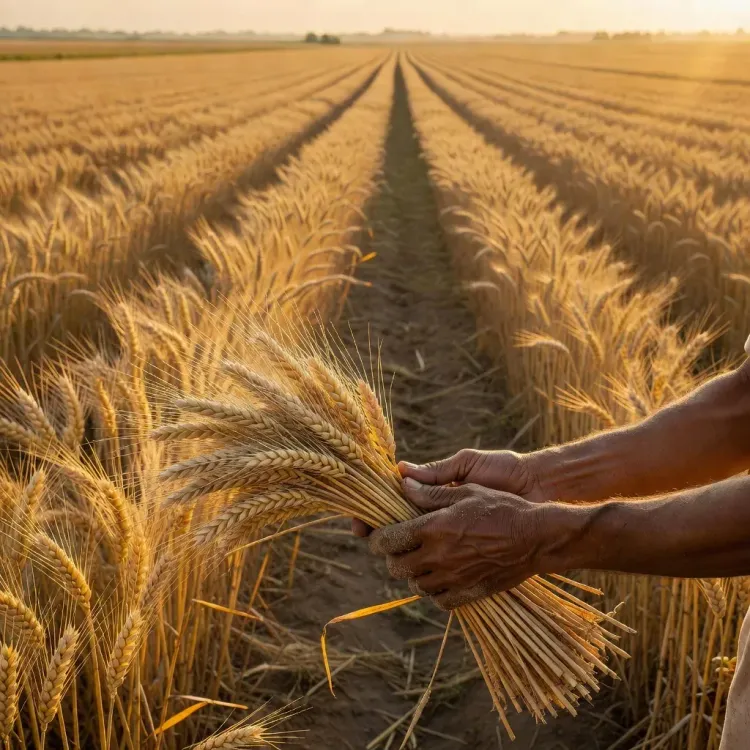
Madhya Pradesh, one of India's largest agricultural states, has a direct stake in the scheme's continuity. The state's farming communities — spanning wheat, soybean, and pulses belts — represent a significant share of the national beneficiary base.
With ₹3.15 lakh crore committed over five years, the government is signalling that income support to farmers is not a transitional measure but a permanent feature of the fiscal architecture. Whether state-level rollout machinery can match that ambition — in disbursement speed and beneficiary accuracy — will be the real test of the extension's impact.
Point of View
With a ₹3.15 lakh crore commitment, signals that direct income transfers to farmers have moved from policy experiment to permanent fiscal fixture under the Modi government. For the BJP, renewing the scheme ahead of the electoral cycle reinforces its rural welfare narrative at a moment when agrarian distress remains a live political variable. CM Yadav's enthusiastic endorsement also reflects how state-level BJP leaders are aligning their public communication with central welfare announcements to consolidate farmer constituencies. The real policy question — whether disbursement infrastructure keeps pace with the scale of the commitment — will define the scheme's actual impact over the next five years.
NationPress
15 Sept 2026
Frequently Asked Questions
What is PM-KISAN and how much money do farmers get?
PM-KISAN, or Pradhan Mantri Kisan Samman Nidhi, is a central government scheme that provides ₹6,000 per year in three equal instalments directly to eligible landholding farmer families via direct bank transfer.
How long has PM-KISAN been extended and what is the total budget?
The Union Cabinet approved the extension of PM-KISAN from 2026–27 to 2030–31, with a total financial outlay of ₹3.15 lakh crore over the five-year period.
When was PM-KISAN launched?
PM-KISAN was launched in December 2018 as a central sector scheme to provide direct income support to farmer families across India.
What did MP CM Mohan Yadav say about the PM-KISAN extension?
CM Dr. Mohan Yadav welcomed the Cabinet decision on X, calling it 'another historic step towards farmer welfare' and credited Prime Minister Narendra Modi for the move.
Who approved the PM-KISAN scheme extension in 2026?
The Union Cabinet, chaired by Prime Minister Narendra Modi, approved the extension of PM-KISAN on July 31, 2026.