Arunachal Governor urges APSCPCR to shift to preventive child rights framework
Synopsis
Arunachal Pradesh Governor Lt Gen K.T. Parnaik has pushed the state child rights commission to abandon its complaint-first approach and build a preventive protection system — flagging an 'extremely low' POCSO prosecution rate and surging cyber exploitation risks as the most urgent fault lines.
Key Takeaways
Governor Lt Gen K.T.
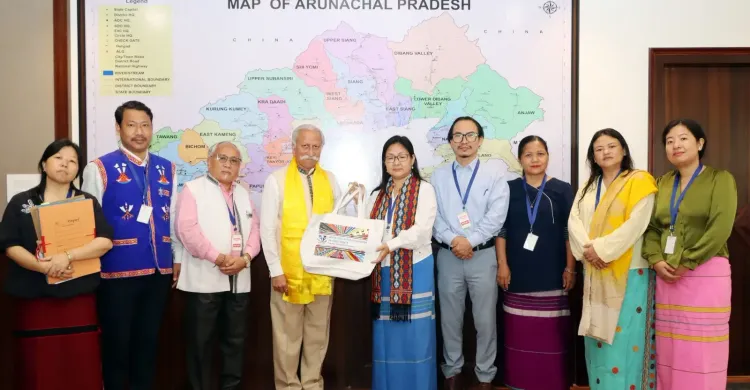
Parnaik (Retd) met the APSCPCR Chairperson and members at Lok Bhavan, Itanagar on 22 August .
He called for a shift from a complaint-based mechanism to a preventive child protection framework with stronger district-level monitoring.
The Governor flagged rising POCSO cases and an extremely low prosecution rate as serious concerns requiring immediate action.
He directed the Commission to ensure strict implementation of the Juvenile Justice Act , POCSO Act , and Right to Education Act .
A two-day North East SCPCRs Convention on child rights was held in Tawang on 31 July and 1 August , bringing together child rights bodies from across the Northeast.
The Governor called for a statewide Child Rights Awareness Movement covering online safety, mental health, and reporting mechanisms.
Arunachal Pradesh Governor Lt Gen K.T. Parnaik (Retd) on Saturday, 22 August called on the Arunachal Pradesh State Commission for Protection of Child Rights (APSCPCR) to act as a vigilant watchdog and a proactive force in building a child-friendly state — one where every child can grow with dignity, security, and equal opportunity. The appeal came during a meeting at Lok Bhavan, Itanagar, where the Commission's Chairperson and members briefed the Governor on recent developments.
Key Concerns Raised by the Governor
Governor Parnaik directed the Commission to prioritise a range of critical vulnerabilities facing children in the state, including child abuse, trafficking, child labour, substance abuse, school dropouts, child marriage, and cyber exploitation. He stressed that sustained, coordinated efforts are essential to protect children from these threats and to uphold their rights, safety, and overall well-being.
He expressed grave concern over rising POCSO cases in the state, while also regretting what he described as an extremely low prosecution rate under the Protection of Children from Sexual Offences (POCSO) Act. The Governor has consistently advocated for stronger enforcement of POCSO provisions and called for stricter monitoring of Child Care Institutions, including regular inspections of observation homes, shelter homes, hostels, and other residential facilities for children.
Shift from Reactive to Preventive Framework
A key thrust of the Governor's address was his call for the Commission to move away from a purely complaint-driven model. He advised the APSCPCR to adopt a preventive child protection framework, placing greater emphasis on early identification of at-risk children rather than waiting for grievances to be reported.
To achieve this, he recommended strengthening district-level monitoring and fostering closer coordination among schools, Anganwadi centres, law enforcement agencies, health departments, and community organisations. He also stressed the need for strict implementation of the Juvenile Justice Act, the POCSO Act, and the Right to Education Act, with periodic reviews and independent assessments to close systemic gaps.
North East SCPCRs Convention at Tawang
The meeting followed a briefing by the APSCPCR Chairperson on the outcomes of the two-day North East SCPCRs Convention on Child Rights, held at Tawang on 31 July and 1 August. The convention brought together child rights institutions from across the Northeastern states to deliberate on emerging challenges, best practices, and collaborative strategies for safeguarding children's rights.
Governor Parnaik appreciated the initiative, noting that children's well-being must remain a collective responsibility of both society and government. He underscored that every child deserves a safe childhood, quality education, good health, and protection from exploitation.
Call for a Statewide Child Rights Awareness Movement
Expressing concern over growing social and digital challenges confronting children, the Governor urged the Commission to launch a broad-based Child Rights Awareness Movement across Arunachal Pradesh. He called for a statewide child rights literacy campaign involving educational institutions, Panchayati Raj bodies, religious leaders, youth organisations, civil society groups, and the media.
Awareness programmes covering child protection laws, online safety, mental health, counselling services, and reporting mechanisms, he said, should reach every village and urban locality in the state. An informed and vigilant society, he observed, remains the strongest safeguard for children. With rising POCSO cases and persistent structural challenges, the Commission's response in the coming months will be closely watched.
Point of View
Not FIRs, are the true measure of institutional effectiveness, and Arunachal's record on that count appears wanting. Coordinating schools, Anganwadis, law enforcement, and health departments sounds comprehensive on paper, but without dedicated funding and a clear accountability chain, inter-agency mandates in remote Northeastern states have historically remained aspirational. The Tawang convention is a positive regional signal, but the harder test is whether its recommendations translate into enforceable district-level protocols before the next such meeting.
NationPress
22 Aug 2026
Frequently Asked Questions
What did Arunachal Pradesh Governor K.T. Parnaik say about child rights?
Governor Lt Gen K.T. Parnaik urged the APSCPCR to function as a vigilant watchdog and shift from a complaint-based model to a preventive child protection framework. He stressed early identification of vulnerable children and stronger enforcement of the POCSO Act, Juvenile Justice Act, and Right to Education Act.
What is the APSCPCR and what does it do?
The Arunachal Pradesh State Commission for Protection of Child Rights (APSCPCR) is the state body mandated to monitor and enforce child rights laws, including the POCSO Act and the Juvenile Justice Act. It is responsible for addressing child abuse, trafficking, labour, and other violations across the state.
What was the North East SCPCRs Convention held at Tawang about?
The two-day convention, held on 31 July and 1 August at Tawang, brought together child rights commissions from across the Northeastern states. It focused on emerging challenges, best practices, and collaborative strategies for safeguarding children's rights and welfare in the region.
Why did the Governor raise concern over POCSO cases in Arunachal Pradesh?
Governor Parnaik flagged a rise in POCSO cases alongside an extremely low prosecution rate, indicating that while complaints are being registered, convictions remain rare. He called for stronger monitoring of Child Care Institutions and more effective enforcement of the Protection of Children from Sexual Offences Act.
What steps did the Governor recommend for child protection in Arunachal Pradesh?
He recommended district-level monitoring, closer coordination among schools, Anganwadi centres, law enforcement, and health departments, regular inspections of shelter homes and observation homes, and a statewide Child Rights Awareness Movement covering online safety, mental health, and reporting mechanisms.