POCSO cases surge in Palakkad: Kerala forms Special Task Force to probe rise
Synopsis
Kerala has ordered a high-level Special Task Force to investigate why POCSO cases are disproportionately concentrated in four Palakkad police jurisdictions — including Walayar, near industrial clusters where children are often left unsupervised. The probe will specifically examine whether smartphone use and digital exposure are making children more vulnerable, marking one of the state's most structured responses to localised child abuse trends.
Key Takeaways
Kerala government on 7 July ordered a Special Task Force to probe elevated POCSO cases in Palakkad district .
The task force will be headed by AIG of Police Poonkuzhali and must submit its report within three months to the Additional Chief Secretary, Home.
Focus areas: police jurisdictions of Walayar , Kollengode , Meenakshipuram , and Kozhinjampara .
Panel members include representatives from the District Women's Cell , Sakhi , District Child Welfare Office , and senior police officers.
The probe will assess the role of smartphone and digital device use in increasing children's vulnerability to exploitation.
The decision follows a recommendation by the Estimates Committee of the 10th Kerala Legislative Assembly .
The Kerala government on Tuesday, 7 July ordered the formation of a high-level Special Task Force to investigate a comparatively high incidence of cases registered under the Protection of Children from Sexual Offences (POCSO) Act in select police station jurisdictions of Palakkad district over the past several years. The task force will be headed by AIG of Police Poonkuzhali and is expected to submit a comprehensive report within three months.
Government Order and Mandate
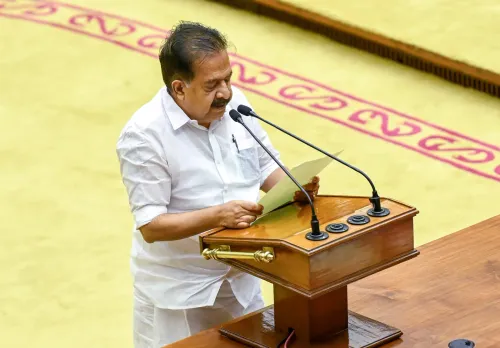
Home Minister Ramesh Chennithala directed the Home Department to constitute the task force within three days of the order. The panel is required to report to the Additional Chief Secretary, Home, covering both the pattern of offences and the broader social circumstances that may be exposing children in these areas to greater risk.
The decision follows recommendations from the Estimates Committee of the 10th Kerala Legislative Assembly, which had called for a dedicated study into the concentration of POCSO cases in specific localities and suggested the formation of a multidisciplinary committee to recommend preventive measures.
Areas Under the Scanner
The inquiry will focus specifically on the police station jurisdictions of Walayar, Kollengode, Meenakshipuram, and Kozhinjampara — areas where POCSO case numbers have remained comparatively elevated relative to other parts of Palakkad. Officials have flagged concerns over the underlying social and environmental factors driving the trend.
Notably, Walayar lies close to industrial clusters where, according to the government order, both parents in many families leave home for work, often leaving children without adequate adult supervision for extended hours — a condition that authorities believe may heighten vulnerability to exploitation.
Task Force Composition
The task force will draw members from multiple institutions, including the District Janajagaran Samithi, the District Women's Cell, Sakhi, the District Child Welfare Office, women's organisations, and senior police officers. The multidisciplinary structure reflects the government's intent to examine the problem through social, psychological, and law-enforcement lenses simultaneously.
Digital Exposure as a Key Focus Area
One of the central areas of inquiry will be the impact of the digital era on children. The task force has been asked to study how widespread use of smartphones and other digital devices has influenced children's behaviour, emotional responses, psychological well-being, and interpersonal relationships.
Investigators will also examine whether children from different socio-economic backgrounds are affected differently by increased digital exposure, and whether such changes have rendered them more vulnerable to abuse. This comes amid growing national concern over the intersection of digital access and child safety, particularly in semi-urban and industrial belt communities.
What Comes Next
With the task force to be constituted within three days, field investigations across the four identified police station limits are expected to begin shortly. The panel's findings, due within three months, will inform policy recommendations aimed at reducing POCSO incidence in these localities. Child rights advocates and women's organisations in Kerala will be watching closely to see whether the report translates into concrete preventive action on the ground.
Point of View
Time-bound, and rooted in a legislative committee recommendation. But the real test will be whether the report leads to preventive infrastructure or merely documents a problem already visible to local communities. The Walayar angle is particularly significant: it is not a new name in Kerala's child protection discourse, and its reappearance in this order signals that earlier interventions, if any, did not hold. Linking digital exposure to POCSO incidence is a credible hypothesis, but without granular data on case types and perpetrator profiles, the task force risks producing a broad sociological study rather than actionable policy.
NationPress
6 Oct 2026
Frequently Asked Questions
Why has Kerala formed a Special Task Force for POCSO cases in Palakkad?
The Kerala government formed the task force because POCSO case numbers in four Palakkad police jurisdictions — Walayar, Kollengode, Meenakshipuram, and Kozhinjampara — have remained comparatively higher than in other parts of the district. The move follows a recommendation by the Estimates Committee of the 10th Kerala Legislative Assembly, which called for a dedicated inquiry into the underlying social and environmental factors.
Who will head the Kerala POCSO task force and when must it report?
The task force will be headed by AIG of Police Poonkuzhali. It must be constituted within three days of the order issued on 7 July and is required to submit a comprehensive report within three months to the Additional Chief Secretary, Home.
Which areas in Palakkad are under investigation?
The inquiry covers the police station jurisdictions of Walayar, Kollengode, Meenakshipuram, and Kozhinjampara in Palakkad district, where POCSO case incidence has been comparatively elevated over the past several years.
What role will digital exposure play in the task force's inquiry?
The task force has been specifically asked to examine how widespread use of smartphones and digital devices has affected children's behaviour, psychological well-being, and vulnerability to exploitation. It will also assess whether children from different socio-economic backgrounds are affected differently by digital access.
Who are the members of the Special Task Force?
The task force includes representatives from the District Janajagaran Samithi, the District Women's Cell, Sakhi, the District Child Welfare Office, women's organisations, and senior police officers — a multidisciplinary composition designed to address both law-enforcement and social dimensions of the problem.