Chhattisgarh CMO marks Child Protection Day, pledges rights
Synopsis
The Chief Minister's Office of Chhattisgarh marked International Child Protection Day on 1 June 2026, calling for a collective pledge to protect children's rights and futures, anchoring the state's public commitment to India's child welfare legal framework.
Key Takeaways
The Chhattisgarh CMO posted a message on 1 June 2026 to mark International Child Protection Day .
The post's theme — 'Surakshit bachpan, surakshit kal' — translates to 'A safe childhood, a safe tomorrow.' India's child protection framework includes the POCSO Act, 2012 and the Juvenile Justice Act, 2015 (amended 2021), both of which place implementation duties on state governments.
Chhattisgarh's tribal and forest belt geography creates specific child vulnerability challenges that state messaging seeks to address.
Follow-through will be tracked via NCPCR reviews, district-level data, and state budget allocations for child welfare.
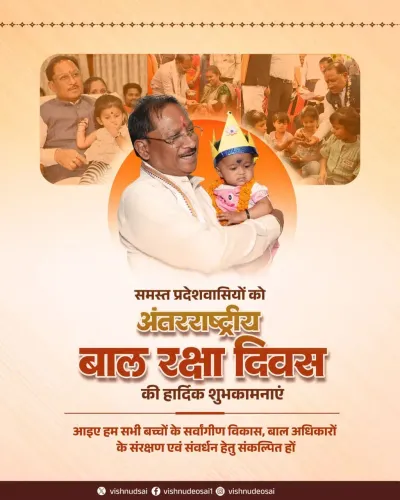
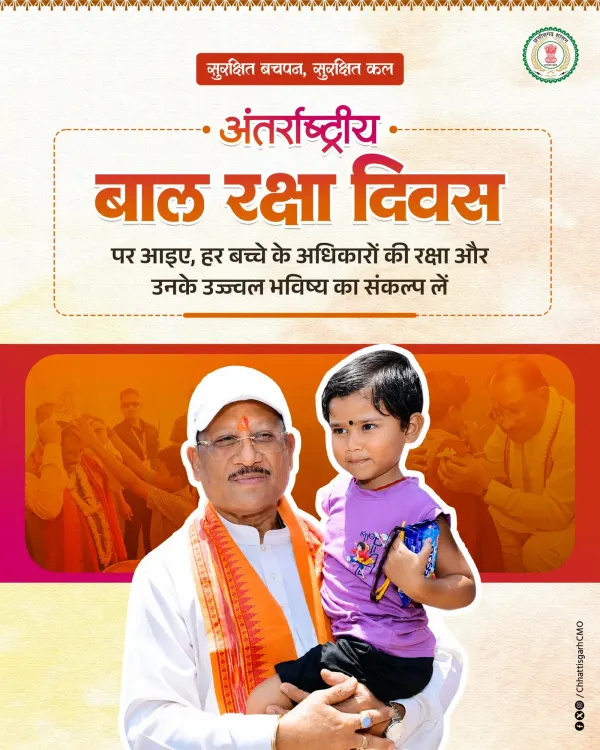
The Chief Minister's Office of Chhattisgarh on Monday, 1 June 2026, marked the occasion of International Child Protection Day by calling on citizens to commit to safeguarding the rights and futures of every child. The official post, shared from the state government's handle, carried the message: 'Surakshit bachpan, surakshit kal' — 'A safe childhood, a safe tomorrow.'
Context
International Child Protection Day, observed on 1 June, is a day dedicated to raising awareness about children's rights to safety, protection from exploitation, and access to development opportunities. The Chhattisgarh CMO's post aligned the state government publicly with this global observance, urging a collective resolve — 'har bachche ke adhikaron ki raksha aur unke ujjwal bhavishya ka sankalp' — 'to protect the rights of every child and pledge for their bright future.'
The message reflects a pattern seen across Indian states, where governments use child-rights observances to reaffirm commitment to national and international frameworks protecting minors.
Policy Backdrop
India's child protection architecture rests on two central pillars. The Protection of Children from Sexual Offences (POCSO) Act, 2012 established a dedicated legal framework for preventing and addressing sexual offences against children, making India one of the few countries with a standalone statute of this nature.
The Juvenile Justice (Care and Protection of Children) Act, 2015, amended in 2021, further strengthened state-level mechanisms for the care, rehabilitation, and protection of children in need. Both laws place significant implementation responsibilities on state governments, including Chhattisgarh, which is required to maintain functional Child Welfare Committees and Juvenile Justice Boards across its districts.
India is also a signatory to the UN Convention on the Rights of the Child, which provides the international normative framework that occasions such as Child Protection Day seek to reinforce at the grassroots level.
Stakeholders and Impact
The primary stakeholders in this messaging are Chhattisgarh's children, particularly those in vulnerable categories — including tribal communities, children in conflict zones, and those at risk of trafficking or labour exploitation. Child welfare bodies, district administrations, and civil society organisations working on child rights in the state are the operational actors expected to translate such public commitments into programmatic action.
Chhattisgarh's geography — spanning dense forests, tribal belts, and historically conflict-affected areas — presents particular challenges for child protection delivery. State-level awareness campaigns anchored to national observances serve to keep institutional focus on these populations.
What's Next
Observers and child rights advocates will watch for follow-through in the form of state budget allocations for child welfare schemes, annual performance reports on POCSO and Juvenile Justice Act implementation, and any reviews by the National Commission for Protection of Child Rights (NCPCR) or the state child rights commission. The sincerity of such observance pledges is ultimately measured by district-level data on child marriages, trafficking cases, and school retention rates — metrics that Chhattisgarh's administration will be expected to report on in the months ahead.
Point of View
Even as implementation gaps persist on the ground. For Chhattisgarh specifically, the pledge carries added weight given the state's complex socio-geographic profile — tribal belts, historical insurgency zones, and high rates of child vulnerability. The real test of such messaging lies not in the post itself but in the budget lines and district-level enforcement data that follow.
NationPress
15 Oct 2026
Frequently Asked Questions
What is International Child Protection Day?
International Child Protection Day is observed on 1 June each year to raise awareness about children's rights to safety, protection from exploitation, and access to development. It is marked by governments and civil society organisations worldwide, including across Indian states.
What did the Chhattisgarh CMO post on Child Protection Day 2026?
The Chief Minister's Office of Chhattisgarh posted a message on 1 June 2026 with the theme 'Surakshit bachpan, surakshit kal' — meaning 'A safe childhood, a safe tomorrow' — calling on citizens to pledge protection of every child's rights and a bright future.
What laws protect children in Chhattisgarh?
Children in Chhattisgarh are protected under national laws including the POCSO Act, 2012 and the Juvenile Justice (Care and Protection of Children) Act, 2015 (amended 2021), both of which require state-level implementation through Child Welfare Committees and Juvenile Justice Boards.
What is the POCSO Act?
The Protection of Children from Sexual Offences (POCSO) Act, 2012 is India's dedicated law for preventing and prosecuting sexual offences against children. It mandates special courts and child-friendly procedures, and its enforcement is a state government responsibility.
How does Chhattisgarh's geography affect child protection?
Chhattisgarh's dense forests, tribal communities, and historically conflict-affected districts create heightened vulnerabilities for children, including risks of trafficking, child labour, and limited access to education, making robust state-level child protection delivery especially critical.