CM Bhajan Lal Sharma Greets Rajasthan on Children's Day
Synopsis
Rajasthan Chief Minister Bhajan Lal Sharma marked International Children's Day on 1 June 2026 by calling on all residents to commit to protecting child rights, ensuring quality education, better health, and a safe environment, describing a secure childhood as the foundation of a strong nation.
Key Takeaways
Rajasthan Chief Minister Bhajan Lal Sharma posted greetings on International Children's Day, 1 June 2026 .
He called a 'safe and value-based childhood' the foundation of a strong nation.
His message covered four pillars: child rights protection, quality education, better health, and a safe environment.
India's child welfare framework includes the Right to Education Act (2009) , POCSO Act (2012) , and the National Policy for Children (2013) .
The Beti Bachao Beti Padhao scheme (launched 2015 ) remains a key programme in Rajasthan for improving child sex ratio and girls' education.
State budget allocations for education and child health will be a key indicator of follow-through on these commitments.
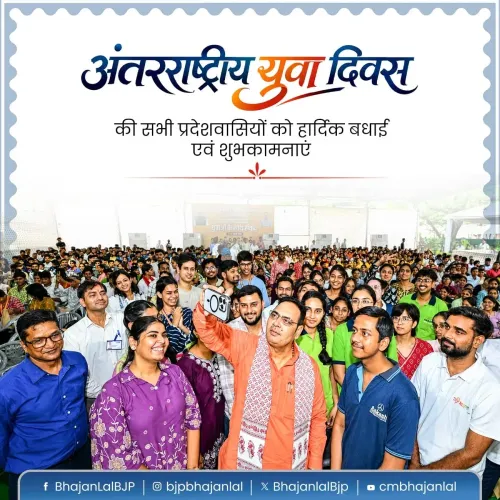
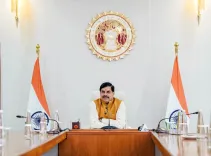
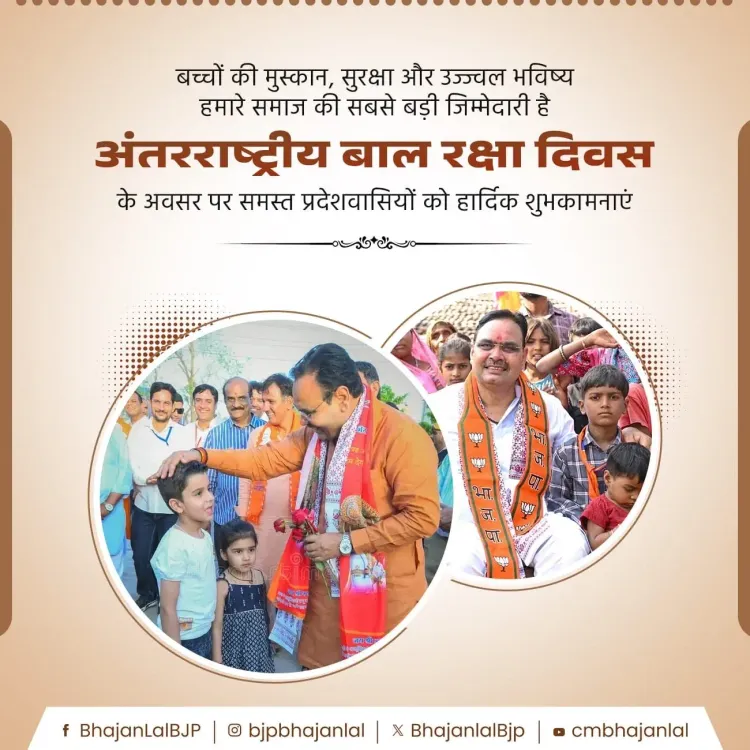
Rajasthan Chief Minister Bhajan Lal Sharma extended greetings to all residents of the state on the occasion of International Children's Day on Monday, 1 June 2026, reaffirming the state's commitment to child rights, quality education, health, and a safe environment for every child.
In his post on X, the Chief Minister wrote: 'अंतरराष्ट्रीय बाल रक्षा दिवस के अवसर पर समस्त प्रदेशवासियों को हार्दिक शुभकामनाएं!' ['Heartfelt greetings to all residents of the state on the occasion of International Children's Day!'] He called for a collective resolve to protect the rights of every child and ensure quality education, better health, and a safe environment, stating that 'a safe and value-based childhood is the foundation of a strong nation.'
Context
International Children's Day is observed annually on 1 June and is distinct from India's national Children's Day observed on 14 November. The day draws attention to child welfare, protection from exploitation, and the fulfilment of rights recognised under the UN Convention on the Rights of the Child. State leaders across India routinely use the occasion to restate policy commitments on child rights.
Rajasthan, as a large western Indian state, administers a range of central and state-level schemes targeting child welfare, spanning education enrolment, nutrition, and protection from abuse.
Policy Backdrop
India's child welfare architecture rests on several legislative and policy pillars. The Right to Education Act, 2009 mandates free and compulsory education for children aged 6 to 14. The Protection of Children from Sexual Offences Act, 2012 provides a dedicated legal framework against child sexual abuse. The National Policy for Children, 2013 enshrines rights to survival, development, protection, and participation.
The Beti Bachao Beti Padhao scheme, launched in 2015, continues to address child sex ratio imbalances and promote girls' education, with Rajasthan being among the states where the programme has been actively implemented given historical gender-ratio challenges in several districts.
Stakeholders and Impact
The primary beneficiaries of child welfare frameworks in Rajasthan are the state's millions of children, particularly those in rural and tribal belts where access to quality education and healthcare remains uneven. Child welfare organisations operating in the state work alongside government departments to implement protection and development mandates.
Annual observance messages by senior leaders serve to reinforce institutional continuity of these commitments and signal administrative priority to district-level implementers and civil society partners.
What's Next
Observers will watch for follow-through in the form of Rajasthan state budget allocations for education and child health, as well as any new state-specific child protection guidelines or data releases in the months ahead. The Chief Minister's message, framed around rights, education, health, and safety, broadly tracks the four pillars of the National Policy for Children, suggesting alignment with that framework as a governing template.
Point of View
But its framing around rights, education, health, and safety closely mirrors the four pillars of India's National Policy for Children — suggesting deliberate alignment with the central government's child welfare vocabulary. For a BJP-governed state, invoking Beti Bachao Beti Padhao's legacy and the broader rights framework also serves to consolidate the party's narrative on social welfare delivery. The real test of these commitments will come in state budget allocations and district-level implementation data. Observers of Rajasthan politics will note that such messaging, repeated consistently by the CM, builds a public accountability baseline against which future policy performance can be measured.
NationPress
15 Oct 2026
Frequently Asked Questions
What is International Children's Day and when is it observed?
International Children's Day is observed on 1 June each year to promote child welfare and highlight children's rights globally. It is distinct from India's Children's Day, which falls on 14 November .
What did Rajasthan CM Bhajan Lal Sharma say on Children's Day 2026?
CM Bhajan Lal Sharma extended greetings to all Rajasthan residents and called for a collective resolve to protect child rights, ensure quality education, better health, and a safe environment, describing a secure childhood as the foundation of a strong nation.
What are the key child welfare laws in India?
India's key child welfare laws include the Right to Education Act, 2009 (free education for ages 6-14), the Protection of Children from Sexual Offences Act, 2012 , and the National Policy for Children, 2013 .
What is the Beti Bachao Beti Padhao scheme?
Beti Bachao Beti Padhao is a central government scheme launched in 2015 to address the declining child sex ratio and promote girls' education. Rajasthan is among the states where it has been actively implemented.
Who is Bhajan Lal Sharma?
Bhajan Lal Sharma is the Chief Minister of Rajasthan and a BJP leader who assumed office in December 2023 .