CM Bhajan Lal Sharma Marks International Justice Day
Synopsis
Rajasthan Chief Minister Bhajan Lal Sharma marked International Justice Day on 17 July 2026, urging citizens to deepen their commitment to equality, impartiality, and accessible justice as cornerstones of democracy.
Key Takeaways
Bhajan Lal Sharma , Chief Minister of Rajasthan , issued a public message on International Justice Day, 17 July 2026 .
He described justice as 'the strongest foundation of democracy and an important means of protecting rights.' He called on all citizens to strengthen commitment to equality, impartiality, and accessible justice .
International Justice Day marks the anniversary of the Rome Statute , adopted on 17 July 1998 .
The statement comes amid ongoing national and state-level efforts to improve case disposal rates and expand legal aid under the Legal Services Authorities Act .
Observers will watch for follow-up policy action on district court infrastructure and legal aid expansion in Rajasthan.
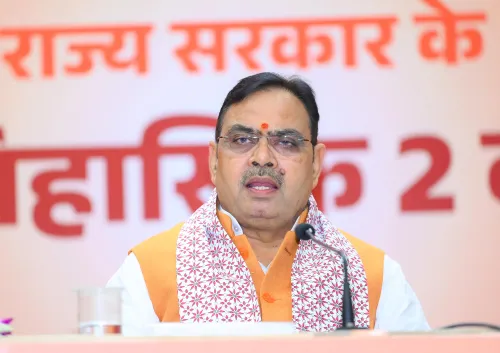
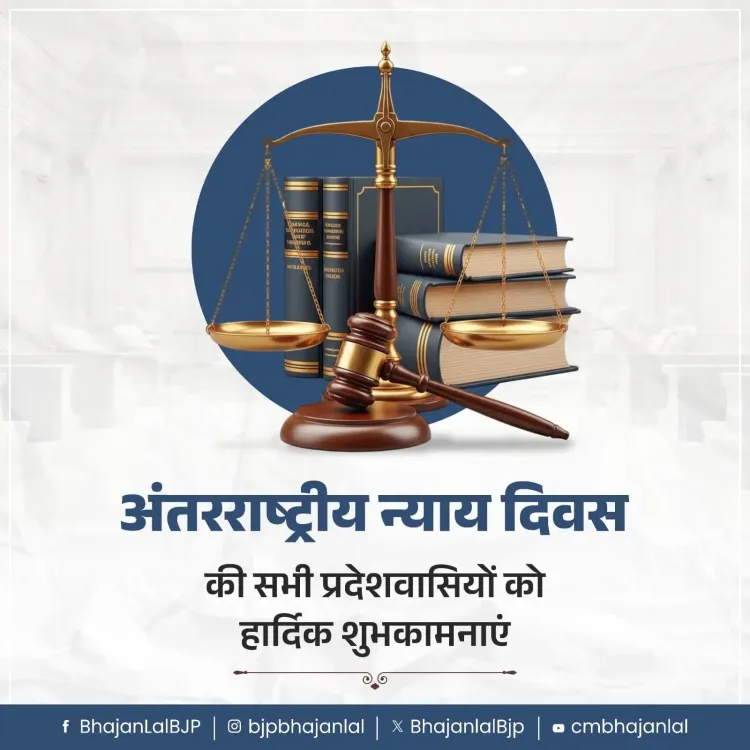
Rajasthan Chief Minister Bhajan Lal Sharma extended greetings to the people of Rajasthan on International Justice Day on Friday, 17 July 2026, calling justice the strongest foundation of democracy and an essential means of protecting citizens' rights.
Context
In his post, Sharma wrote in Hindi: 'न्याय लोकतंत्र की सबसे सशक्त नींव और अधिकारों की रक्षा का महत्वपूर्ण माध्यम है' ['Justice is the strongest foundation of democracy and an important means of protecting rights']. He urged all citizens to strengthen their commitment to equality, impartiality, and an accessible justice system so that every person can move forward with dignity and trust.
International Justice Day, observed annually on 17 July, marks the anniversary of the adoption of the Rome Statute in 1998, which established the International Criminal Court. Governments and public officials across the world use the occasion to reaffirm constitutional and democratic values.
Policy Backdrop
Indian political leaders routinely issue public messages on international observance days to underscore constitutional commitments to justice and equality. At the national level, efforts to improve case disposal rates and expand legal aid have been pursued under existing frameworks such as the Legal Services Authorities Act.
Rajasthan, a western Indian state, has seen a focus on administrative and legal reforms since the 2023 assembly elections that brought the BJP government led by Sharma to power. District court infrastructure and legal aid accessibility have been recurring themes in the state's governance agenda.
Stakeholders and Impact
The message is directed at Rajasthan's citizens broadly, but carries particular resonance for those who interact with the state's judicial institutions — including litigants in lower courts, legal aid beneficiaries, and civil society organisations working on access to justice.
Judicial delays and the availability of affordable legal representation remain pressing concerns in Rajasthan, as they do across much of India. Public affirmations of commitment to an accessible justice system by senior elected officials are seen as signals to the bureaucracy and judiciary about political priorities.
What's Next
Observers will watch whether the Rajasthan government follows this message with concrete budgetary or legislative action — particularly state budget allocations or proposals concerning district court infrastructure and legal aid expansion. Such steps would translate the symbolic observance into measurable policy outcomes for the state's citizens.
Point of View
High-visibility signal to constituents and institutions alike. For a BJP government that came to power in Rajasthan in late 2023, such messaging also serves to frame the administration as committed to rule-of-law governance. The real test, as analysts often note, lies in whether symbolic statements translate into measurable improvements in court infrastructure, legal aid reach, and case disposal rates. Until concrete budget lines or legislative proposals follow, the message remains aspirational rather than programmatic.
NationPress
15 Oct 2026
Frequently Asked Questions
What is International Justice Day and why is it observed on 17 July?
International Justice Day, observed on 17 July each year, marks the anniversary of the adoption of the Rome Statute in 1998 , which established the International Criminal Court. It is a day for governments and citizens worldwide to reaffirm commitments to justice, accountability, and the rule of law.
What did Rajasthan CM Bhajan Lal Sharma say on International Justice Day 2026?
Bhajan Lal Sharma called justice 'the strongest foundation of democracy' and urged all Rajasthan citizens to strengthen their commitment to equality, impartiality, and an accessible justice system so every person can move forward with dignity and trust.
Who is Bhajan Lal Sharma?
Bhajan Lal Sharma is the Chief Minister of Rajasthan and a senior BJP leader who assumed office in December 2023 following the party's victory in the state assembly elections.
What is the state of legal aid and justice access in Rajasthan?
Judicial delays and affordable legal representation remain challenges in Rajasthan , as across India. Legal aid is provided under the Legal Services Authorities Act , but access to district court infrastructure and timely justice continues to be a governance priority for the state.
Will Rajasthan announce any new justice or legal aid policy after this statement?
No specific policy announcement accompanied CM Sharma's International Justice Day message. Observers are watching for future state budget allocations or legislative proposals on district court infrastructure and legal aid expansion in Rajasthan.